

17-7PH Stainless Spring Steel Wire for sale
Apr 14, 2026
Leave a message
What is 17-7ph spring wire?
17-7 PH spring wire (UNS S17700 / AISI Type 631) is a chromium-nickel-aluminum precipitation-hardening stainless steel wire engineered for applications demanding high strength, fatigue resistance, good corrosion resistance, and minimal distortion during heat treatment.
Production Process of 17-7PH Spring Wire
The production of 17-7PH (UNS S17700 / EN 1.4568) spring wire requires precise control over chemical composition, cold deformation, and heat treatment. Because 17-7PH relies on precipitation hardening to achieve ultra-high strength, the manufacturing process is split between wire mill production (making Condition C wire) and final spring fabrication (heat treating to Condition CH900).

1. Melting and Refining:
Controlled melting using vacuum or electric furnace methods is employed. The base alloy (containing 17% Cr, 7% Ni, and 1.1% Al) is first melted in an electric arc furnace (EAF) and subsequently refined using either the argon-oxygen decarburization (AOD) process or vacuum induction melting (VIM).
2.Billet Casting & Hot Rolling
The liquid steel is cast into ingots or continuously cast into billets, then hot rolled at temperatures around 1150°C–1200°C into thick wire rod coils (typically 5.5 mm to 9.5 mm in diameter).


3. Solution Annealing (Condition A):
A softening treatment performed prior to cold working. Hot-rolled bars undergo solution heat treatment at 1040°C (1900°F), followed by rapid water quenching to room temperature. This process places the alloy in a soft, fully austenitic, and ductile state (Condition A), preparing it for subsequent cold working involving significant deformation.
4. Cold-drawn (Condition C):
Annealed wire rod undergoes pickling/cleaning and is coated with a drawing lubricant (soap or nickel coating) before being drawn through a series of carbide dies. Cold working transforms metastable austenite into deformation-induced martensite while simultaneously inducing work hardening. Through substantial cross-sectional reduction (up to 70%–80%), the material is processed from Condition A to Condition C spring wire, raising its tensile strength to 1400–1800 MPa (depending on wire diameter).


5. Spring Coiling/Forming:
GNEE supplies wire in "Condition C" to spring manufacturers. Leveraging the wire's good bendability-meaning it does not crack during bending-manufacturers coil or stamp the material into compression springs, extension springs, or wave springs.
6. Precipitation hardening (CH900 condition): Final age hardening.
After coiling, the finished springs undergo heat treatment at 482°C (900°F) for one hour, followed by air cooling. This aging process causes the precipitation of microscopic compounds within the martensitic matrix, thereby increasing the ultimate tensile strength to over 2000 MPa while minimizing dimensional distortion.

17-7ph spring wire Specifications
| Parameter | Value |
| Cr / Ni / Al | 16.0–18.0 / 6.5–7.75 / 0.75–1.50 % |
| C (max) | 0.09 % |
| Modulus of Elasticity (E) | 29.5 × 10⁶ psi (203 GPa) |
| Shear Modulus (G) | 11.0 × 10⁶ psi (76 GPa) |
| Density | 0.286 lb/in³ |
| Max operating temp | 650 °F (343 °C) continuous |
| Design stress | 45% of min tensile |
| Wire diameter range | 0.017" – 0.625" (0.43 – 15.9 mm) |
| Standards | ASTM A313, AMS 5678, AMS 5824, SAE J217 |
17-7ph spring wire Temper Conditions
Wire is supplied cold-drawn in Condition C (spring temper), then the spring maker ages after forming to reach final properties:
| Condition | Process | Tensile (min) | Hardness | Use |
| A (Annealed) | 1,900–2,050 °F / 1 h, air cool | 150 ksi max | B85 | Forming, deep-draw, complex shapes |
| C (Cold Drawn) | Cold-worked from A | 235–335 ksi (size-dependent) | C48 | As-supplied spring temper |
| CH900 | C + age 900 °F / 1 h | 235–365 ksi (size-dependent) | C49 | Final spring condition - max strength |
| RH950 | Reheat + age 950 °F / 1 h | 225 ksi | C47 | Higher toughness, lower strength |
Tensile by Diameter (Condition CH900, min)
| Wire Dia. | Min Tensile |
| 0.010 – 0.015" | 335 ksi |
| 0.020 – 0.029" | 325 ksi |
| 0.030 – 0.041" | 310 ksi |
| 0.051 – 0.061" | 305 ksi |
| 0.086 – 0.100" | 279 ksi |
| 0.130 – 0.162" | 256 ksi |
| 0.225 – 0.306" | 242 ksi |
| 0.440 – 0.625" | 230 ksi |
17-7ph spring wire Applications
Aerospace: aircraft control-surface springs, actuator springs, landing gear components
Automotive: valve springs, fuel-system springs, sensor elements
Medical: catheter guidewires, surgical instrument springs
Industrial: high-fatigue compression/tension/torsion springs, retaining rings, clips
Electronics: precision connectors, reed switch contacts
Why Choose 17-7PH Over Other Spring Wires?
| Comparison | 17-7PH advantage |
| vs. 302/304 | Higher strength (up to 365 ksi), 200 °F higher max service temp, better fatigue |
| vs. 17-4PH | More formable (austenitic in annealed state), less distortion on aging, better corrosion resistance |
| vs. Music wire (1074) | Corrosion resistance, high-temp stability, non-magnetic (slightly) |
| vs. Inconel X-750 | 50–70% lower cost, sufficient for service ≤ 650 °F |
17-7ph spring wire price per kg
| Source / Form | Approx. Price |
| FOB China, 0.25–3 mm coil | $3.00 – $6.00 / kg ($1,400–$2,700/ton) |
| US domestic (Gibbs, Central Wire, Suhm) | $8.00 – $15.00 / lb depending on dia. & temper |
| US small qty / cut lengths (Amazon, Small Parts) | $15 – $40+ / lb (60" lengths, Condition C) |
| AMS-certified aerospace grade | Premium 20–40% over commercial |
To help us provide an accurate quote, could you please provide the following information:
the required order quantity (in kilograms or tons),
the specific wire diameter or gauge,
and the shipping or delivery destination.
How does 17-7PH weldability compare to 302 stainless?
17-7PH stainless steel has lower weldability than 302 stainless steel because it is a precipitation-hardening alloy requiring controlled post-weld heat treatment to recover strength. 17-7PH can be welded by TIG, MIG, and resistance welding methods, but welding may soften the heat-affected zone, and aging treatment is usually required to achieve high mechanical properties. In comparison, 302 stainless steel offers easier welding, better ductility, and normally does not require post-weld heat treatment, making it more suitable for general fabrication.
Packaging Standard
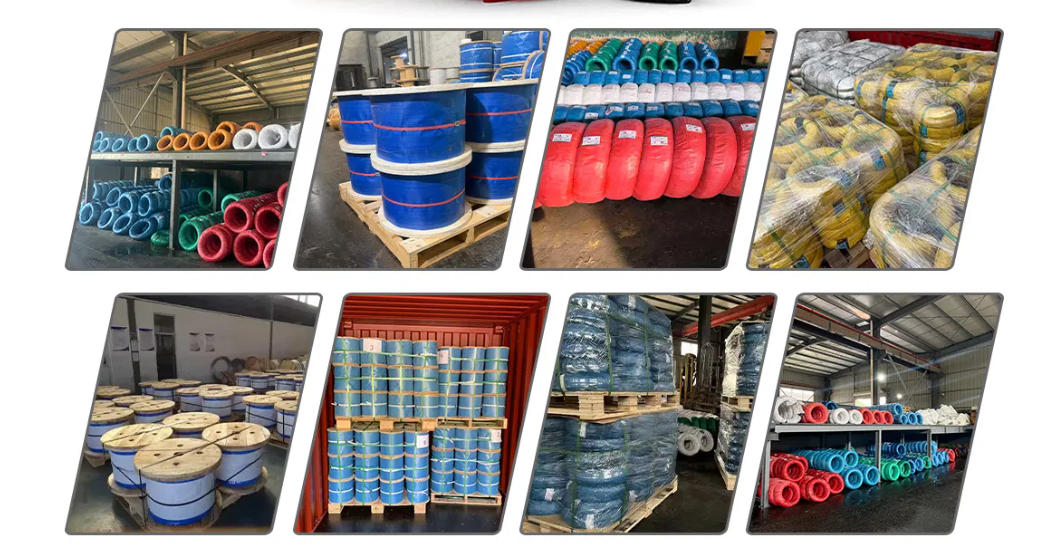
Steel wire ropes are professionally packed with wooden reels, steel frames or compact coiled packaging according to different diameters and lengths. Each rope coil is tightly wound, fixed and wrapped with waterproof plastic film, kraft paper and woven belt. The whole package is moisture-proof, dust-proof, rust-proof and compression-resistant.
All packaging meets international export standards. Custom packaging and logo marking are available according to customers' requirements.
Shipping & Transportation
We support FOB, CFR, CIF and other international trade terms. Goods can be shipped from major ports such as Shanghai and Tianjin.
Before delivery, all products will be strictly inspected to ensure complete specifications, stable quality and intact packaging. We arrange professional loading and secure fixing during shipment to avoid friction, deformation and damage during sea and land transportation.
Fast delivery, reliable packaging and professional shipping service guarantee customers a perfect receiving experience.
Send Inquiry