







316H Stainless Steel High-Carbon
Jan 08, 2026
Leave a message
316H is the high-carbon variant of 316 stainless steel, with controlled carbon content to improve high-temperature creep strength. It combines the molybdenum-containing corrosion resistance of 316 with high-temperature stress resistance, suitable for high-temperature stress-bearing components in medium-corrosion environments.
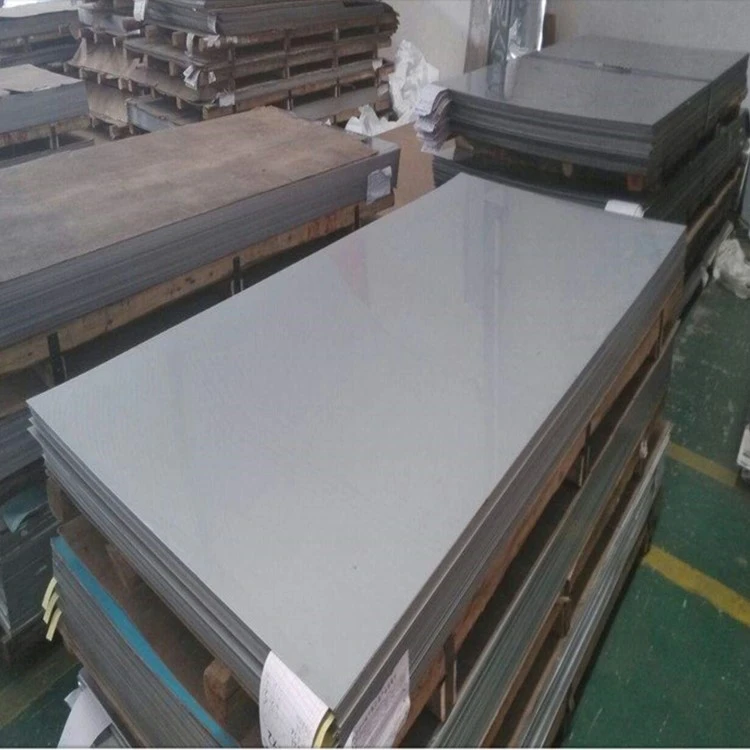
Chemical Composition (wt%): C=0.04-0.10, Cr=16.00-18.00, Ni=10.00-14.00, Mo=2.00-3.00, Si≤1.00, Mn≤2.00, P≤0.045, S≤0.030, Fe=Balance
Mechanical Properties (Annealed): Tensile Strength ≥515MPa, Yield Strength ≥205MPa, Elongation ≥40%, Hardness ≤217HB
Performance Advantages: Excellent high-temperature creep strength (700℃, 1000h creep rupture strength ≥80MPa); good resistance to high-temperature chloride corrosion; stable high-temperature oxidation resistance; suitable for 600-870℃ stress-bearing scenarios.
Applications: High-temperature chemical reaction vessel flanges, boiler superheater tubes (600-870℃), gas turbine fuel system components, high-temperature corrosive medium pipelines in petrochemical industry.
Equivalent Grades: UNS S31609, JIS SUS316H, EN 1.4407, GB 07Cr17Ni12Mo2
Q&A
Q1: What is the advantage of 316H over 304H in high-temperature corrosion environments? A1: The main advantage of 316H over 304H in high-temperature corrosion environments is its superior resistance to high-temperature chloride and weak acid corrosion, thanks to the addition of molybdenum. 304H does not contain molybdenum, so its resistance to pitting and crevice corrosion in high-temperature environments containing chloride ions is poor, making it only suitable for high-temperature oxidizing environments (such as dry high-temperature air). In contrast, 316H contains 2.00-3.00wt% molybdenum, which forms a dense molybdenum-rich oxide film at high temperatures, effectively resisting chloride ion erosion. For example, in high-temperature flue gas containing sulfur dioxide and chloride ions in the petrochemical industry, 304H will experience rapid corrosion, while 316H can maintain stable performance. Additionally, 316H has a higher nickel content than 304H, enhancing the stability of the austenitic structure and improving high-temperature toughness. This makes 316H the preferred material for high-temperature stress-bearing components in medium-corrosion environments.
Q2: What is the post-weld heat treatment standard for 316H? A2: The post-weld heat treatment standard for 316H stainless steel is annealing at 850-900℃, with a holding time of at least 30 minutes per 25mm of thickness, followed by air cooling. This heat treatment is mandatory because welding introduces residual stress in the component, which may lead to stress corrosion cracking in high-temperature and corrosive environments. Annealing at 850-900℃ can effectively eliminate residual stress, reducing the risk of cracking. Meanwhile, this temperature range can dissolve excessive chromium-molybdenum carbides precipitated during welding, avoiding the formation of alloy-depleted zones and restoring the corrosion resistance of the weld area. Compared to 304H, 316H's post-weld heat treatment requires stricter temperature control because molybdenum carbides are more stable and require sufficient temperature to dissolve. Improper heat treatment (such as insufficient temperature or holding time) will reduce the high-temperature performance and corrosion resistance of 316H.
Q3: Can 316 replace 316H in high-temperature stress scenarios? A3: No, 316 cannot replace 316H in high-temperature stress scenarios. The key difference is the high-temperature creep strength, which is determined by the carbon content. 316H has a controlled high carbon content (0.04-0.10wt%), which forms sufficient stable carbides at high temperatures to pin grain boundaries and prevent grain sliding, thereby improving creep strength. At 700℃, the 1000h creep rupture strength of 316H (≥80MPa) is 33% higher than that of 316 (≥60MPa). In high-temperature stress-bearing scenarios such as boiler superheater tubes operating at 700℃, 316 will undergo obvious plastic deformation under long-term stress, leading to component failure, while 316H can maintain structural stability. Additionally, 316H's carbon content balances high-temperature performance and corrosion resistance, while 316's low carbon content results in insufficient carbides at high temperatures, leading to poor creep resistance. Using 316 in high-temperature stress scenarios will pose serious safety hazards.
Q4: What is the significance of carbon content control for 316H? A4: The carbon content control of 316H (0.04-0.10wt%) is crucial for balancing its high-temperature performance and corrosion resistance. The lower limit of 0.04wt% ensures that there is sufficient carbon to combine with chromium and molybdenum at high temperatures to form stable carbides (such as Cr₂₃C₆ and Mo₂C). These carbides can significantly improve high-temperature creep strength, enabling 316H to maintain structural stability under long-term high-temperature and high-stress conditions. The upper limit of 0.10wt% is to avoid excessive carbon, which would lead to excessive carbide precipitation. Excessive carbides will reduce the room-temperature toughness and corrosion resistance of 316H, especially increasing the risk of intergranular corrosion. Compared to 316 (C≤0.08wt%), 316H's carbon content range is more precise, ensuring that it has both higher high-temperature creep strength than 316 and better corrosion resistance than ordinary high-carbon stainless steels. This precise carbon content control is the key to 316H's application in high-temperature stress-bearing corrosion environments.
Q5: What are the typical application scenarios of 316H in the petrochemical industry? A5: 316H has several typical application scenarios in the petrochemical industry. First, high-temperature chemical reaction vessel flanges: these components operate at 600-800℃ and bear high pressure, requiring both high-temperature creep strength and corrosion resistance to reaction media (such as weak acids and organic solvents). Second, high-temperature corrosive medium pipelines: used to transport high-temperature flue gas, steam, or chemical media containing chloride ions, where 316H's molybdenum content resists corrosion and high carbon content ensures high-temperature strength. Third, cracking furnace auxiliary components: in ethylene cracking furnaces, 316H is used for components such as furnace tubes and supports, which operate at high temperatures and require resistance to high-temperature oxidation and creep. Fourth, gas turbine fuel system components: these components are exposed to high-temperature fuel gas and require high-temperature strength and corrosion resistance. Fifth, high-temperature heat exchanger tubes: used in heat exchangers for high-temperature corrosive media, where 316H's comprehensive performance ensures long-term stable operation. In these scenarios, 316H's advantages of combining high-temperature strength and corrosion resistance are fully utilized.
Send Inquiry