







SUS316L Equivalent Materials.PDF
Sep 28, 2026
Leave a message
What is SUS316L stainless steel?
SUS316L is a low-carbon, molybdenum-bearing austenitic stainless steel that complies with Japanese Industrial Standards (JIS).
Its primary international equivalents include AISI 316L, UNS S31603, EN 1.4404, X2CrNiMo17-12-2, and 022Cr17Ni12Mo2. SUS316L was developed by adding molybdenum (Mo) to the base composition of SUS304, which significantly enhances properties such as resistance to chloride corrosion, pitting corrosion, crevice corrosion, and corrosion in welded structures. Consequently, SUS316L is typically selected for applications where the corrosion resistance of SUS304 might be insufficient.
Click to download SUS316L Stainless Steel Specification.PDF

What is the molybdenum (Mo) content of SUS 316L?
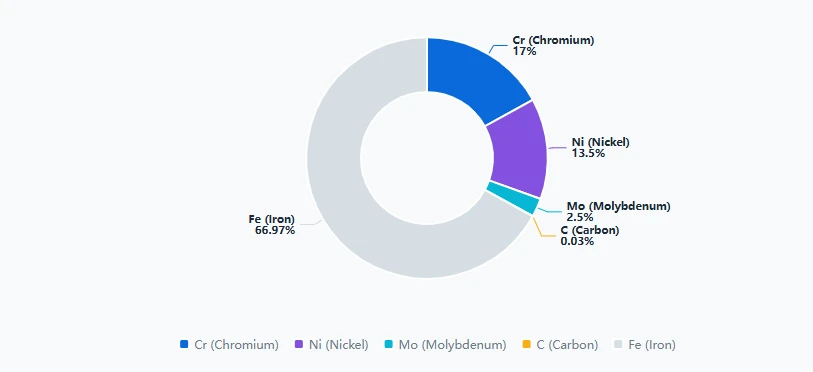
Mo content is 2.0–3.0%. Molybdenum is the key element responsible for the pitting and chloride resistance of 316L; it raises the PREN value from 18 (for 304) to over 26, making it the decisive factor in choosing 316L over 304.
What is the difference between SUS316L and SUS316?
The main difference between SUS316L and standard SUS316 is the carbon content. SUS316L limits carbon to ≤0.030%, reducing chromium carbide precipitation during welding and improving corrosion resistance in welded structures. The addition of 2–3% molybdenum (Mo) significantly enhances resistance to chloride-induced pitting and crevice corrosion.
What is the equivalent grade for SUS316L?
The Japanese standard uses the prefix "SUS," the US standard uses "316L," the European standard uses "1.4404," and the Chinese standard uses "022Cr17Ni12Mo2."
Within the European standard, there are two similar grades: 1.4404 (X2CrNiMo17-12-2) and 1.4435 (X2CrNiMo18-14-3). The former has a nickel content of 12–15%, while the latter has 14–16%; 1.4435 is the higher-end option, so it must be explicitly specified during procurement.
When placing an order, always confirm which standard the supplier is following to avoid issues arising from "different tolerances for the same grade."
| Standard System | Country/Region | Equivalent Grade |
|---|---|---|
| JIS | Japan | SUS316L |
| ASTM | USA | 316L |
| UNS | USA | S31603 |
| EN | Europe | 1.4404 |
| DIN | Germany | X2CrNiMo17-12-2 |
| GB/T | China | 022Cr17Ni12Mo2 |
| GOST | 03Х17Н14М2 | |
| BS | UK | 316S11 |
SUS316L Chemical Composition Specification(JIS G4305 vs ASTM A240)
| Standard / Grade | C | Si | Mn | P | S | Cr | Ni | Mo | N | Balance |
|---|---|---|---|---|---|---|---|---|---|---|
| JIS G4305 SUS316L (%) | ≤0.030 | ≤1.00 | ≤2.00 | ≤0.045 | ≤0.030 | 16.0–18.0 | 12.0–15.0 | 2.0–3.0 | - | Fe |
| ASTM A240 316L (%) | ≤0.030 | ≤0.75 | ≤2.00 | ≤0.045 | ≤0.030 | 16.0–18.0 | 10.0–14.0 | 2.00–3.00 | ≤0.10 | Fe |
SUS316L Mechanical Properties (Annealed vs Cold Worked Condition)
| Property | Annealed Condition (JIS G4305) | Cold Worked Condition | Unit |
|---|---|---|---|
| Tensile Strength (σb) | ≥480 (Typical: 480–700) | ~900–1200 | MPa |
| Yield Strength (σ0.2) | ≥170 (Typical: 170–310) | 400–800 | MPa |
| Elongation (δ5) | ≥40% | 20–35 | % |
| Hardness | ≤95 HRB / ≤217 HB | ~250–300 HB | - |
| Elastic Modulus (E) | ~193 | ~193 | GPa |
| Poisson's Ratio (ν) | 0.29 | 0.29 | - |
SUS316L Corrosion Resistance Performance
| Corrosion Type | SUS304 | SUS316L | Description |
|---|---|---|---|
| Atmospheric / Fresh Water Corrosion | ★★★★★ | ★★★★★ | Both grades provide excellent corrosion resistance in normal atmospheric and freshwater environments |
| Dilute Acid (H₂SO₄ <10%) | ★★★ | ★★★★★ | Molybdenum (Mo) addition significantly improves acid corrosion resistance |
| Chloride / Seawater Corrosion | ★★ | ★★★★★ | The most important application advantage of SUS316L due to improved chloride resistance |
| Pitting Corrosion | Low | High (PREN ≈ 24–26) | PREN = %Cr + 3.3 × %Mo + 16 × %N; higher PREN indicates better pitting resistance |
| Crevice Corrosion | Low | High | Critical performance factor for chemical equipment, marine systems, and confined environments |
| Intergranular Corrosion (After Welding) | Medium (304L recommended) | Excellent (L-grade natural resistance) | Low carbon content (C ≤0.03%) reduces chromium carbide precipitation and sensitization risk |
| High-Temperature Oxidation (800°C) | ★★★★ | ★★★★ | Similar oxidation resistance under comparable conditions |
304 VS.316 VS.316L: PREN
Formula:PREN = %Cr + 3.3 × %Mo + 16 × %N
Although 316L (PREN ≈ 24) is suitable for various chloride-containing environments, its corrosion resistance falls below the threshold required for seawater applications. For conditions involving full immersion in seawater, 316LN (PREN ≈ 29)-while approaching that threshold-fails to meet the requirements; only 2205 duplex stainless steel (PREN ≈ 35) reliably complies with the standards. Consequently, offshore engineering and seawater desalination projects typically specify the use of duplex or super-austenitic stainless steels rather than 316L.
| Grade | Cr (%) | Mo (%) | N (%) | PREN Value |
|---|---|---|---|---|
| 304 | 18 | 0 | 0 | 18.0 |
| 316 | 17 | 2.5 | 0 | 25.25 |
| 316L | 17 | 2.5 | 0 | 25.25 |
| 316LN | 17 | 2.5 | 0.15 | 27.65 |

SUS316L Materials Applications
| Industry | Typical Applications |
|---|---|
| Marine / Shipbuilding | Ship structures, seawater piping systems, offshore platforms, port facilities |
| Chemical / Pharmaceutical Industry | Reactors, heat exchangers, distillation columns, process piping |
| Medical / Biotechnology | Surgical instruments, implants, dental equipment, medical devices |
| Food Processing | High-salt food processing equipment, storage tanks, pipelines |
| Energy Industry | Flue Gas Desulfurization (FGD) systems, nuclear power equipment, energy processing units |
| Architecture / Decoration | Coastal curtain walls, luxury architectural components, decorative structures |
| Automotive Industry | Exhaust components, catalytic converter housings, heat-resistant parts |
SUS316L Stainless Steel Price Per Kg
The global price of SUS316L stainless steel typically ranges from $3.00 to $5.00 per kilogram, varying based on regional markets, product forms (sheets, plates, or bars), and order volumes.
Current market price breakdown:
Sheets and plates (FOB China): Cold-rolled sheets are priced at approximately $3.80–$4.50/kg, while hot-rolled plates range from $3.20 to $4.00/kg.
Special forms and specifications: Prices for high-end specialty products, precision bars, or small-batch cut-to-size pieces may rise to $5.50–$7.50/kg or higher, whereas prices for bulk orders directly from steel mills are significantly lower.
Nickel Price :SUS316L Price Relationship (FOB , USD/kg)

| LME Nickel Price (USD/ton) | Estimated 316L/2B Price (USD/kg) | Estimated 304/2B Price (USD/kg) | 304 → 316L Price Premium |
|---|---|---|---|
| $14,000 | 2.80–3.30 | 2.20–2.70 | 26% |
| $16,000 | 3.00–3.55 | 2.40–2.95 | 27% |
| $18,000 | 3.30–3.95 | 2.65–3.25 | 28% |
| $20,000 | 3.60–4.30 | 3.00–3.55 | 28–29% |
| $22,000 | 3.90–4.65 | 3.25–3.85 | 29% |
316L vs 304 vs 316 Price Difference
| Comparison Factor | 304 | 316L | 316L Premium |
|---|---|---|---|
| 2026 China Domestic Price (USD/ton) | $1,900–2,100 | $2,400–2,800 | +26%–33% |
| 2026 USA Delivered Price (USD/lb) | $1.50–1.80 | $2.05–2.55 | +37%–42% |
| Main Premium Sources | - | Mo addition + higher Ni content + low-carbon production process | Mo accounts for approximately 15% of the premium |
SUS316 Stainless Steel Supplier
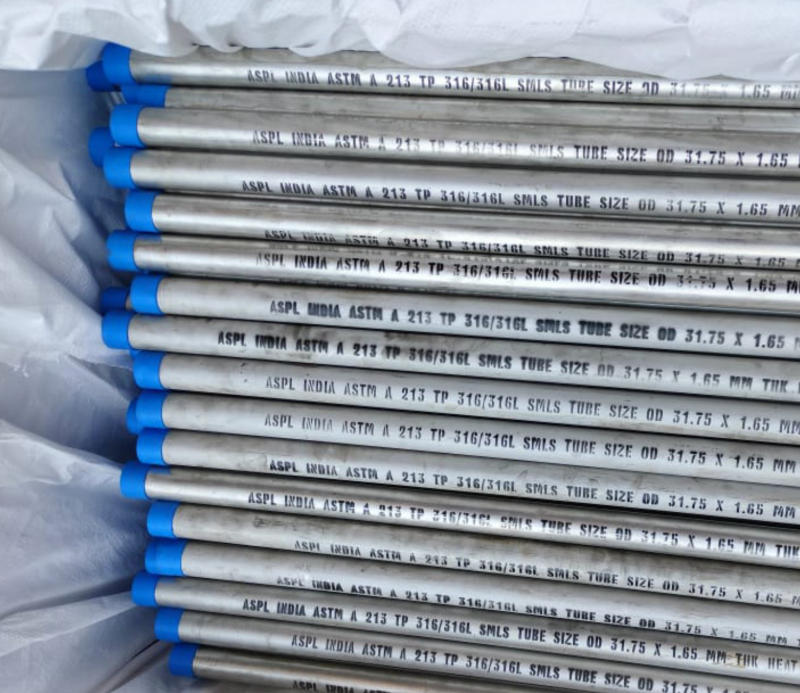
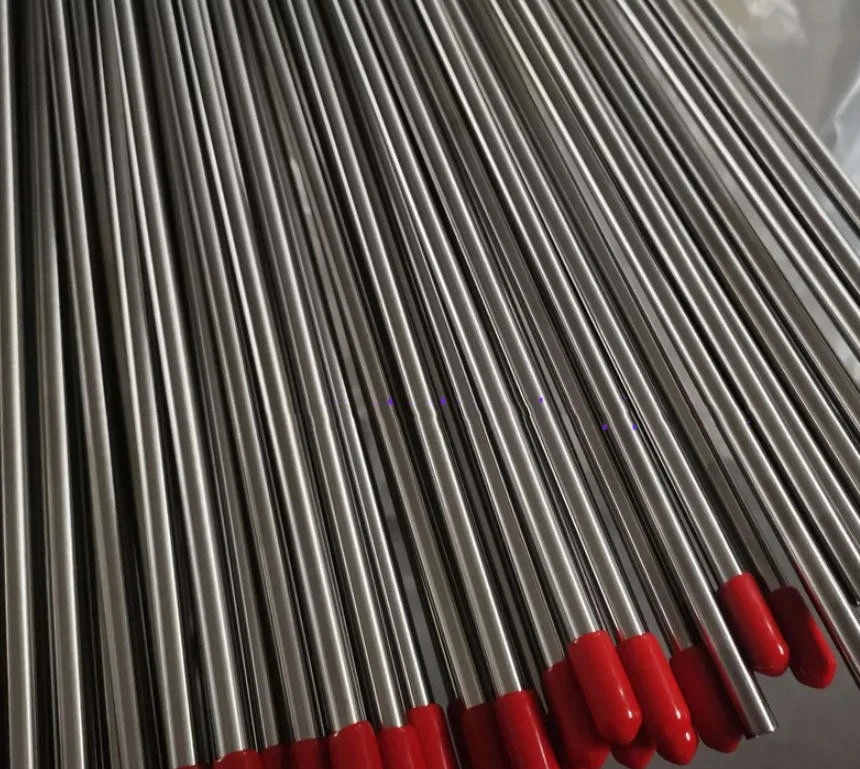
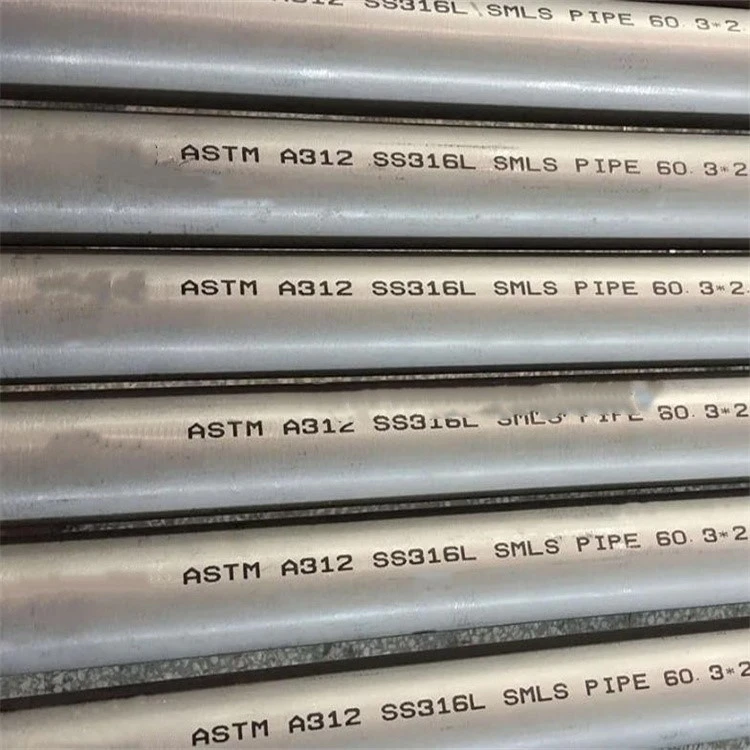
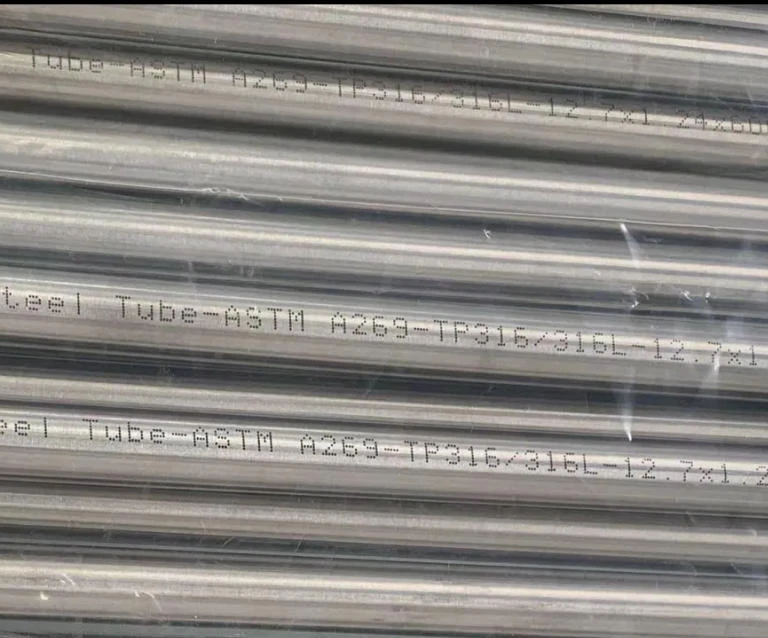
Gnee supplies SUS316L stainless steel plates, pipes (including seamless and welded), coils, bars, and machined components in accordance with international standards.
Our supply capabilities include:
Products meeting SUS316L / ASTM 316L / EN1.4404 specifications
Compliance with ASTM A240, A312, and A213 standards
EN10204 3.1 material certificates provided for every batch
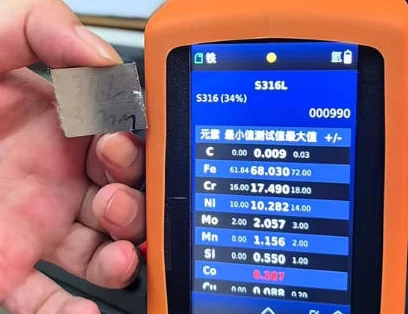
PMI (Positive Material Identification) verification
Mechanical property testing
UT (Ultrasonic) / ET (Eddy Current) / Hydrostatic testing
Custom cutting and surface finishing services
For global buyers seeking corrosion-resistant stainless steel with full traceability, SUS316L remains one of the most widely selected engineering materials.


To provide more tailored recommendations, could you please specify:
What specific product form do you require (e.g., plate, pipe, rod, etc.)?
In what operating conditions or applications will the material be used?
FAQ
Q: Is SUS 316L magnetic?
In the annealed state, it is generally non-magnetic (not attracted to magnets); however, magnetism increases after cold working processes like drawing or stamping. This is a normal phenomenon and does not indicate material impurity.
Q: Are SUS 316L and 316L exactly the same?
They are essentially the same, though the European standard 1.4404 specifies a nickel (Ni) range of 12–15% (matching JIS), whereas ASTM 316L specifies 10–14%. Additionally, the European standard 1.4435 (Ni 14–16%) is a high-end variant that must be explicitly specified during procurement.
Q: What is the high-temperature limit for SUS 316L?
The operating temperature range is approximately -196°C to 870°C; it does not undergo hardening via heat treatment. Long-term use above 870°C may lead to sigma (σ) phase precipitation, causing embrittlement.
Q: What is the difference between food-grade 316L and standard 316L?
Food-grade material imposes stricter limits on harmful elements (such as lead, arsenic, and cadmium) and compositional specifications; it must comply with food-contact certifications (e.g., FDA 21 CFR, EU 1935/2004).
Q: How do I choose between SUS 316L and 2205 duplex stainless steel?
2205 offers approximately twice the strength of 316L and superior corrosion resistance (PREN ≈ 35), but it has poorer weldability and higher costs. 316L is generally sufficient for standard chemical or marine applications, whereas 2205 is the choice for scenarios involving extreme corrosion and high stress.
Q: Does SUS 316L require solution treatment after welding?
The "L" grade has an extremely low carbon content, so it generally maintains its corrosion resistance without the need for additional solution treatment. However, for weldments with large thicknesses (>25 mm) or those involving multiple passes, a post-weld solution treatment (1010–1150 °C, water quench) is recommended to restore optimal properties.
Send Inquiry