

SUS321 Material Specification.PDF
Sep 30, 2026
Leave a message
If you are looking for an austenitic stainless steel that combines High-Temperature Resistance And Excellent Resistance To Intergranular Corrosion, SUS 321 Stainless Steel is a material worth considering. SUS 321 is a Titanium-Stabilized Austenitic Stainless Steel with a titanium content of ≥5×C%, which effectively prevents chromium carbide precipitation and reduces the risk of intergranular corrosion. It delivers excellent performance in high-temperature service environments ranging from 430–900°C.
Click to download SUS321 Material Specification.PDF

What is SUS 321 stainless steel?
SUS 321 is a titanium-stabilized austenitic stainless steel defined by the Japanese Industrial Standards (JIS), belonging to the 18Cr-9Ni-Ti system. Its key characteristic is the addition of titanium (Ti ≥ 5 × C%) to form titanium carbide (TiC) by binding with carbon; this effectively prevents the precipitation of chromium carbide (Cr₂₃C₆) at grain boundaries, thereby fundamentally eliminating the risk of intergranular corrosion caused by sensitization.
Compared to the general-purpose SUS 304, SUS 321 offers superior oxidation resistance, creep strength, and post-welding corrosion resistance in high-temperature service environments (430–900°C). It is widely used in applications such as petrochemical heat exchangers, aero-engine exhaust components, boiler piping, and internal components for high-temperature furnaces.
What is the difference between SUS 321 and 321H?
SUS 321 has a carbon content of ≤0.08%, while 321H contains 0.04–0.10% carbon to provide improved creep strength and stress rupture resistance at elevated temperatures. Both grades contain Cr 17–19%, Ni 9–13%, and Ti ≥5×C. SUS 321 is commonly used for welded components and heat exchangers, while 321H is preferred for pressure vessels, furnace parts, and long-term service above 500°C where higher creep resistance is required.
Chemical Composition of SUS 321 Stainless Steel (Mass Fraction, %)
| Element | SUS 321 | SUS 321H |
|---|---|---|
| C (Carbon) | ≤0.08 | 0.04–0.10 |
| Si (Silicon) | ≤1.00 | ≤0.75 |
| Mn (Manganese) | ≤2.00 | ≤2.00 |
| P (Phosphorus) | ≤0.045 | ≤0.045 |
| S (Sulfur) | ≤0.030 | ≤0.030 |
| Cr (Chromium) | 17.00–19.00 | 17.00–19.00 |
| Ni (Nickel) | 9.00–13.00 | 9.00–12.00 |
| Ti (Titanium) | ≥5×C% | 4×(C+N)–0.70 |
Mechanical Properties of SUS 321 Stainless Steel (Annealed Condition)
The following are the mechanical property requirements of SUS 321 stainless steel in the annealed condition, according to ASTM A240/A240M and ASME SA240 standards.
| Property | Value |
|---|---|
| Tensile Strength | ≥515 MPa (ksi) |
| Yield Strength (0.2% Offset) | ≥205 MPa (ksi) |
| Elongation (50 mm Gauge Length) | ≥40 % |
| Hardness (Rockwell B) | ≤95 HRB |
| Hardness (Brinell) | ≤217 HB |
SUS 321 Stainless Steel Standard and Grade Comparison
| Standard System | Grade / Designation |
|---|---|
| JIS (Japan) | SUS 321 |
| ASTM (USA) | S32100 / Type 321 |
| EN/DIN (Europe) | X6CrNiTi18-10 / 1.4541 |
| BS (United Kingdom) | 321S31 |
| GB (China) | 06Cr18Ni11Ti / 1Cr18Ni9Ti |
| GOST (Kazakhstan) | 08Kh18N10T |
| ISO | 15 |
Applicable Standard Documents:
| Standard | Product Form |
|---|---|
| JIS G4303 | Stainless Steel Bars |
| JIS G4304 | Hot-Rolled Stainless Steel Plates, Sheets and Strips |
| JIS G4305 | Cold-Rolled Stainless Steel Plates, Sheets and Strips |
| JIS G4309 | Stainless Steel Welded Tubes |
| JIS G4314 | Stainless Steel Wires |
Note: SUS 321 is an internationally recognized titanium-stabilized austenitic stainless steel grade. Equivalent grades may vary slightly in chemical composition and mechanical requirements depending on the applicable standard. For export orders, buyers should confirm the required specification, product standard, and inspection requirements before production.
SUS 321 vs SUS 304 vs SUS 316:Key differences
SUS 321 achieves its excellent high-temperature performance through Titanium Stabilization Technology. The controlled titanium addition (Ti ≥5×C% For SUS 321) prevents chromium carbide formation during heating or welding, reducing the risk of intergranular corrosion. Compared with SUS 304, SUS 321 provides better structural stability for long-term service in high-temperature environments, making it suitable for Heat Exchangers, Furnace Components, Chemical Processing Equipment, Aerospace Parts, And Welded High-Temperature Piping Systems.
| Parameter | SUS 321 | SUS 304 | SUS 316 |
|---|---|---|---|
| C (Carbon) max | 0.08 | 0.08 | 0.08 |
| Cr (Chromium) | 17–19 | 18–20 | 16–18 |
| Ni (Nickel) | 9–13 | 8–10.5 | 10–14 |
| Mo (Molybdenum) | - | - | 2–3 |
| Ti (Titanium) | ≥5×C | - | - |
| Tensile Strength (MPa) | ≥515 | ≥515 | ≥515 |
| Yield Strength (MPa) | ≥205 | ≥205 | ≥205 |
| Reference Price (RMB/kg) | 12.7–14.5 | 9.0–12.0 | 16.0–22.0 |

Applications of SUS 321 Stainless Steel
•Aerospace: Jet engine components, aircraft exhaust manifolds, and heat shields.
• Automotive Industry: Heavy-duty exhaust systems, catalytic converter housings, and firewalls.
• Petrochemical and Chemical Industries: High-temperature piping, furnace tubes, reaction vessels, and refinery machinery.
• Heat Treatment: Heat exchangers, annealing covers, expansion joints, and industrial furnace components.
• Power Generation: Boiler casings, superheater tubes, and exhaust stacks.
• Food and Pharmaceutical: Sanitary storage tanks, reaction vessels, and sterilizable processing equipment.

If you'd like, let me know:
• What specific project or part you are building
• The operating temperatures and environment it will face
I can help you confirm if SUS 321 is the right grade or suggest an alternative?
Global SUS321 Stainless Steel Price Overview (Q2–Q3 2026)

| Region | Price (USD/kg) | Quarter-on-Quarter Change | Key Driving Factors |
|---|---|---|---|
| North America | $2.86–3.01 | +2% to +4.8% | Weakening automotive and machinery demand, increasing import competition |
| Europe | $2.78–2.91 | -1.4% to +2.5% | Construction recovery and slight increases in raw material costs |
| Northeast Asia | $1.81–1.83 | +1.7% to +8.3% | Strong automotive and construction demand, rising nickel/chromium costs, tighter supply |
| Southeast Asia | $2.51–2.55 | +1.2% to +6.8% | Strong demand from food processing and construction sectors, increasing nickel and chromium costs |
| Middle East | $2.58–2.64 | +0.4% to +6.9% | Moderate demand growth and increased imports |
| India | $2.40–2.45 | +0.4% to +6.1% | Sufficient supply and active import market |
SUS 321 Stainless Steel Price per kg Reference (2026) – FOB China
In 2026, SUS 321 stainless steel exported from China generally ranges from approximately $1.80/kg for standard cold-rolled sheets to over $8.00/kg for precision products and customized components. The final FOB quotation depends on nickel and titanium alloy costs, product dimensions, production quantity, testing requirements, and international freight conditions.
| Product Form | Specification / Grade | FOB China Reference Price (USD/kg) |
|---|---|---|
| SUS 321 Cold Rolled Sheet / Coil (2B Finish) | Thickness 0.3–6 mm, ASTM A240 / JIS G4305 | $1.80–2.40/kg |
| SUS 321 Hot Rolled Plate (No.1 Finish) | Thickness 6–50 mm, ASTM A240 / JIS G4304 | $1.90–2.60/kg |
| SUS 321 Seamless Pipe | ASTM A312 TP321, OD 6–630 mm | $2.80–4.50/kg |
| SUS 321 Welded Pipe | ASTM A312 TP321 / JIS G3459 | $2.20–3.50/kg |
| SUS 321 Round Bar | ASTM A276 / A479, Bright / Peeled Surface | $2.50–4.20/kg |
| SUS 321 Wire / Welding Wire | ASTM A580 / AWS ER321 | $4.00–6.50/kg |
| SUS 321 Foil / Precision Strip | Thickness 0.01–0.1 mm | $8.00–15.00/kg |
| SUS 321 Forged Fittings / Flanges | ASTM A182 F321, ANSI B16.5/B16.9 | $4.00–8.00/kg |
Procurement Considerations
Specification Standards: Clearly specify JIS G4305, ASTM A240, or EN 10088-2 to avoid grade confusion.
Titanium Content Verification: Require a chemical analysis report confirming Ti ≥ 5×(C+N).
Heat Treatment Condition: Annealed is the default; cold-worked conditions require separate confirmation.
MOQ and Lead Time: Production volume for 321 is lower than for 304; lead times are typically 2–4 weeks longer.
Certification: Request certifications such as PED, ASME, or NADCAP (aerospace) as required.
SUS 321 Stainless Steel Suppliers and Manufacturers
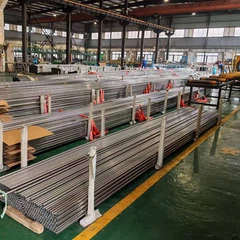
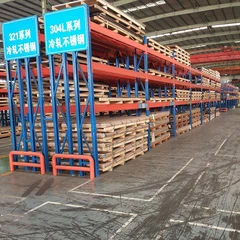
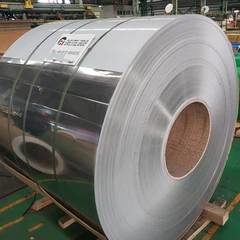
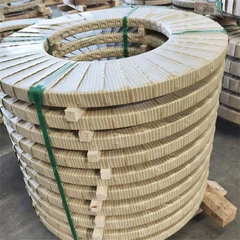
Gnee Stainless is a professional supplier and manufacturer of SUS 321 stainless steel in China, offering ASTM A240 321 plates and coils, ASTM A312 TP321 seamless and welded pipes, bars, pipe fittings, and custom products. Services such as EN10204 3.1 Material Test Certificates (MTC), PMI (Positive Material Identification) testing, dimensional inspections, and custom fabrication are available, with products meeting international standards including ASTM, JIS, DIN, and EN.
SUS 321 Stainless Steel Specification
| Product Form | Common Specification Range | Typical MOQ | Reference Lead Time |
|---|---|---|---|
| Cold Rolled Sheet / Coil | 0.3–3.0 mm × 1000/1219/1500 mm | 1 MT | 7–15 days |
| Hot Rolled Plate | 3.0–80 mm × 1500/1800/2000 mm | 2 MT | 15–30 days |
| Seamless Pipe | OD 6–325 mm × WT 0.5–30 mm | 500 kg | 10–25 days |
| Welded Pipe | OD 8–630 mm × WT 0.3–12 mm | 500 kg | 7–15 days |
| Round Bar / Square Bar / Hex Bar | Φ6–300 mm | 500 kg | 10–20 days |
| Forgings | Customized according to drawings | Negotiable | 30–60 days |
Note: Lead times may vary depending on product dimensions, surface requirements, testing standards, production schedule, and order quantity. For export orders, SUS 321 products can be supplied with EN10204 3.1 Material Test Certificates (MTC), PMI testing, dimensional inspection, and customized packing solutions according to customer requirements.


FAQ
Q: Can SUS 321 be welded? What welding consumables are required?
Yes, it has excellent weldability. Recommended consumables include E309L/E321 or ER309L/ER321. Titanium stabilization makes the heat-affected zone (HAZ) resistant to sensitization, so post-weld annealing is usually unnecessary.
Q: Is SUS 321 magnetic?
It is non-magnetic in the annealed state (austenitic structure). Slight magnetism may develop after cold working, but this can be eliminated by annealing.
Q: What is the maximum service temperature for SUS 321?
It can withstand intermittent service up to ~900°C (1652°F); for continuous service, ≤870°C (1600°F) is recommended. Grade 310S is recommended for temperatures exceeding this limit.
Q: Can SUS 321 be used in the food industry?
Yes. Its chromium and nickel content is comparable to 304, meeting food-grade requirements; however, due to higher costs, it is generally used only in applications requiring high-temperature welding or sterilization.
Q: How difficult is it to machine SUS 321?
Machinability is moderate, similar to 304. As an austenitic steel, it is prone to work hardening; tools with large rake angles and adequate cooling are required. It offers excellent deep-drawing and bending properties.
Q: How do I choose between SUS 321 and 347?
Both are stabilized austenitic steels. 321 is stabilized with titanium, while 347 is stabilized with niobium (Nb). 321 offers slightly better high-temperature strength, whereas 347 has slightly better weldability and is usually lower in cost. 321 is more common in aerospace applications.
Q: Is the corrosion resistance of SUS 321 superior to that of 304?
They are similar at room temperature. The advantage of 321 lies in its resistance to high-temperature oxidation and intergranular corrosion in the weld heat-affected zone, rather than in room-temperature corrosion resistance. If superior corrosion resistance is required (e.g., in chloride-containing environments), 316L should be selected.
Q: What are the delivery conditions for SUS 321?
Common conditions: Annealed (A), cold-worked (H/1/2H/3/4H), and solution-annealed. Cold-rolled sheets/coils are typically supplied in the annealed state or with 1/2H–3/4H hardness.
Send Inquiry