







AMS 5571 347 aerospace-grade Stainless Steel tubing
Sep 17, 2026
Leave a message
If you are seeking stainless steel tubing capable of continuous service between 800°F and 1650°F (427–900°C)-without the need for post-weld solution annealing and with excellent resistance to intergranular corrosion-AISI 347 seamless tubing is the premier stabilized austenitic stainless steel choice for applications such as aircraft engine exhaust systems, high-temperature chemical piping, and heat exchangers. Through dual stabilization with Niobium (Nb) and Tantalum (Ta), it completely eliminates the risk of grain-boundary carbide precipitation within the chromium-carbide precipitation range (800–1500°F) while offering superior high-temperature creep strength and stress-rupture properties compared to Grade 321.
What is AMS 5571?
AMS 5571 is an aerospace material specification issued by SAE International covering seamless, corrosion- and heat-resistant Type 347 stainless steel tubing (UNS S34700) in the solution heat-treated condition.
What is 347 aerospace-grade seamless stainless steel tubing?
AISI 347 aerospace-grade seamless stainless steel tubing (UNS S34700) is a niobium-tantalum stabilized austenitic stainless steel product manufactured via piercing and cold-drawing or cold-rolling processes, ensuring the absence of weld-related weak points. Its composition-featuring 17–19% Cr, 9–13% Ni, and Nb ≥ 10×C%-enables it to maintain structural integrity and resistance to intergranular corrosion within the high-temperature range of 800–1650°F. It is widely used in applications such as aero-engine exhaust manifolds, turbine hot-gas ducts, chemical superheaters, and nuclear-grade heat exchangers.
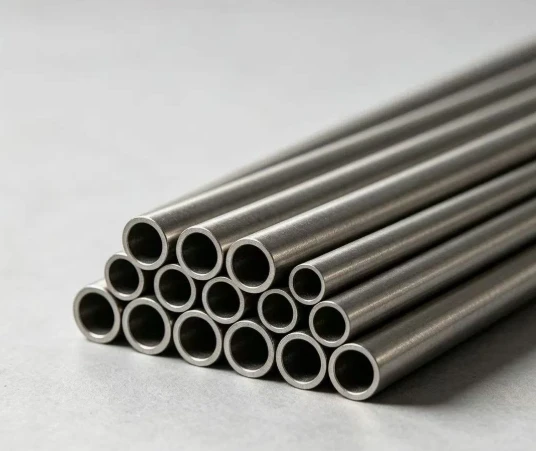
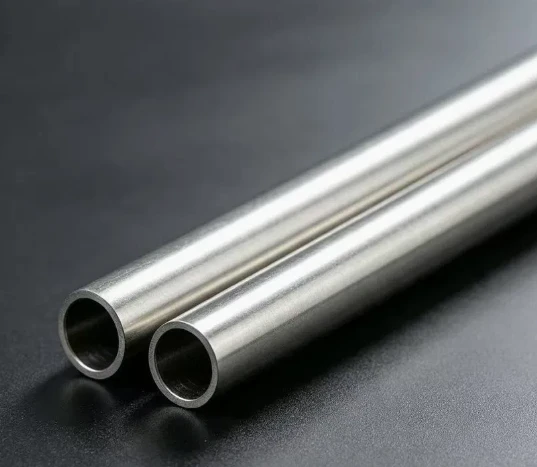
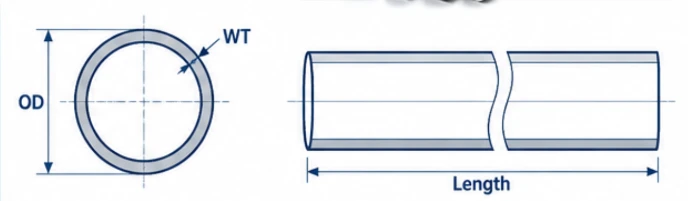
AMS 5571 TP347 Stainless Steel Tube Specification
|
Item |
Example Specification |
|---|---|
|
Material Grade |
AISI 347 / UNS S34700 (or 347H / S34709) |
|
Applicable Standard |
AMS 5571 |
|
Outside Diameter (OD) |
1/2" (12.7 mm) ± 0.05 mm |
|
Wall Thickness |
0.065" (1.65 mm) ± 5% |
|
Length |
6 m (20 ft) / Custom |
|
Delivery Condition |
Annealed (Solution Annealed) |
|
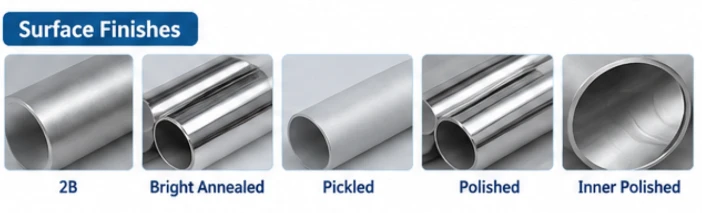
Surface Finish |
2B / Bright Annealed / Inner Polished |
|
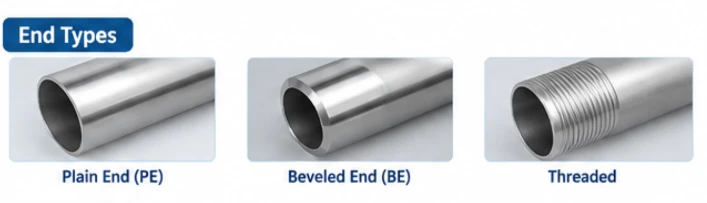
End Type |
Plain End + Protective Caps |
|
Quantity |
500 kg |
|
Inspection Requirements |
EN 10204 3.2 + PMI + Eddy Current Testing (ET) |
|
Certificates |
MTC + Individual Tube ET Reports + PMI Reports |
|
Packaging |
Wooden Cases + Moisture-Proof Film + Plastic End Caps + Labels |
|
Trade Terms |
FOB Shanghai / CIF Long Beach |
|
Lead Time |
25–35 Days |
|
Special Requirements |
NADCAP Certification / AS9100 / Aerospace Material Approval |
Chemical Composition Comparison: TP347 vs TP347H
|
Cr (Chromium) |
17.0–19.0% |
17.0–19.0% |
17.0–19.0% |
18.0–20.0% |
|
Ni (Nickel) |
9.0–13.0% |
9.0–13.0% |
9.0–12.0% |
8.0–11.0% |
|
Mn (Manganese) |
≤ 2.00% |
≤ 2.00% |
≤ 2.00% |
≤ 2.00% |
|
Si (Silicon) |
≤ 1.00% |
≤ 1.00% |
≤ 1.00% |
≤ 1.00% |
|
P (Phosphorus) |
≤ 0.045% |
≤ 0.045% |
≤ 0.045% |
≤ 0.045% |
|
S (Sulfur) |
≤ 0.030% |
≤ 0.030% |
≤ 0.030% |
≤ 0.030% |
|
Nb (Niobium / Cb) |
≥ 10×C% and ≥ 1.00% |
≥ 8×C% and ≥ 1.00% |
- |
- |
|
Ti (Titanium) |
- |
- |
≥ 5×C% and ≥ 0.70% |
- |
|
Mo (Molybdenum) |
- |
- |
- |
- |
Aerospace-Grade Mechanical Properties By Tube Diameter (AMS 5571)
|
Nominal Outside Diameter (OD) |
Nominal Wall Thickness |
Tensile Strength UTS (ksi) |
Yield Strength YS (ksi) |
Elongation |
|---|---|---|---|---|
|
≤ 0.188" |
≤ 0.016" |
75–120 max |
- |
35% |
|
≤ 0.188" |
> 0.016" |
75–105 max |
30 min |
35% |
|
> 0.188"–0.500" |
≤ 0.010" |
75–115 max |
30 min |
35% |
|
> 0.188"–0.500" |
> 0.010" |
75–105 max |
- |
35% |
|
> 0.500" |
All wall thicknesses |
75–100 max |
30 min |
35% |

How do you calculate the pressure-bearing capacity of 347 piping?
Use the ASME B31.3 formula (or B31.1):

P = Design pressure
D = Outside diameter
S = Allowable stress (refer to ASME Section II Part D; for 347 at 800°F, S ≈ 18,000 psi)
E = Joint factor (seamless pipe = 1.0)
Y = Coefficient (= 0.4)
AMS 5571 347 aerospace-grade Stainless Steel tubing Applications
|
Component / Location |
Function |
Typical Dimensions |
Applicable Standard |
|---|---|---|---|
|
Turbine Exhaust Manifold (Header) |
Directs high-temperature exhaust gases |
OD 1"–4"; Wall 0.065"–0.120" |
AMS 5571 |
|
Engine Hot-Gas Tube |
Bleed air / cooling air |
OD 1/4"–1"; Wall 0.028"–0.065" |
AMS 5571 |
|
APU Exhaust |
Auxiliary power unit exhaust |
OD 2"–6" |
AMS 5571 / MIL-T-8808 |
|
Fuel Heating Line |
Low-temperature fuel heating |
OD 1/2"–1" |
AMS 5571 |
|
Expansion Joint / Bellows |
Thermal expansion compensation |
Custom |
Customer-Specified |
347 aerospace-grade tubing Price per kg
|
Item |
Price Range (USD/kg) |
Remarks |
|---|---|---|
|
304 Seamless Pipe (Benchmark) |
$3.50–$5.50 |
Depends on specifications and wall thickness |
|
347 Seamless Pipe |
$5.00–$8.00 |
+30%–50% vs. 304 |
|
347H Seamless Pipe |
$5.50–$9.00 |
Slightly higher than 347 |
|
321 Seamless Pipe (Comparison) |
$4.50–$7.00 |
10%–20% lower than 347 |
|
347 Aerospace Grade (AMS 5571) |
$8.00–$15.00+ |
Includes NADCAP certification + batch-by-batch testing |
To provide you with a more accurate quote, could you please provide the following information?
Required outer diameter (OD) and wall thickness?
Estimated order quantity (in kilograms or feet)?
Are there any specific aerospace specifications or testing requirements (e.g., AMS standards)?
What Is the Typical MOQ and Lead Time for 347 Stainless Steel Tubes?
|
Item |
Typical Range |
|---|---|
|
MOQ (Industrial Grade) |
500 kg–1 ton |
|
MOQ (Aerospace Grade, AMS 5571) |
100–500 kg |
|
Lead Time (Standard Sizes, In Stock) |
7–15 days |
|
Lead Time (Custom Sizes) |
25–45 days |
|
Lead Time (Aerospace Grade + Individual Tube Testing) |
30–60 days |
Recommendation: Place orders for aerospace projects 3–4 months in advance, as production capacity for AMS 5571 tubing is limited and individual eddy-current testing is time-consuming.
We offer free samples (1–2 pieces, ≤ 1 m) with freight collect.
Aerospace-grade samples must be taken from certified heats; stock remnants are not permitted.
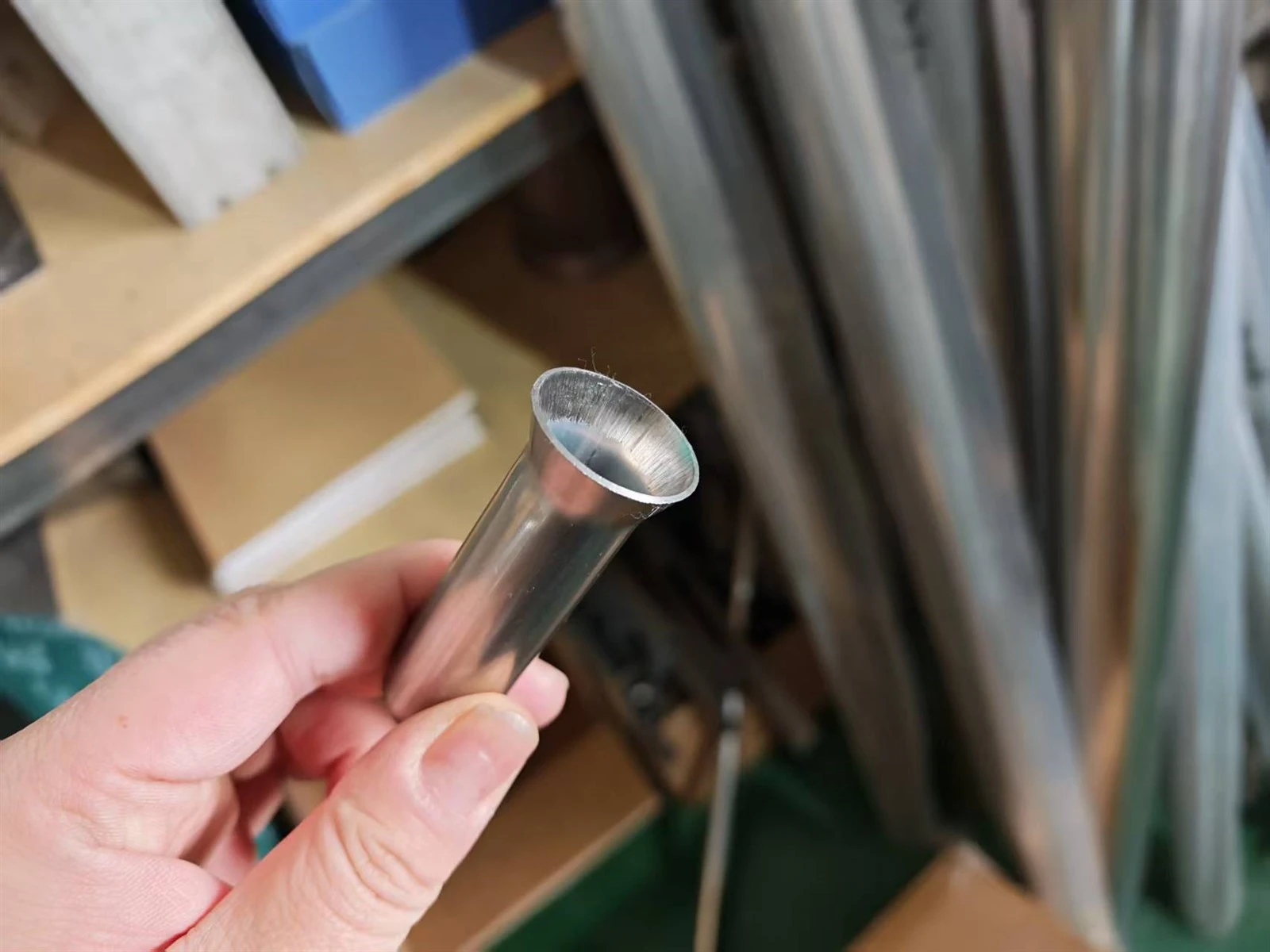
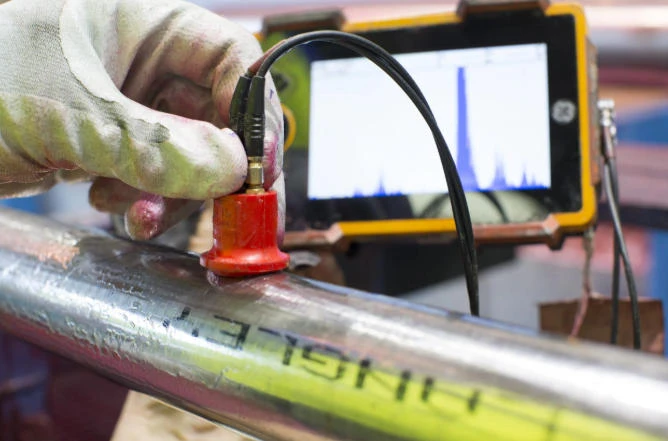
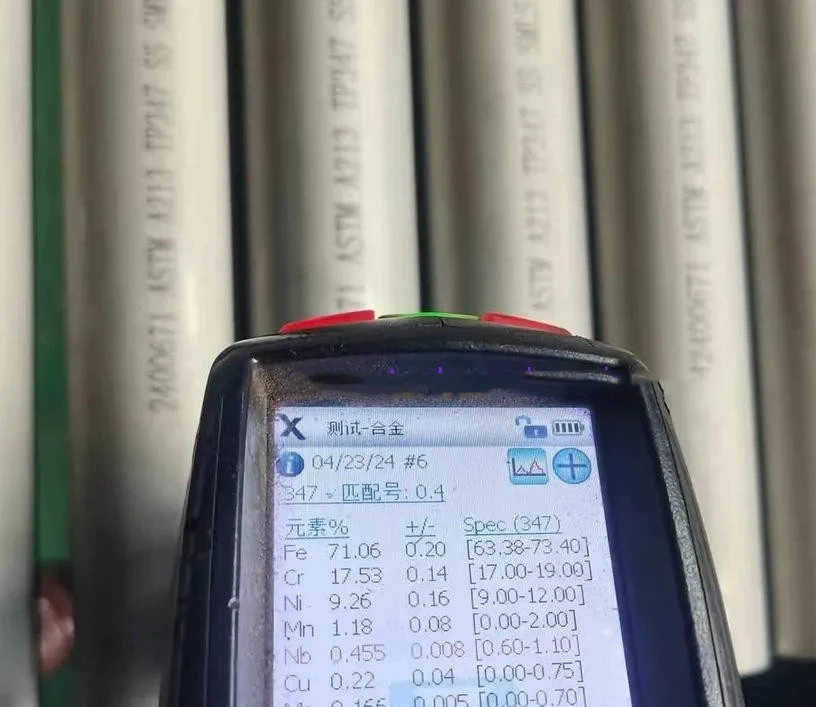
Quality Control:
PMI (verification of Nb content)
Tensile testing (UTS/YS/El)
Eddy current testing (internal defects)
Metallographic examination (fully austenitic, no delta ferrite)
Dimensional inspection (OD, wall thickness, ovality)
Packaging for 347 Stainless Steel Pipe
Moisture protection: Desiccant and moisture-proof film inside wooden crates (especially for sea shipments exceeding 30 days)
Deformation prevention: Plastic protective caps on pipe ends to prevent impact damage
Marking: Each pipe/bundle marked with: Material (347 / 347H); Standard (AMS 5571); Batch No. / Heat No.; OD × Wall × Length; Quantity / Weight

FAQ
What is Difference Between 347 and 347H Stainless Steel?
The core difference between 347 and 347H stainless steel is their carbon content. The letter "H" stands for "High Carbon," and the higher carbon level in 347H provides improved high-temperature strength and creep resistance, making it more suitable for prolonged exposure to elevated temperatures.
Key Parameter Comparison
| Property / Parameter | 347 (UNS S34700) | 347H (UNS S34709) |
|---|---|---|
| Carbon Content | Maximum 0.08% (≤0.08%) | 0.04–0.10% |
| High-Temperature Strength & Creep Resistance | Suitable for general high-temperature service | Higher, particularly above 538°C (1000°F) |
What is the operating temperature range for 347 stainless steel pipe?
| Condition | Temperature Range |
|---|---|
| Continuous service (recommended) | -425°F to 1650°F (-250°C to 900°C) |
| Intermittent heating | Up to 1650°F (900°C) |
| ASME B31.1 recommendation (347H) | 347H is preferred above 800°F (427°C) |
| Above 900°C (1650°F) | Not recommended; consider 310S / Inconel 600 |
| Low-temperature service (< -425°F / -250°C) | Impact testing is required for verification |
Can 347 replace 321?
It can be used as a substitute in some scenarios, but they are not freely interchangeable. The key difference is that 347 offers superior high-temperature creep and stress-rupture properties compared to 321; in aerospace projects, however, 347 and 321 are not interchangeable, and the specifications mandated by the OEM (specifically the AMS standards) must be strictly followed.
Send Inquiry