







What is 12Cr18Ni10Ti hot-rolled stainless steel plate?
Sep 17, 2026
Leave a message
If you are looking for a titanium-stabilized austenitic stainless steel plate that requires no post-weld solution annealing, resists intergranular corrosion under thermal cycling between 800–1500°F (427–816°C), and costs less than 347, 12Cr18Ni10Ti hot-rolled plate is the most economical and reliable stabilized choice for exhaust systems, expansion joints, chemical superheaters, and heat exchangers. By utilizing titanium (Ti ≥ 5×C) to preferentially bind with carbon to form TiC, it completely eliminates the risk of grain-boundary Cr₂₃C₆ precipitation within the 800–1500°F range, while maintaining room-temperature corrosion resistance comparable to Type 304.
What is 12Cr18Ni10Ti Hot-Rolled Stainless Steel Plate?
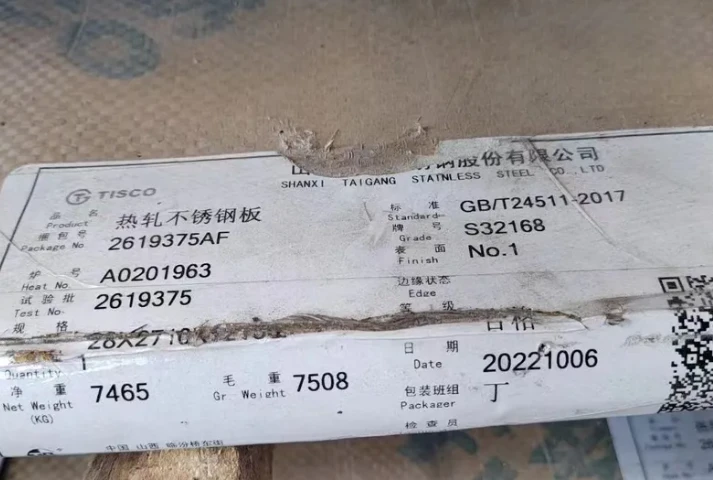
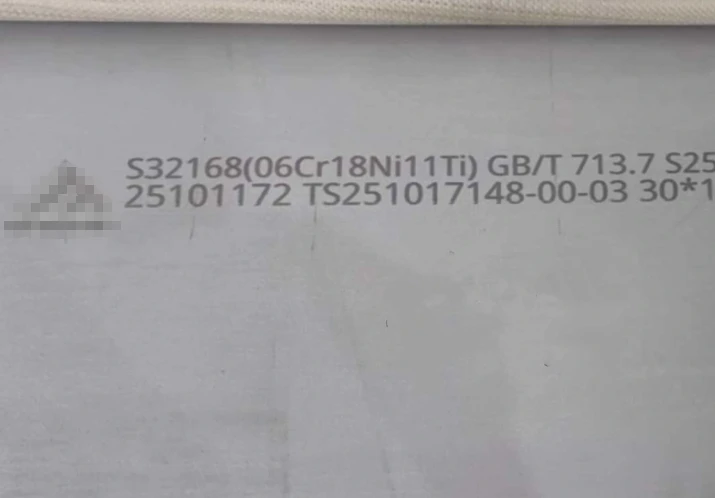
12Cr18Ni10Ti hot-rolled stainless steel plate (internationally equivalent to AISI 321 / UNS S32100 / EN 1.4541) is a titanium-stabilized Cr-Ni austenitic stainless steel hot-rolled plate containing 17–19% Cr, 9–12% Ni, and Ti ≥ 5×C%. Supplied in a hot-rolled + solution-annealed (1050°C water quenched) condition with a No. 1 (pickled) or No. 4 (brushed) surface finish, it is widely used in aircraft exhaust manifolds, chemical superheaters, expansion joints, heat exchangers, and high-temperature furnace components.
Equivalent Materials for 12Cr18Ni10Ti Stainless Steel
| Standard System | Grade / Designation |
|---|---|
| China – Former GB Standard | 1Cr18Ni9Ti |
| China – Current GB/T 24511 | 06Cr18Ni11Ti (S32168) |
| ASTM / UNS | 321 / S32100 |
| EN / DIN | 1.4541 / X6CrNiTi18-10 |
| JIS | SUS321 |
|
GOST |
12Х18Н10Т / 08Х18Н10Т |
12Cr18Ni10Ti / AISI 321 Stainless Steel Plate Specification
| Parameter | Specification Range |
|---|---|
| Thickness | 3.0 mm (1/8")–100 mm (4") hot rolled; custom thickness up to 200 mm |
| Width | 1000–2500 mm (40"–100") |
| Length | 2000–12000 mm (80"–480") |
| Thickness Tolerance | ±10% (≤6 mm) / ±0.5 mm (>6 mm) |
| Width Tolerance | ±3 mm |
| Length Tolerance | ±3 mm (fixed length) / +0 to +50 mm (multiple length) |
| Flatness | ≤ 1/1000 (short side) |
| Surface Finish | No. 1 (pickled / hot-rolled surface) / No. 4 (brushed) / 2B / BA |
| Delivery Condition | Solution Annealed: 1050°C ± 30°C, water quenched |
| Edges | Sheared edge / Saw-cut edge |
| Packaging | Wooden cases / steel strapping + moisture-proof film + paper separators |
| MOQ | 5 tons (standard sizes) / 1 ton (custom sizes) |
| Lead Time | 15–25 days (standard) / 30–45 days (custom) |
321 vs. 321H:Chemical Composition
| Element | 321 (12Cr18Ni10Ti) | 321H |
|---|---|---|
| C (Carbon) | ≤ 0.08% | 0.04–0.10% |
| Cr (Chromium) | 17.0–19.0% | 17.0–19.0% |
| Ni (Nickel) | 9.0–12.0% | 9.0–12.0% |
| Mn (Manganese) | ≤ 2.00% | ≤ 2.00% |
| Si (Silicon) | ≤ 0.75% | ≤ 0.75% |
| P (Phosphorus) | ≤ 0.045% | ≤ 0.045% |
| S (Sulfur) | ≤ 0.030% | ≤ 0.030% |
| N (Nitrogen) | ≤ 0.10% | ≤ 0.10% |
| Ti (Titanium) | ≥ 5 × (C+N), ≤ 0.70% | ≥ 4 × (C+N), ≤ 0.70% |
ASTM A240 321 plate Mechanical Properties
| Property | Value |
|---|---|
| Tensile Strength (UTS) | ≥ 515 MPa (75,000 psi) |
| 0.2% Yield Strength (YS) | ≥ 205 MPa (30,000 psi) |
| Elongation | ≥ 40% |
| Reduction of Area | ≥ 50% |
| Brinell Hardness | ≤ 201 HB (217 HB max.) |
| Rockwell B Hardness | ≤ 95 HRB |
Common Standard Sizes of 321 Stainless Steel Plate in China
| Thickness (mm) | Width (mm) | Length (mm) | Approx. Weight per Sheet (kg) |
|---|---|---|---|
| 3.0 | 1250 | 2500 | ~94 |
| 5.0 | 1500 | 3000 | ~177 |
| 8.0 | 1500 | 3000 | ~283 |
| 10.0 | 1500 | 3000 | ~354 |
| 12.0 | 1500 | 3000 | ~425 |
| 16.0 | 1500 | 3000 | ~566 |
| 20.0 | 1500 | 3000 | ~707 |
| 25.0 | 1500 | 3000 | ~884 |
| 30.0 | 1500 | 3000 | ~1,061 |
| 40.0 | 1500 | 3000 | ~1,415 |
To help determine the specific sheet specifications you require, could you please provide the following information:
The required thickness, width, and length dimensions?
The intended application or operating temperature (e.g., exhaust manifolds, heat exchangers)?
And whether you need custom-cut sheets or standard stock sheets?
321 vs. 304 : High-Temperature Creep Performance
| Temperature | 304 Creep Strength (10⁴ hr) | 321 Creep Strength (10⁴ hr) | 321 Advantage |
|---|---|---|---|
| 800°F (427°C) | ~12,000 psi | ~14,000 psi | +17% |
| 1000°F (538°C) | ~8,000 psi | ~10,500 psi | +31% |
| 1200°F (649°C) | ~5,000 psi | ~7,000 psi | +40% |
| 1400°F (760°C) | ~3,000 psi | ~4,500 psi | +50% |
Typical Applications of 321 Stainless Steel Plate
| Industry | Specific Applications | Recommended Surface Finish |
|---|---|---|
| Aerospace | Engine exhaust manifolds, APU housings | No. 1 |
| Petrochemical | Superheater tube sheets, reheater housings, cracking furnaces | No. 1 |
| Power Generation | Steam pipe flanges, heat exchanger housings | No. 1 |
| Chemical Processing | Reactor heads, high-temperature piping, expansion joints | No. 1 / No. 4 |
| Food & Pharmaceutical | High-temperature sterilization equipment, CIP systems | No. 4 / 2B |
| High-Performance Automotive | Exhaust systems, turbocharger housings | No. 1 |
321 Stainless Steel Plate Price per kg
| Item | Price Range (USD/kg) |
|---|---|
| 304 Hot-Rolled Plate (Benchmark) | $2.50–$4.00 |
| 321 Hot-Rolled Plate (No. 1) | $3.50–$5.50 |
| 321 Stainless Steel Rolled Plate (No. 4 / 2B) | $4.00–$6.50 |
| 321H Hot-Rolled Plate | $4.00–$6.00 |
| 321 Aerospace Grade (AMS 5510) | $6.00–$12.00+ |
To provide you with a more accurate estimate, could you please let me know:
What thickness and dimensions do you require?
What is the estimated total weight or quantity of the order?
321 Stainless Steel Plate Supplier
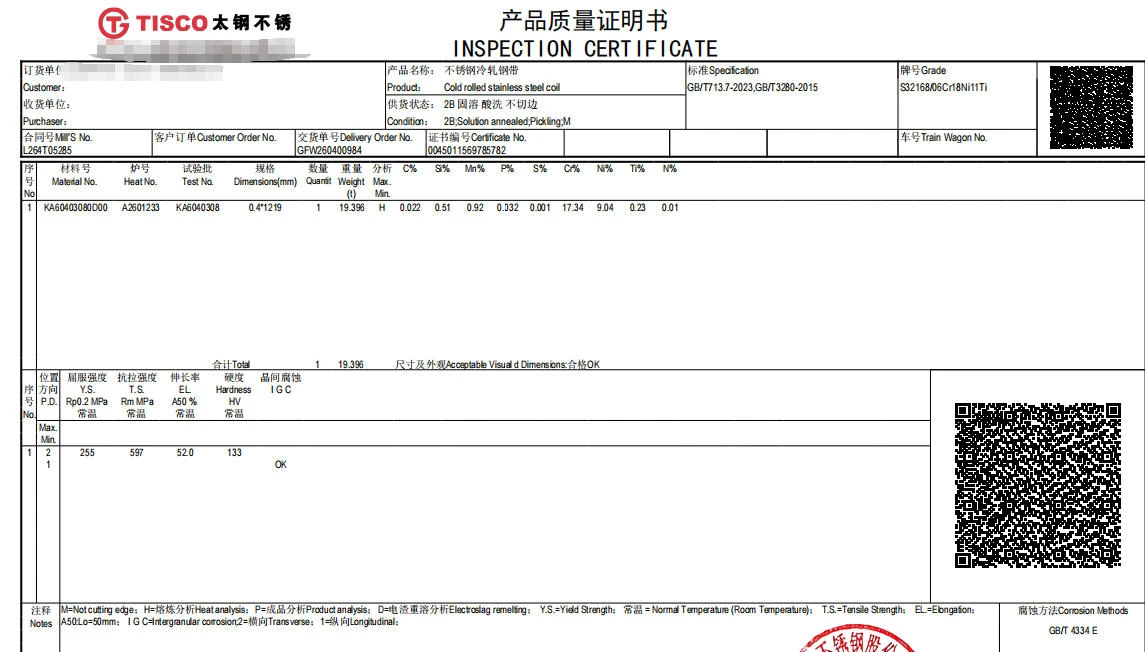
Each shipment comes with an EN 10204 3.1 Material Test Certificate (MTC) and test reports covering chemical composition and mechanical properties, with full heat number traceability. Standard-sized products typically ship within 7–15 business days, while custom-sized products require approximately 15–30 days.
Quality Inspection and Testing
| Inspection Item | Method | Purpose |
|---|---|---|
| Chemical Composition | ICP-OES / Wet Chemical Analysis | Verify that Cr, Ni, Ti, and C meet the specified requirements |
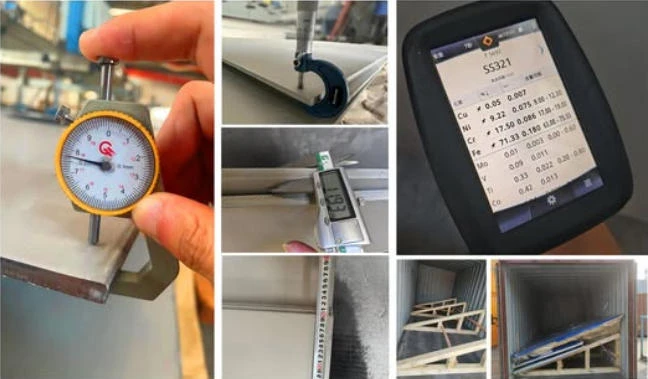
| Rapid Screening | PMI (Handheld XRF) | Identify and distinguish 321, 304, and 316 stainless steel on site |
| Mechanical Properties | Tensile Test (UTS / YS / Elongation) | Verify that strength and ductility meet the specified requirements |
| Non-Destructive Testing (NDT) | Ultrasonic Testing (UT) | Detect internal cracks, laminations, and inclusions |
| Non-Destructive Testing (NDT) | Eddy Current Testing (ET) | Detect surface and near-surface defects |
| Metallographic Examination | Microstructure + Grain Size Analysis | Evaluate the austenitic microstructure and ferrite content |
Standard Packaging for 321 Stainless Steel Plate
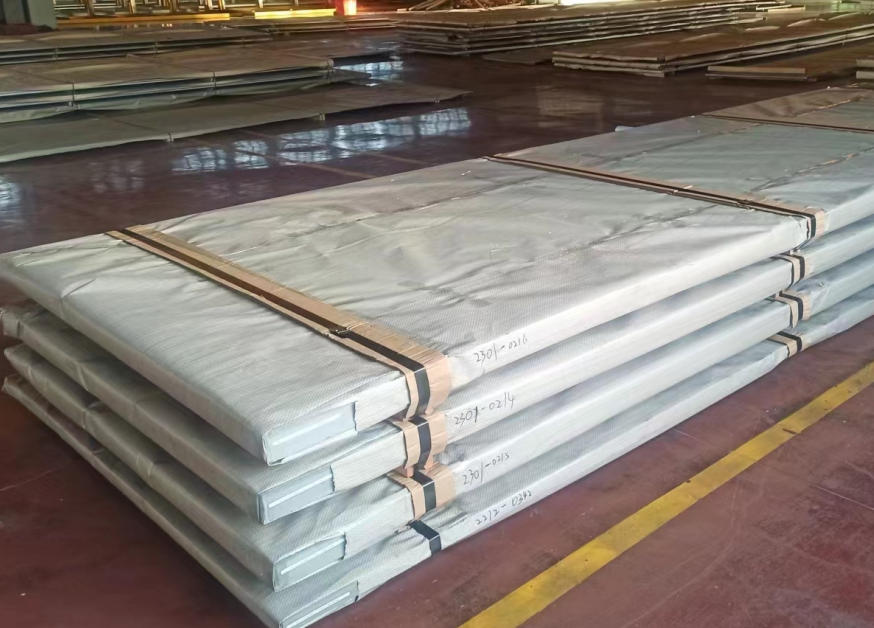
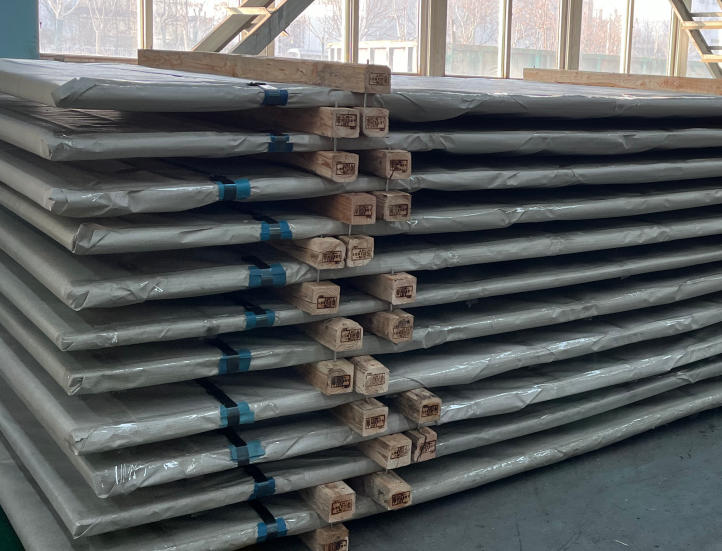
GNEE packages 321 stainless steel plates with moisture-proof film, kraft paper, and steel strapping, with plates separated by protective paper or PVC film to prevent scratches and surface contamination. Standard export packing uses strong wooden cases or pallets, suitable for 20 ft and 40 ft containers. Each bundle is marked with grade, size, heat number, quantity and weight for easy identification and traceability.
FAQ
Is 12Cr18Ni10Ti Similar to 321 Stainless Steel?
Yes. 12Cr18Ni10Ti is broadly equivalent to AISI 321 / UNS S32100, as both are titanium-stabilized austenitic stainless steels. Typical 321 chemistry contains 17–19% Cr, 9–12% Ni and Ti ≥5×(C+N). For international procurement, however, always specify the applicable standard, such as ASTM A240, GB/T 4237 or EN 1.4541, rather than relying only on the grade name.
What Is the Difference Between 321 and 321H?
The main difference is carbon content and high-temperature strength. 321 has C ≤0.08%, while 321H requires C 0.04–0.10%. The higher controlled carbon level improves creep and stress-rupture strength during long-term high-temperature service, particularly above approximately 538°C (1000°F). Both grades are titanium-stabilized and commonly supplied to ASTM A240 requirements.
Can 321 Stainless Steel Plate Be Welded?
Yes. 321 stainless steel plate has excellent weldability and can be welded using TIG, MIG and other standard fusion processes. Titanium stabilization helps reduce chromium-carbide precipitation in the heat-affected zone, so post-weld heat treatment is generally not required. For filler selection, 347/347Si filler metals are commonly specified because titanium is not readily transferred through the welding arc.
What Is the Working Temperature Range of 321 Stainless Steel Plate?
321 stainless steel is designed for elevated-temperature service and is commonly used at temperatures up to approximately 900°C (1650°F), depending on load, atmosphere and design conditions. It provides good oxidation resistance, phase stability and creep performance compared with 304. For continuous high-temperature pressure service, the allowable temperature and stress should be determined from the applicable ASME design code and material condition.
Send Inquiry