

ASME SA213 TP304 Seamless Heat Exchanger Tube: Properties and Sizes
Oct 17, 2025
Leave a message
What the ASME SA213 Specification Covers
ASME SA213 is the material specification for seamless ferritic and austenitic alloy-steel boiler, superheater and heat-exchanger tubes. The specification is technically identical to ASTM A213, so a tube ordered to either designation satisfies the same chemistry, mechanical property, dimension and testing requirements. Grade TP304 is the 18-8 austenitic grade within that specification, with 18.0–20.0% chromium and 8.0–11.0% nickel, and it is the most widely used austenitic grade for heat-transfer tubing in power, petrochemical and process service.
Because the tubes are produced by the seamless route, there is no longitudinal weld to act as a preferential corrosion path or a fatigue initiation site, which is the main reason seamless tubing is specified for high-pressure boiler and heat exchanger duty rather than welded tubing.
Manufacturing Route for TP304 Seamless Tubes
Production starts from a solid stainless steel billet which is pierced and hot rolled into a hollow shell, then reduced to final size by cold rolling or cold drawing over a mandrel. Cold working raises strength and hardness and introduces internal stress, so every tube is subsequently solution annealed at a temperature in the range of 1040–1120 °C followed by rapid cooling to restore a uniform austenitic structure and optimum corrosion resistance.
The annealed tube is descaled by pickling, or bright annealed in a controlled hydrogen atmosphere when an oxide-free, bright surface is required for instrumentation or for subsequent forming. Dimensional accuracy, straightness and surface condition are verified at each stage, and the mill test certificate issued to EN 10204 3.1 records the heat number, chemical analysis, mechanical results and the tests performed.
Size Range, Finish and Tolerances
| Parameter | Value |
|---|---|
| Standard | ASME SA213 / ASTM A213 |
| Grade | TP304 |
| Tube type | Seamless, hot finished or cold finished |
| Inside diameter, minimum | 3.2 mm (1/8 in) |
| Outside diameter, maximum | 127 mm (5 in) |
| Wall thickness | 0.4–12.7 mm (0.015–0.500 in), minimum or average wall |
| Length | Fixed or random lengths, to order |
| Finish | Pickled, or bright annealed |
| Application | Boiler, superheater, heat exchanger, condenser |
Cold-finished tubes are supplied free of scale and suitable for inspection; a light oxidation tint is not considered scale. Hot-finished tubes are supplied free of loose scale. When bright annealing is used, pickling is not necessary because the reducing atmosphere leaves the surface clean and metallically bright.
Chemical Composition of TP304
| Element | Content (%) |
|---|---|
| Carbon, max | 0.08 |
| Manganese, max | 2.00 |
| Phosphorus, max | 0.045 |
| Sulfur, max | 0.030 |
| Silicon, max | 0.75 |
| Chromium | 18.0–20.0 |
| Nickel | 8.0–11.0 |
| Nitrogen, max | 0.10 |
Where a low-carbon variant is needed for welded joints that cannot be solution annealed after fabrication, TP304L with a maximum carbon content of 0.035% is used instead; the higher-carbon TP304H is used where improved creep strength is required at elevated temperature.
Mechanical and Physical Properties
| Property | TP304, annealed |
|---|---|
| Tensile strength, min | 515 MPa |
| Yield strength 0.2% offset, min | 205 MPa |
| Elongation in 50 mm, min | 35% |
| Hardness, max | 90 HRB / 200 HV |
| Thermal conductivity, at 100 °C / at 500 °C | 16.2 / 21.5 W/m·K |
| Mean coefficient of expansion, 0–100 / 0–538 °C | 17.2 / 18.4 μm/m·°C |
| Density | 8000 kg/m³ |
| Elastic modulus | 193 GPa |
| Specific heat, 0–100 °C | 500 J/kg·K |
| Electrical resistivity | 720 nΩ·m |
The combination of moderate conductivity, low expansion and high elongation is what makes TP304 tubing tolerant of thermal cycling and suitable for rolled or welded tube-to-tubesheet joints without excessive residual stress.
Service Limits and Applications
TP304 seamless tubes are designed for continuous service at metal temperatures up to about 650 °C, with resistance to oxidation in air extending to approximately 850 °C. For boiler tubes the allowable oxidation limit is generally taken as 705 °C, beyond which the rate of scale formation accelerates and tube life falls sharply. In the creep range the useful stress falls quickly with temperature, so allowable design stress must always be read from the applicable code rather than from the room-temperature minimum values.
Typical duties include superheater and reheater tubes and steam piping in power station boilers, heat exchanger and condenser tubes in petrochemical and refining service, and general process tubing where a combination of corrosion resistance and elevated-temperature strength is required. The grade is also common in food, pharmaceutical and water-treatment heat exchangers where the clean, non-staining surface is an advantage.
Testing, Inspection and Handling
Before despatch, tubes are checked for chemical composition, tensile and yield strength, elongation and hardness. Dimensional inspection covers outside diameter, wall thickness and length, and each tube is subjected to a hydrostatic pressure test or an eddy current test in place of it, at the producer's option, with a nondestructive electric test also permitted by agreement. Flattening, reverse flattening and flare tests are applied where specified.
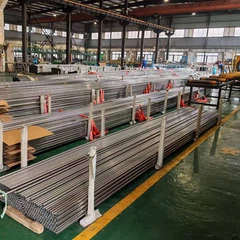
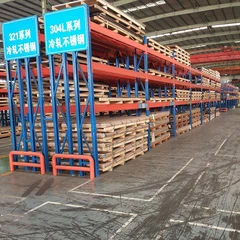
Tubes are supplied protected against moisture and packed in wooden crates, on pallets or wrapped for transport in standard containers, so that surfaces and ends arrive free of mechanical damage and corrosion. Handling procedures should keep stainless tubes separated from carbon steel to avoid embedded iron contamination that would later appear as rust spots in service.
Frequently Asked Questions
Q: What does ASME SA213 TP304 cover?
It covers seamless austenitic stainless steel boiler, superheater and heat exchanger tubes of the 18-8 grade, and it is technically equivalent to ASTM A213 TP304.
Q: What size range is available in TP304 seamless tubing?
Tubes are furnished from 3.2 mm (1/8 in) inside diameter up to 127 mm (5 in) outside diameter, with wall thicknesses from 0.4 mm to 12.7 mm, in minimum or average wall as ordered.
Q: What are the minimum mechanical properties of TP304?
In the annealed condition the specification requires 515 MPa minimum tensile strength, 205 MPa minimum 0.2% yield strength and 35% minimum elongation in 50 mm.
Q: What is the maximum service temperature of TP304 tubes?
Continuous service is normally limited to about 650 °C, with oxidation resistance in air to roughly 850 °C and allowable boiler-tube oxidation up to about 705 °C.
Q: How is the tube surface prepared?
Cold-finished tubes are free of scale and suitable for inspection, then pickled to remove oxide; bright annealing may be used instead, in which case pickling is unnecessary.
Q: Which tests are carried out before delivery?
Chemical analysis, tensile, yield, elongation and hardness testing, dimensional checks, and a hydrostatic or eddy current test on every tube, with flattening and flare tests added when specified.
Send Inquiry