







ASTM 201 Stainless Steel: Properties, Applications, and Limitations
Jan 08, 2026
Leave a message

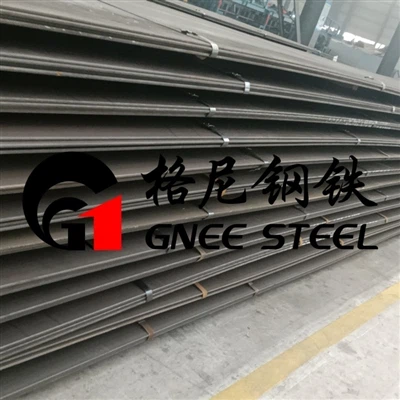

201 Stainless Steel is classified as an austenitic stainless steel, primarily known for its high chromium and nickel content. It typically contains around 16-18% chromium and 3-5% nickel, with a low carbon content (less than 0.15%). This composition contributes to its excellent corrosion resistance, formability, and weldability, making it a popular choice in various applications.
1 Comprehensive Overview
201 Stainless Steel is often utilized in environments where moderate corrosion resistance is required, alongside good mechanical properties. Its unique composition allows it to maintain strength and toughness at both ambient and elevated temperatures. The presence of manganese (up to 7.5%) as a substitute for nickel enhances its strength and makes it more cost-effective compared to higher nickel grades.
1.1 Key Characteristics:
Corrosion Resistance: Offers good resistance to oxidation and corrosion, although it is less resistant than higher nickel grades like 304.
Mechanical Properties: Exhibits good tensile strength and ductility, making it suitable for forming and fabrication.
Weldability: Can be welded using standard techniques, although care must be taken to avoid issues like intergranular corrosion.
1.2 Advantages and Limitations:
| Advantages (Pros) | Limitations (Cons) |
|---|---|
| Cost-effective alternative to higher nickel grades | Lower corrosion resistance compared to 304 and 316 grades |
| Good formability and weldability | Susceptible to pitting in chloride environments |
| High strength-to-weight ratio | Not suitable for high-temperature applications |
201 Stainless Steel has gained popularity in various sectors, including automotive, construction, and food processing, due to its balance of performance and cost. Historically, it has served as a more affordable option for applications that do not require the superior corrosion resistance of higher-grade stainless steels.
Send Inquiry