







Comparison of 304 stainless steel and 18-8 stainless steel
Dec 16, 2025
Leave a message

Comparison of 304 stainless steel and 18-8 stainless steel
304 stainless steel is the same as 18-8 stainless steel; they are essentially the same material. "18-8" refers to its composition (containing approximately 18% chromium and 8% nickel), while "304" is the specific grade in the AISI/SAE system. Therefore, in most cases, the two can be used interchangeably, but 304 stainless steel may have stricter controls on trace element content for specific applications such as welding. Both have good corrosion resistance and formability, and are therefore commonly used in general-purpose products, but 304 is the standard grade, while "18-8" is a broader and more accurate descriptive term for this commonly used austenitic stainless steel series.
Is 304 stainless steel high quality?
304 stainless steel is an excellent austenitic stainless steel with wide applications in engineering. Its superior chemical composition gives it durable and stable properties.

What is 18-8 stainless steel?
18-8 stainless steel is an alloy containing approximately 18% chromium and 8% nickel, along with trace amounts of other elements such as carbon and manganese. The most common 18-8 stainless steel grade is AISI 304. It is known for its excellent corrosion resistance, durability, and ease of workability. "18-8" refers to the percentage of chromium and nickel in the alloy; these elements are what give it its rust-resistant properties.
What is 304 stainless steel?
304 stainless steel is the most widely used stainless steel grade globally. It also contains 18% chromium and 8% nickel, similar to 18-8 stainless steel. In addition, it contains small amounts of carbon and manganese. This grade has excellent corrosion resistance and can withstand high temperatures, making it suitable for a wide range of applications, including kitchen appliances, food processing equipment, and industrial applications.
18-8 Stainless Steel vs 304 Stainless Steel: Chemical Composition
| Element | 18-8 (generic) | 304 (AISI/ASTM) |
|---|---|---|
| Chromium (Cr) | ~18% | 18–20% |
| Nickel (Ni) | ~8% | 8–10.5% |
| Carbon (C) | ≤0.10% | ≤0.08% (304) / ≤0.03% (304L) |
| Manganese (Mn) | ≤2.0% | ≤2.0% |
| Silicon (Si) | ≤1.0% | ≤1.0% |
| Phosphorus (P) | ≤0.045% | ≤0.045% |
| Sulfur (S) | ≤0.030% | ≤0.030% |
18-8 Stainless Steel vs 304 Stainless Steel: Properties & Performance
| Property | 18-8 (generic) | 304 (AISI/EN typical) | Practical Impact |
|---|---|---|---|
| Tensile Strength | High, variable | ~515–620 MPa | 304 consistency aids design accuracy |
| Yield Strength | Variable | ~205 MPa | 304 specs are auditable |
| Elongation | ~40% | ~40% | Excellent formability; 304 offers tighter minima |
| Hardness | Varies by supplier | ~HRB 70–95 | Both work-harden readily |
| Corrosion in Chlorides | Moderate | Moderate-better | 304 edges 18-8 for splash/salt environments |
| Weld Sensitization Risk | Depends on C | Prefer 304L | Low-carbon 304L recommended for thick weldments |
| Magnetism After Cold Work | Slight | Slight | Both may become slightly magnetic after heavy forming |
What are the advantages of 304 stainless steel and 18/8 stainless steel?
Advantages of 304 stainless steel
304 stainless steel is known for the following properties:
Corrosion resistance: Performs well in most general environments.
Mechanical properties: High strength and good toughness.
Processability: Easy to weld and form, suitable for various manufacturing processes.
Affordability: More affordable than 316 stainless steel, offering superior performance at a lower cost.
Hygiene: Easy to clean, ideal for food and medical applications.
Aesthetics: Beautiful appearance, suitable for decorative purposes.
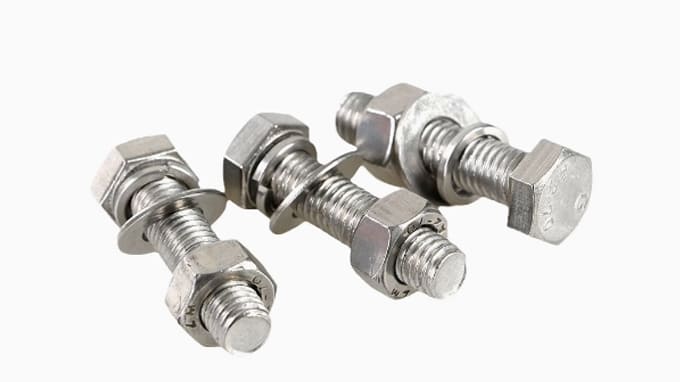

Advantages of 18/8 stainless steel
18/8 stainless steel offers several advantages:
Corrosion Resistance: Its composition provides excellent corrosion resistance, especially in humid and mildly corrosive environments.
Mechanical Properties: High strength and toughness ensure reliability in a wide range of applications.
Processability: Easy to machine, weld, and form, suitable for manufacturing complex parts.
Non-magnetic: Non-magnetic in the annealed state, ideal for applications requiring non-magnetic materials.
Food Safety: Widely used in food processing due to its corrosion resistance and ease of cleaning.
Affordability: More affordable than higher grades of stainless steel such as 316, while still providing good performance.
Common Applications of 18/8 and 304 Stainless Steel
18/8 Stainless Steel: Commonly used in kitchenware, tableware, and medical devices.
304 Stainless Steel: Used in household appliances, food processing equipment, building decoration, and medical equipment.
Why choose Gnee as your stainless steel supplier?
✅ Over 18 years of export experience, with products sold to more than 80 countries
✅ ISO, SGS, and BV certified
✅ Ample global stock of 304, 316, 316L, and 321 alloy pipes, plates, and bars
✅ Customized processing services available, including cutting, polishing, CNC machining, and packaging
✅ Fast delivery in 7-15 days, supported by global logistics partners
📦 Packaging and Shipping
All stainless steel products are packaged as follows:
Wooden pallets or wooden crates
Moisture-proof packaging
Labeled with heat number, standard, and dimensions
Shipped worldwide via sea, air, or express delivery
Gnee Steel also supplies custom Inconel 600 products in various sizes and specifications. Please send us your drawings for a quote!
Send Inquiry