







Stainless Steel 304 vs 316
Mar 16, 2026
Leave a message

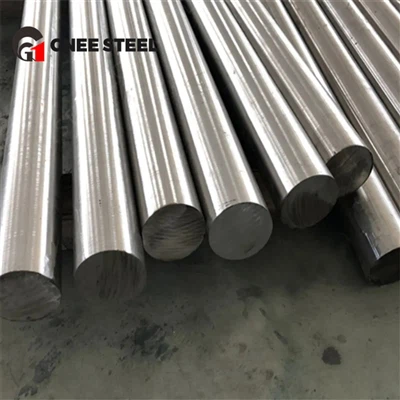
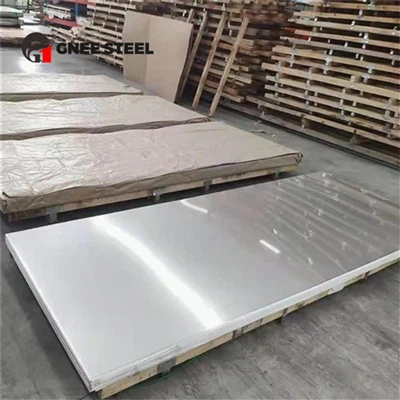
300 Series
The 304 (A2) is the most extensively used austenitic stainless-steel and this is also known as 18/8 to describe its composition of 18% chromium and 8% nickel. The 304 stainless steel has good oxidation resistance in intermittent service up to 870 °C and in continuous service up to 925 °C.
The second most frequently-used austenitic stainless-steel is the 316 grade (A4), which is also known as marine grade stainless, and used mainly for its increased resistance to corrosion. Type 316 is fundamentally an austenitic chromium- nickel stainless steel that contains an extra 2-3% molybdenum. The molybdenum boosts general corrosion resistance, enhances resistance to pitting from chloride ion solutions (for instance seawater and de-icing salts), and offers increased strength at elevated temperatures.
What is the Difference Between 304 and 316 Stainless Steel?
The straightforward answer is that 304 has 18% chromium and 8% nickel while 316 has 16% chromium, 10% nickel and 2% molybdenum. Both of these 300 grade steels are known for their excellent welding and forming properties, which give them applications across many industries. Masteel is a key supplier of 304 and 316 grades of stainless steel and can provide both cut profiles and advice on fabrication and properties.
Where Is It Used?
Grade 304 is a particular favorite in the food processing industries mainly in milk processing, beer brewing and wine making, pharmaceutical manufacture, and petrochemicals. In this area, benches, troughs, pressure vessels, sinks, chemical containers, heat exchangers, and storage tanks are all produced from 304 stainless. The steel is highly resistant to common acids and is extremely easy to fabricate into the items required, although some staining or patina may occur over a period of time.
This grade of stainless is also used in architectural applications for railings, paneling, and trim as it will offer a long service life and retain a good appearance. The 304 stainless steel does have a weakness, i.e., it is likely to corrode from chloride solutions, or from saline environments in coastal areas. Chloride ions may cause areas of corrosion, called 'pitting' which can pass under the protective chromium barriers to attack internal structures. Solutions with just 25 ppm of sodium chloride can have a corrosive effect.
For more tough applications within the marine environment, where there is contact from more powerful acids and chemicals, grade 316 is recommended. This has nearly the same physical and mechanical properties as the 304 stainless steel. The 316 stainless steel is common in a number of industrial applications involving processing chemicals, as well as high-saline areas such as coastal regions and outdoor areas where de-icing salts are common. Due to its non-reactive qualities, 316 is also used in the manufacture of medical surgical instruments. In addition, it is the preferred material in the pharmaceutical sector, where reaction vessels have to be extremely clean.
Send Inquiry