

The Purpose of Deep Processing of Stainless Steel
Feb 16, 2025
Leave a message
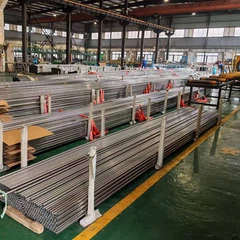
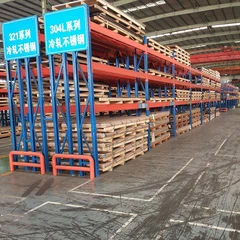
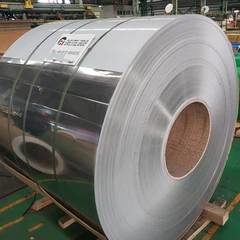
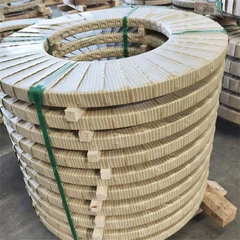
Stainless steel reaches the end user as a semi-finished mill product - coil, sheet, plate, strip or tube. The term deep processing (also called value-added fabrication) describes the series of secondary operations that convert these mill products into components that can be installed or assembled directly. Cutting, slitting, bending, stamping, deep drawing, roll forming, punching, welding and surface finishing are all deep-processing steps. Each step changes the geometry, dimensions, surface condition or edge quality of the material, and each must be matched to the grade, the delivery condition and the final service environment.
1. What Counts as Deep Processing of Stainless Steel
Deep processing covers any operation performed on a mill product after it leaves the rolling line. The main routes are:
Cutting: shearing, laser cutting, plasma cutting, water-jet cutting and sawing, selected according to thickness and required edge quality.
Slitting and blanking: converting wide coil into narrow strips or discrete blanks for downstream stamping or roll forming.
Forming: bending, stamping, deep drawing, spinning, roll forming and press braking.
Joining: welding (TIG, MIG, laser, plasma, resistance), brazing and mechanical fastening.
Surface finishing: grinding, polishing, brushing (HL), bright annealing (BA), mirror finishing, etching, embossing and coating.
Secondary treatments: punching, perforating, notching, edge conditioning and assembly into sub-assemblies.
In practice a component may pass through several routes in sequence - for example, a laser-cut blank that is pressed, edge-finished and welded into a finished housing.
2. Why Deep Processing Adds Engineering Value
Deep processing creates value in five measurable ways:
Material utilisation: nested laser cutting or precision blanking can raise material yield from roughly 70% to over 90%, reducing scrap cost on expensive high-alloy grades.
Dimensional accuracy: laser cutting and precision stamping hold tolerances that allow components to be assembled without rework.
Surface control: a specified finish (2B, BA, No.4, HL, mirror) gives predictable hygiene, reflectivity and cleanability for architectural or food-contact parts.
Integration: pre-finished and pre-formed parts reduce the buyer's in-house processing investment and lead time.
Performance: correct forming and heat-input control preserve corrosion resistance; incorrect practice (excessive grinding, overheated welding) destroys it.
3. Application-Driven Processing by Industry
Construction and Architecture
Stainless steel is used for curtain walls, handrails, elevator panels, doors, windows, columns and cladding because of corrosion resistance, fire performance and appearance. Surface processing is decisive here: brushed (HL), mirror-polished and embossed finishes are produced from 2B or BA substrate, and edge quality must be uniform across large panels. EN 10088-2 and ASTM A480 define the reference surface finishes used in architectural specifications.
Environmental Protection and Flue-Gas Treatment
In flue-gas desulfurisation (FGD) and waste-water plant, components such as absorption towers, coolers, pumps, valves and flues face sulphur dioxide, chloride ions and wet-dry cycling. These parts are typically fabricated from duplex grades such as UNS S31803/S32205 (2205) and UNS S32750 (2507) or high-alloy austenitic grades, and welding procedure control is critical to retain the correct ferrite-austenite balance.
Water Supply and Desalination
Water production, storage, transport, purification and seawater desalination use austenitic and duplex stainless steel for tanks, piping and heat exchangers. Deep processing here includes large-diameter tube bending, flanging and hygienic welding with controlled heat input and inert gas purging.
Automotive and Transport
High-strength stainless steel sheet is formed into body structures, panels and decorative trim, where press formability, springback control and surface quality must all be balanced. Ferritic grades are increasingly specified for exhaust and structural parts because of low thermal expansion and good formability.
Home Appliances
Washing-machine drums, water-heater liners, microwave cavities and refrigerator liners are dominated by ferritic grades such as 430 (UNS S43000) because deep drawing and multi-stage stamping demand good formability at controlled cost. The drum is typically formed from 430 or 439 sheet and finished by welding or lock-seaming.
Packaging, Fasteners and Hardware
Metal packaging, fasteners, furniture hardware, bridge cables and steel curtains rely on slitting, wire drawing, cold heading and perforation. These routes increase product added value and create a closed loop between material development, preparation and processing that improves overall metal quality.
4. Surface Finishing as a Deep-Processing Step
Surface finish is often the most visible output of deep processing. Common finishes and their reference designations include:
2B: cold-rolled, heat-treated, pickled and skin-passed - the standard finish for most industrial and food applications.
BA (bright annealed): annealed under protective atmosphere for a smooth, reflective surface used in appliances and kitchenware.
No.4 and HL (hairline): mechanically brushed finishes widely specified for architectural panels and elevator cladding.
Mirror (No.8): high-polish finish for decorative and sanitary applications.
Embossed/patterned: rolled or pressed patterns that add rigidity and slip resistance.
The finish must be specified against the standard used for delivery - ASTM A480/A480M for plate, sheet and strip, EN 10088-2 for European deliveries - because surface roughness and reflectivity requirements differ between systems.
5. Key Processing Considerations
Bending: minimum bend radius depends on grade, thickness and direction of rolling. Austenitic grades tolerate tight radii; high-carbon martensitic grades must be bent in the annealed condition.
Deep drawing and stamping: ferritic grades have excellent deep-drawing behaviour but lower elongation than austenitic grades; lubrication and tool geometry decide the limiting draw ratio.
Laser cutting: nitrogen-assisted cutting of austenitic sheet preserves the original corrosion resistance at the cut edge; oxygen-assisted cutting leaves an oxide layer that should be removed by pickling or grinding for corrosive service.
Welding: heat input must be controlled to avoid sensitisation in non-stabilised grades and to preserve the phase balance in duplex grades. Stabilised grades such as TP321 (UNS S32100) and TP347 (UNS S34700) resist intergranular corrosion in the 425–850 °C range.
Residual contamination: free iron embedded by grinding or handling causes localised rust on an otherwise corrosion-resistant surface; pickling or passivation (ASTM A380/A967) restores performance.
Frequently Asked Questions
What is the difference between processing and deep processing?
Primary processing converts raw material into mill products (rolling, forging, extrusion). Deep processing covers the secondary operations - cutting, forming, joining and finishing - that turn mill products into components ready for assembly or installation.
Which stainless steel grades are best for deep drawing?
Austenitic grades such as 304 (UNS S30400) and 316L (UNS S31603) give high elongation and work-hardening behaviour. Ferritic grades such as 430 and 439 (UNS S43035) combine good drawability with low cost and low thermal expansion, and are preferred for multi-stage appliance stamping.
Does laser cutting reduce the corrosion resistance of stainless steel?
Not if the cut is made with nitrogen or argon as the assist gas and the edge is clean. Oxygen-assisted cutting leaves a heat-affected oxide edge that should be pickled or mechanically dressed for corrosive or food-contact service.
What surface finish should be specified for architectural panels?
For interior cladding and lift panels, No.4 or hairline (HL) finishes are the most common because they balance aesthetics, uniformity and ease of cleaning. For exterior use, the finish must be combined with a grade that matches the site corrosivity, for example 316 in coastal locations.
Why is 430 used for washing-machine drums despite lower corrosion resistance?
Drum service is inside a detergent wash environment where corrosion demand is moderate. Ferritic 430 offers the deep-drawing formability, thermal conductivity roughly 50% higher than 304, and lower cost, which together make it the economically and technically optimum choice.
Does deep processing affect material certification?
Mill certification (EN 10204 3.1 or 3.2 certificates) applies to the mill product. Processing operations should be documented separately, with traceability of heat numbers maintained through cutting and forming so that the final component can be traced back to its original cast.
Send Inquiry