

What is 1.4162 Stainless Steel?
Mar 17, 2026
Leave a message
If you are looking for a stainless steel that combines high mechanical strength, good corrosion resistance and lower nickel cost, 1.4162 stainless steel is a grade worth considering. Also known as UNS S32101, X2CrMnNiN22-5-2 and Lean Duplex 2101, it belongs to the lean duplex stainless steel family.
Unlike conventional austenitic stainless steels such as 304 and 316L, 1.4162 has a duplex microstructure consisting of approximately ferritic and austenitic phases. This structure gives it a significantly higher yield strength while maintaining useful corrosion resistance and weldability.
What is 1.4162 stainless steel?
1.4162 stainless steel is a low-nickel duplex stainless steel, designated as UNS S32101 and EN X2CrMnNiN22-5-2. It contains approximately 21%–22% chromium and only about 1.35%–1.70% nickel, with additions of manganese, nitrogen, molybdenum, and copper. Its relatively low nickel content distinguishes it from many traditional austenitic stainless steel grades and helps reduce reliance on nickel price fluctuations.
Is 1.4162 the same as LDX 2101?
LDX 2101 is a widely used commercial designation associated with 1.4162 / UNS S32101. However, purchasers should confirm the exact specification and certification of the material being offered.
1.4162 Stainless Steel Chemical Composition
The following composition represents commonly specified limits for UNS S32101 / EN 1.4162. Exact limits should always be verified against the applicable product standard and material certificate.
| Element | Typical Requirement, wt.% |
|---|---|
| Carbon (C) | ≤ 0.040 |
| Silicon (Si) | ≤ 1.00 |
| Manganese (Mn) | 4.00–6.00 |
| Phosphorus (P) | ≤ 0.040 |
| Sulfur (S) | ≤ 0.015–0.030 |
| Chromium (Cr) | 21.00–22.00 |
| Nickel (Ni) | 1.35–1.70/1.90 |
| Molybdenum (Mo) | 0.10–0.80 |
| Copper (Cu) | 0.10–0.80 |
| Nitrogen (N) | 0.20–0.25 |
| Iron (Fe) | Balance |
1.4162 Stainless Steel Mechanical Properties
| Property | Typical / Minimum Value |
| Yield Strength, Rp0.2 | ≥ 450 MPa |
| Tensile Strength, Rm | ≥ 650 MPa |
| Elongation | ≥ 30% |
| Hardness | ≤ 290 HBW |
| Elastic Modulus | ≈ 200 GPa |
| Density | ≈ 7.7–7.8 g/cm³ |
| Thermal Conductivity | ≈ 15 W/m·K |
Actual mechanical properties depend on product form, thickness, heat treatment and the governing standard. For production orders, the values stated on the applicable MTC should be used for acceptance.
Corrosion Resistance of 1.4162 Stainless Steel
1.4162 exhibits good resistance to general corrosion and offers a certain degree of resistance to stress corrosion cracking. Its corrosion resistance characteristics are a key factor in the development of this grade as an economical duplex stainless steel-intended to replace traditional austenitic stainless steels in specific industrial applications.
However, chloride concentration and temperature must be considered before selecting 1.4162. It should not be specified for harsh seawater environments simply because it is a duplex stainless steel.
Is 1.4162 Suitable for Welding?
Yes. 1.4162 possesses good weldability, provided the welding process properly controls heat input and maintains the required balance of the duplex microstructure. Depending on the specific product and application, methods such as gas-shielded arc welding, arc welding, and resistance welding can be employed.
Heat Treatment of 1.4162 Stainless Steel
1.4162 is typically supplied in the solution-annealed condition.
The standard temperature range for solution treatment is approximately 1020–1080°C, followed by appropriate cooling to preserve the desired duplex microstructure. Specific heat treatment procedures should be determined based on applicable product standards and buyer specifications, rather than relying solely on general temperature ranges.
Is 1.4162 magnetic?
Yes. Due to its significant ferrite phase content, the lean duplex stainless steel 1.4162 is typically magnetic, unlike the fully austenitic 304 and 316L steels.
What are the main advantages of 1.4162 compared to 304/316L?
Its primary advantages are higher strength (with a yield strength twice that of the latter) and price stability. Due to its very low nickel content (approximately 1.5%), the cost of 1.4162 is far less affected by fluctuations in the nickel market than that of 304 or 316. Additionally, it offers significantly superior resistance to stress corrosion cracking (SCC).
What are the typical applications of 1.4162?
Storage Tanks: For water, chemicals, and biofuels.
Civil Engineering: Bridges, flood gates, and structural components.
Water Treatment: Desalination equipment and sewage tanks.
Pulp & Paper: Digestors and bleaching equipment.
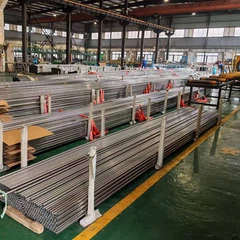
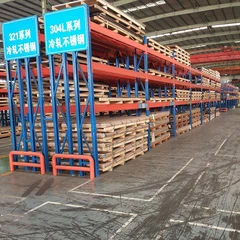
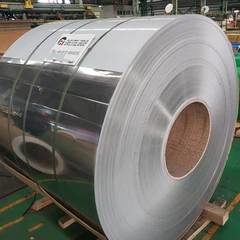
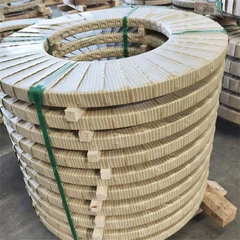
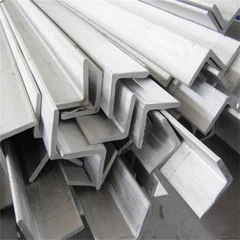
If you have project requirements for 1.4162 / LDX 2101 stainless steel bars, we welcome your orders. GNEE maintains a large inventory of popular products for you to choose from. Materials can be processed into various practical forms, including plates, coils, pipes, bars, and wires. Please contact our factory today for detailed chemical composition specifications and free samples. We offer competitive prices and excellent service.


GNEE Steel offers 1.4162 (S32101) in a wide range of specifications, accompanied by EN 10204 3.1 certification. If you are looking for a cost-effective alternative to 304 or 316L, 1.4162 is a highly competitive choice.
Send Inquiry