







What is 1.4510 stainless steel equivalent?
Aug 24, 2026
Leave a message
What is 1.4510 stainless steel?
1.4510 stainless steel (also known as X3CrTi17 or AISI 439) is a titanium-stabilized mid-chromium ferritic stainless steel. Because the addition of titanium prevents carbon from destroying the grain structure during welding, it offers good corrosion resistance, superior formability, and enhanced weldability compared to standard non-stabilized grades such as 1.4016 (AISI 430).
What is 1.4510 stainless steel equivalent?
1.4510 is the European (EN) designation, but it is widely recognized globally under other standards:
AISI/ASTM: Grade 439 (UNS S43035)
EN Name: X3CrTi17
JIS: SUS 430LX
Common Trade Names: Uginox F18TN, K39M
1.4510 Stainless Steel Specification
1.4510 stainless steel Chemical Composition (Typical Weight %) According to EN 10088
| Element | Min (%) | Max (%) |
|---|---|---|
| Carbon | - | 0.05 |
| Silicon | - | 1.00 |
| Manganese | - | 1.00 |
| Phosphorus | - | 0.040 |
| Sulfur | - | 0.015 |
| Chromium | 16.00 | 18.00 |
| Titanium | 0.15 + 4(C + N) | 0.80 |
| Nitrogen | - | 0.04 |
1.4510 stainless steel Mechanical Properties (At room temperature in annealed condition)
| Property | Metric Value | Imperial Value |
|---|---|---|
| Tensile Strength | 420 – 600 MPa | 61 – 87 ksi |
| 0.2% Yield Strength | ≥ 230 MPa | ≥ 33 ksi |
| Elongation | ≥ 23% | ≥ 23% |
| Brinell Hardness | ≤ 180 HB | ≤ 180 HB |
| Rockwell Hardness | ≤ 85 HRB | ≤ 85 HRB |
1.4510 stainless steel Physical Properties (Reference values at 20°C)
| Property | Value |
|---|---|
| Density | 7.70 g/cm³ |
| Modulus of Elasticity | 200 GPa |
| Thermal Conductivity | 25.0 W/(m·K) |
| Specific Heat Capacity | 460 J/(kg·K) |
| Electrical Resistivity | 0.60 Ω·mm²/m |
| Thermal Expansion (20–100°C) | 10.0 ×10⁻⁶/K |
What is the maximum operating temperature for 1.4510?
| Service Condition | Maximum Temperature | Operational Context |
| Continuous Service | 850°C – 870°C (1560°F – 1600°F) | Safe limit in dry air to maintain good scaling/oxidation resistance without excessive oxidation kinetics. |
| Intermittent Service | 890°C – 920°C (1630°F – 1690°F) | Short-term or cyclic exposure (e.g., automotive exhaust components). |
Is 1.4510 magnetic?
Yes. As a ferritic stainless steel, 1.4510 is strongly magnetic in all conditions (annealed or processed).
What are the welding recommendations for 1.4510 stainless steel?
Methods: Suitable for TIG, MIG, arc, and resistance welding.
Filler metal: 430Ti or 308L (austenitic) filler wire is generally recommended to enhance weld toughness.
Note: Minimize heat input to prevent grain coarsening.
Why is 1.4510 commonly used in automotive exhaust systems?
Because it withstands high-temperature oxidation up to 800°C–850°C and has a low thermal expansion rate. It resists deformation and fatigue cracking during repeated heating and cooling cycles, and offers better resistance to corrosion from exhaust condensate compared to austenitic steels.
1.4510 stainless steel Applications
Automotive: Exhaust systems (manifolds, front pipes, catalytic converter shells).
Appliances: Washing machine drums, microwave oven liners.
Heat Exchangers: Condenser tubing and heater components.
Kitchenware: Pots, pans, and food processing equipment requiring weldability.
1.4510 vs. 1.4016 (AISI 430): Key differences
The key difference between 1.4510 (AISI 439 / 430Ti) and 1.4016 (AISI 430) is that 1.4510 features titanium stabilization, which dramatically improves its weldability and intergranular corrosion resistance over the standard 1.4016 grade. While both are ferritic, magnetic stainless steels sharing an identical baseline of roughly 16–18% chromium, 1.4016 becomes prone to sensitization and embrittlement after welding, whereas 1.4510 remains stable.
What is the difference between 1.4510 and 1.4404?
The main difference between 1.4510 (X3CrTi17 / AISI 439) and 1.4404 (X2CrNiMo17-12-2 / AISI 316L) is their microstructure and corrosion resistance. 1.4510 is a ferritic stainless steel with about 17% chromium and titanium stabilization, offering good oxidation resistance, low thermal expansion, and cost efficiency. 1.4404 is an austenitic stainless steel containing approximately 16.5–18.5% Cr, 10–13% Ni, and 2–2.5% Mo, providing significantly higher resistance to chloride corrosion with a PREN value around 23–28. Therefore, 1.4510 is suitable for automotive exhaust systems and household applications, while 1.4404 is preferred for marine, chemical, food, and pharmaceutical equipment requiring superior corrosion resistance.
1.4510 Stainless Steel Cold Rolled Coil Supplier
Beyond simple supply, GNEE offers specialized processing for 1.4510 to meet specific engineering requirements:
Precision Slitting: High-speed slitting for narrow strips (tolerance ±0.1mm).
Cut-To-Length: Precision leveling and cutting of coils into sheets.
Surface Protection: Single or double-sided coating with PVC, PE, or Laser-film.
Edge Processing: Mill edge or Slit edge (deburred).
Packaging: Seaworthy export packaging (wooden pallets, waterproof paper, steel strapping).
GNEE supplies 1.4510 primarily in flat-rolled forms, optimized for the automotive and appliance industries.
| Product Form | Thickness (mm) | Width (mm) | Length/ID |
| Cold Rolled Coil | 0.3 mm – 3.0 mm | 1000, 1219, 1250, 1500 | ID: 508mm / 610mm |
| Hot Rolled Coil | 3.0 mm – 12.0 mm | 1000, 1250, 1500 | ID: 610mm |
| Cold Rolled Sheet | 0.3 mm – 3.0 mm | Up to 1500 | 2000, 2438, 3000, 6000 |
| Slit Strip | 0.3 mm – 3.0 mm | 10 mm – 600 mm | Custom Coils |
| Decorative Plate | 0.5 mm – 3.0 mm | 1219, 1250 | Fixed lengths |
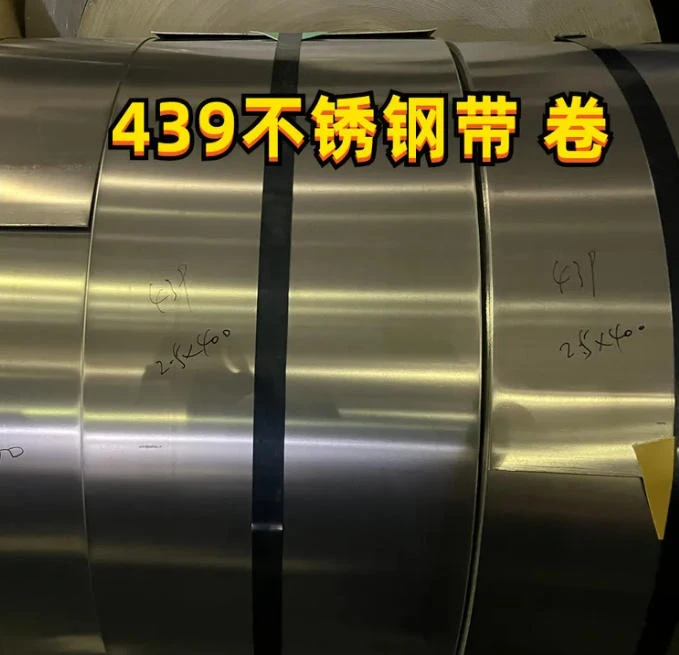
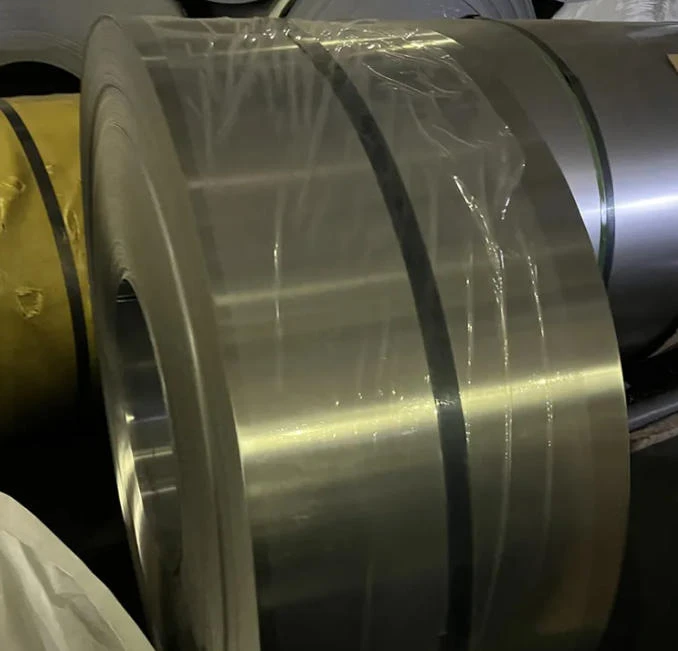
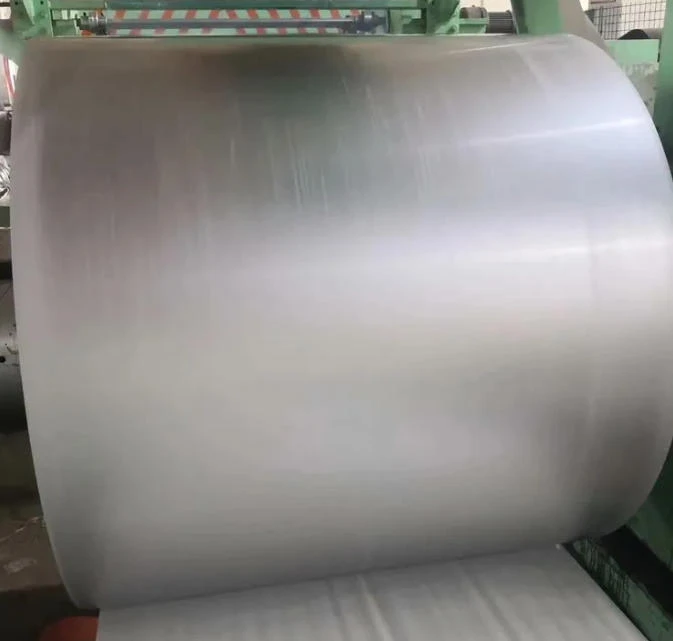
If you are interested in purchasing this material, please let us know:
What thickness and width do you require?
What is the required quantity or roll weight?
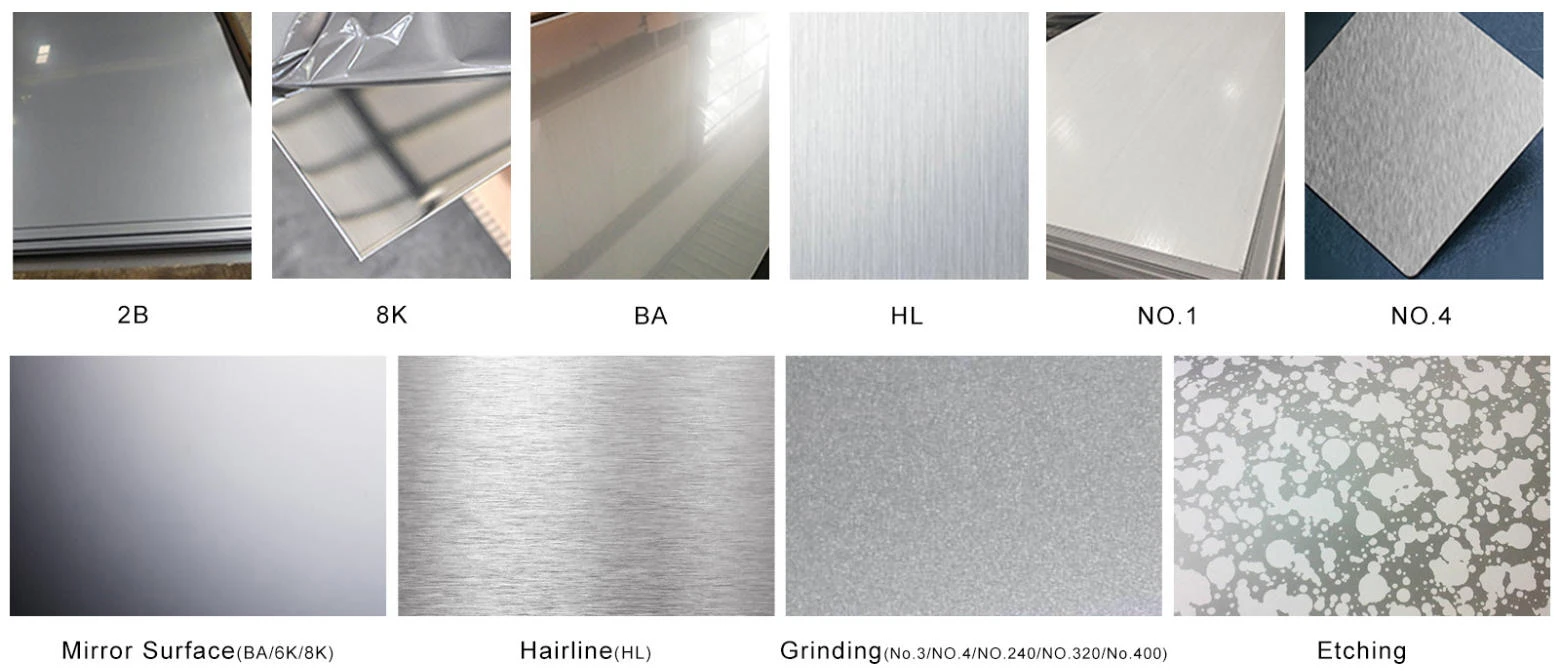
GNEE provides the following finishes:
| Finish Code | Name | Description | Typical Application |
| 2B | Cold Rolled | Smooth, slightly reflective, dull grey. | Industrial parts, deep drawing. |
| BA | Bright Annealed | Mirror-like, very bright and reflective. | Kitchenware, appliance trim. |
| No.1 | Hot Rolled | Annealed and pickled (matte and rough). | Automotive exhaust components. |
| No.4 | Brushed/Satin | Unidirectional fine polishing lines. | Kitchen equipment, elevators. |
| HL | Hairline | Continuous long polishing streaks. | Architecture, door panels. |
| 8K | Mirror | Highly polished, non-directional reflection. | Decoration, high-end trim. |
| PVC/PE | Protective Film | Applied to protect surfaces (Laser or Blue film). | Protection during processing. |
FAQ
Q1: What are the common surface finishes available?
The most common finishes are 2B (cold-rolled and skin-passed), BA (bright annealed), and No.4 (brushed/satin finish). For exhaust pipe applications, the cold-rolled "mill finish" is typically supplied.
Q2: What is the market availability of 1.4510?
Supply is abundant within the automotive supply chain and the home appliance industry. However, its prevalence in the retail market may not be as high as that of 304. It is generally available primarily as cold-rolled sheet (0.5mm – 3.0mm).
Q3: How much cost can be saved by using 1.4510 instead of 304?
Depending on raw material market conditions, cost savings typically range from 20% to 40%. This largely depends on the prevailing market price of nickel; the higher the nickel price, the greater the savings.
Send Inquiry