







What is the difference between 1.4547 and 1.4529?
Mar 18, 2026
Leave a message
1.4547 stainless steel, commonly known as 254 SMO or UNS S31254, is a high-performance super austenitic stainless steel with exceptional resistance to pitting, crevice corrosion, and stress corrosion cracking in chloride environments. With its high molybdenum and nitrogen content, combined with significant chromium and nickel, it offers performance that bridges the gap between standard austenitic grades and more expensive nickel-based alloys. It is widely used in seawater handling, chemical processing, and pollution control equipment where conventional stainless steels are inadequate.
This premium super austenitic grade is standardized under key international designations.
| Standard | Equivalent Grade |
|---|---|
| EN (Europe) | 1.4547 |
| ASTM/AISI (USA) | 254 SMO, UNS S31254 |
| Common Name | 254 SMO, 6% Moly |
Its high alloy content, especially molybdenum and nitrogen, is key to its exceptional corrosion resistance.
| Element | C | Si | Mn | P | S | Cr | Ni | Mo | N | Cu |
|---|---|---|---|---|---|---|---|---|---|---|
| Content (%) | ≤ 0.02 | ≤ 0.8 | ≤ 1.0 | ≤ 0.03 | ≤ 0.01 | 19.5 - 20.5 | 17.5 - 18.5 | 6.0 - 6.5 | 0.18 - 0.22 | 0.5 - 1.0 |
It combines high strength with excellent ductility and superior corrosion resistance.
| Property | Yield Strength (Rp0.2) | Tensile Strength (Rm) | Elongation (A) | Hardness (HB) |
|---|---|---|---|---|
| Typical Value | ≥ 300 MPa | 650 - 850 MPa | ≥ 35% | ≤ 250 |
Key Characteristics and Applications of 1.4547 / 254 SMO
Exceptional Pitting and Crevice Corrosion Resistance: With a PREN (Pitting Resistance Equivalent Number) typically > 40, it offers outstanding resistance in aggressive chloride environments, including seawater and hypochlorite solutions.
Excellent Stress Corrosion Cracking (SCC) Resistance: Performs well under tensile stress in corrosive environments where standard austenitic grades like 316L would fail.
High Strength: Provides higher yield strength than standard austenitic grades (300 MPa vs. 200 MPa), allowing for lighter designs and reduced material costs.
Good Weldability and Formability: Can be welded using common techniques with matching high-alloy filler materials, maintaining good corrosion resistance in the weld zone.
Primary Applications:
Seawater Systems: Heat exchangers, piping, pumps, and valves in desalination plants, offshore platforms, and marine applications.
Chemical Processing: Equipment for handling aggressive acids, chlorides, and oxidizing media, particularly in bleach plants and pulp processing.
Pollution Control: FGD (Flue Gas Desulfurization) systems, scrubbers, and ducting in power plants.
Oil & Gas: Offshore topside equipment, seawater injection systems, and process piping.
Pulp & Paper: Bleaching equipment, digesters, and handling systems for chlorine dioxide environments.
Pharmaceutical: High-purity equipment requiring exceptional corrosion resistance.
How does 254 SMO (1.4547) compare to 316L (1.4404) and other 6% Moly alloys?
254 SMO offers dramatically superior corrosion resistance compared to 316L, with PREN > 40 vs. 316L's 24-26. It can withstand seawater temperatures up to 40-50°C, while 316L is limited to ambient temperatures in seawater. It offers excellent resistance to stress corrosion cracking, where 316L is susceptible. Compared to other 6% molybdenum super austenitic alloys, 254 SMO is one of the most widely used and proven grades, offering a well-established balance of properties with over 40 years of successful application history. It bridges the performance gap between standard stainless steels and more expensive nickel-based alloys like Alloy C-276, offering a cost-effective solution for severe chloride environments.
What are the welding considerations for 254 SMO (1.4547) stainless steel?
Welding 254 SMO requires careful control to maintain corrosion resistance. Recommended practices include using matching or over-alloyed filler metals (such as Alloy 625 or 276 type fillers) to ensure the weld zone maintains corrosion resistance comparable to the base metal. Controlling heat input (typically 0.5-1.5 kJ/mm) is important to avoid excessive grain growth and precipitation of detrimental phases. Proper shielding gas (argon-based with nitrogen addition) helps maintain nitrogen content in the weld metal. Post-weld cleaning is essential to preserve corrosion resistance in the weld zone, and pickling/passivation is recommended to restore the passive layer. Heat tint and oxide layers must be completely removed as they can compromise corrosion resistance.
What is the difference between 1.4547 and 1.4529?
Both 1.4547 (254 SMO) and 1.4529 (also sometimes called 254 SMO or Alloy 31) are 6% molybdenum super austenitic stainless steels, but they have slightly different compositions. 1.4547 is the original 254 SMO grade developed by Avesta, with a specific composition optimized for seawater and chloride service. 1.4529 (Alloy 31) has slightly higher nickel and chromium with similar molybdenum content, offering comparable but slightly different corrosion resistance profiles. Both are excellent for severe chloride environments, but 1.4547 is more widely specified for marine and offshore applications, while 1.4529 may be preferred for certain chemical processing applications. They are often considered interchangeable for many applications, but specific requirements should be verified for critical service.
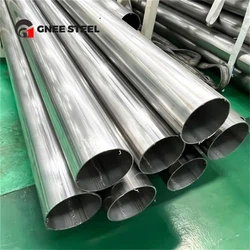

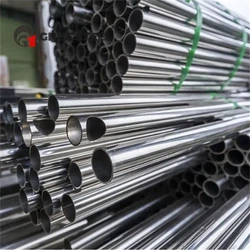
Looking for a Reliable Supplier of 1.4547 / 254 SMO Stainless Steel?
GNEE Steel supplies premium super austenitic 254 SMO (1.4547/UNS S31254) stainless steel in plate, pipe, bar, fitting, and flange forms for the most demanding corrosive and marine applications. We provide full material traceability and certification (EN 10204 3.1) to ensure optimal performance. If you have any requirements, please feel free to contact us.


Send Inquiry