







17 7 PH stainless steel vs 316
Jan 29, 2026
Leave a message
1.4568 stainless steel, commonly known as 631 or 17-7PH (UNS S17700), is a semi-austenitic precipitation-hardening stainless steel. It is known for its unique ability to be formed in a soft, ductile condition and then heat-treated to achieve very high strength and hardness, along with good corrosion resistance. This makes it ideal for aerospace springs, high-stress fasteners, and medical instruments.
This versatile precipitation-hardening grade is standardized under key international systems.
| Standard | Equivalent Grade |
|---|---|
| EN (Europe) | 1.4568 |
| ASTM/AISI (USA) | 631, 17-7PH, UNS S17700 |
| JIS (Japan) | SUS631 |
Its composition includes aluminum for age-hardening.
| Element | C | Si | Mn | Cr | Ni | Al |
|---|---|---|---|---|---|---|
| Content (%) | ≤ 0.09 | ≤ 1.0 | ≤ 1.0 | 16.0 - 18.0 | 6.5 - 7.75 | 0.75 - 1.50 |
Mechanical properties vary dramatically with heat treatment condition.
| Condition | Yield Strength (Rp0.2) | Tensile Strength (Rm) | Elongation (A) | Hardness (HRC) |
|---|---|---|---|---|
| Condition A (Annealed) | ~ 380 MPa | ~ 1030 MPa | ~ 20% | ~ 28 HRC |
| Condition C (TH1050) | ~ 1030 MPa | ~ 1240 MPa | ~ 7% | ~ 40 HRC |
Key Characteristics and Applications of 1.4568 / 17-7PH
High Strength with Good Ductility: Can achieve tensile strengths over 1200 MPa after precipitation hardening while retaining useful ductility.
Excellent Fatigue and Spring Properties: Widely used for springs, diaphragms, and other components requiring high fatigue resistance and elastic properties.
Good Corrosion Resistance: Comparable to Type 304 stainless steel, making it suitable for applications requiring both strength and moderate corrosion resistance.
Primary Applications:
Aerospace: Bellows, springs, fasteners, and structural components.
Medical: Surgical instruments, orthopedic implants, and dental tools.
Chemical Processing: Valve parts and pump components requiring strength and corrosion resistance.
Precision Instruments: Critical components requiring dimensional stability and high strength.
17-7 PH stainless steel vs 316
17-7 PH stainless steel is a high-strength, precipitation-hardening alloy ideal for springs and aerospace components requiring fatigue resistance up to 600°F, while 316 stainless steel is an austenitic alloy optimized for superior corrosion resistance, particularly in marine or chloride environments. 17-7 PH offers better strength and hardness; 316 provides superior, reliable corrosion resistance.
How does 17-7PH compare to 17-4PH in terms of properties and applications?
Both are precipitation-hardening grades, but 17-7PH is semi-austenitic while 17-4PH is martensitic. 17-7PH generally offers better formability in the annealed condition and can achieve higher strength levels (especially in spring applications) with excellent fatigue resistance. 17-4PH typically has better machinability and is often chosen for complex machined parts. 17-7PH is preferred for thin sections and formed components like springs and bellows.

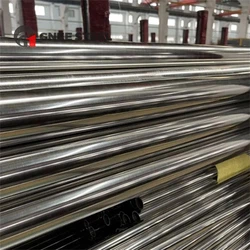
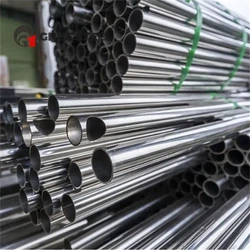
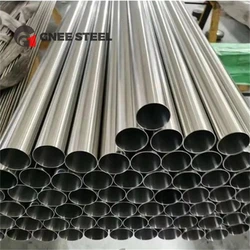
Looking for a Reliable Supplier of 1.4568 / 17-7PH Stainless Steel?
GNEE Steel supplies high-performance 17-7PH (1.4568) stainless steel in strip, wire, bar, and sheet forms, available in various heat-treated conditions to meet specific mechanical requirements. We provide full material certification and processing support. If you have any requirements, please feel free to contact us.

Send Inquiry