







1.4581 Stainless Steel — Specs & Selection Guide
Mar 18, 2026
Leave a message
1.4581 stainless steel, commonly known as 316L or UNS S31603, is the low-carbon variant of the standard 316 molybdenum-alloyed austenitic stainless steel. Its reduced carbon content enhances resistance to intergranular corrosion in the as-welded condition, making it the preferred choice for heavy welded fabrications, chemical processing equipment, pharmaceutical devices, and marine applications where both corrosion resistance and weld integrity are critical. As one of the most versatile and widely used stainless steels, it offers an excellent balance of corrosion resistance, formability, and cost-effectiveness.
Equivalent Grade for 1.4581 stainless steel
| Standard | Equivalent Grade |
|---|---|
| EN (Europe) | 1.4581 |
| ASTM/AISI (USA) | 316L, UNS S31603 |
| JIS (Japan) | SUS316L |
| KS (Korea) | STS316L |
| Common Name | 316L |
Chemical composition of 1.4581 stainless steel
| Element | C | Si | Mn | P | S | Cr | Ni | Mo |
|---|---|---|---|---|---|---|---|---|
| Content (%) | ≤ 0.03 | ≤ 1.0 | ≤ 2.0 | ≤ 0.045 | ≤ 0.03 | 16.5 - 18.5 | 10.0 - 13.0 | 2.0 - 2.5 |
Mechanical properties of 1.4581 stainless steel
| Property | Yield Strength (Rp0.2) | Tensile Strength (Rm) | Elongation (A) | Hardness (HB) |
|---|---|---|---|---|
| Typical Value | ≥ 200 MPa | 490 - 690 MPa | ≥ 40% | ≤ 215 |
Key Characteristics and Applications of 1.4581 / 316L
Superior Weldability without Sensitization: The low carbon content (≤0.03%) minimizes chromium carbide formation during welding, preventing intergranular corrosion in the heat-affected zone without the need for post-weld heat treatment.
Enhanced Corrosion Resistance: The molybdenum addition (2-3%) provides significantly better resistance to pitting and crevice corrosion in chloride-containing environments compared to 304/304L.
Good Acid Resistance: Offers improved performance in sulfuric, phosphoric, and acetic acid environments, making it suitable for chemical processing applications.
Excellent Formability and Toughness: Maintains the good ductility and impact resistance characteristic of austenitic stainless steels, even at cryogenic temperatures.
Primary Applications:
Chemical & Pharmaceutical: Tanks, reactors, piping, and vessels for corrosive media requiring high purity.
Marine & Coastal: Boat fittings, offshore platforms, and components exposed to seawater or salt spray.
Medical & Food Processing: Surgical instruments, implants, and equipment requiring sterilization and high cleanliness.
Architectural: High-end façades, railings, and structures in polluted or coastal atmospheres.
Pulp & Paper: Process equipment in bleaching and chemical recovery areas.
Textile Industry: Equipment for dyeing and bleaching operations.
When should I choose 316L (1.4581) over 316 (1.4401)?
Does 316L have lower mechanical strength than 316 due to its lower carbon content?
What are the welding considerations for 316L?
Looking for a Reliable Supplier of 1.4581 / 316L Stainless Steel?
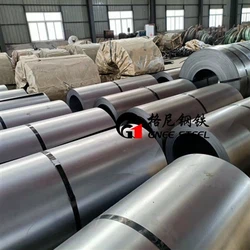
1.4581 Stainless Steel Coil

1.4581 Stainless Steel Plate

1.4581 Stainless Steel Pipe
Send Inquiry