What are the properties of 1.4621 stainless steel?
1.4621 stainless steel, commonly known as 430 ULTRA or UNS S43036, is a high-performance ferritic stainless steel with enhanced corrosion resistance and improved formability compared to standard 430. With its higher chromium content and controlled chemistry, it offers a unique combination of good corrosion resistance, excellent formability, and cost-effectiveness, bridging the performance gap between standard ferritic grades and more expensive austenitic stainless steels. It is widely used in automotive trim, kitchen appliances, and architectural applications where aesthetics and moderate corrosion resistance are required.
| Standard |
Equivalent Grade |
| EN (Europe) |
1.4621 |
| ASTM/AISI (USA) |
430 ULTRA, UNS S43036 |
| Common Name |
430 ULTRA |
| Element |
C |
Si |
Mn |
P |
S |
Cr |
Mo |
Ti |
| Content (%) |
≤ 0.03 |
≤ 1.0 |
≤ 1.0 |
≤ 0.04 |
≤ 0.03 |
17.0 - 19.0 |
≤ 0.5 |
0.10 - 0.60 |
| Property |
Yield Strength (Rp0.2) |
Tensile Strength (Rm) |
Elongation (A) |
Hardness (HB) |
| Typical Value |
≥ 260 MPa |
450 - 600 MPa |
≥ 25% |
≤ 190 |
Enhanced Corrosion Resistance: Higher chromium content (17-19%) provides better corrosion resistance than standard 430, approaching that of 304 in many environments, particularly against atmospheric corrosion and mild chemicals.
Excellent Formability: Superior ductility and formability compared to standard ferritic grades, allowing for complex deep drawing and forming operations.
Good Weldability: Low carbon content and titanium stabilization improve weldability, reducing the risk of sensitization and grain growth.
Improved Surface Finish: Excellent surface quality makes it suitable for decorative applications requiring high aesthetic appeal.
Automotive Trim: Exterior trim, moldings, wheel covers, and decorative components.
Kitchen Appliances: Dishwasher fronts, refrigerator panels, oven linings, and microwave interiors.
Architectural Applications: Interior and exterior architectural trim, elevator panels, and decorative elements.
Catering Equipment: Sinks, countertops, and food preparation surfaces requiring good aesthetics.
Heat Exchangers: Components in HVAC systems and heat recovery equipment.
Solar Water Heaters: Absorber plates and collector components.
430 ULTRA offers significantly better corrosion resistance than standard 430 due to its higher chromium content and cleaner chemistry. While 430 may show staining in moderate corrosive environments, 430 ULTRA performs well in many applications where 304 would traditionally be used. It offers formability approaching that of 304, making it suitable for deep drawing operations. Compared to 304, 430 ULTRA is less expensive and more price-stable due to its lower nickel content (no nickel addition). However, it does not match 304's corrosion resistance in aggressive chloride environments and is magnetic. It serves as a cost-effective alternative to 304 for applications where the highest corrosion resistance is not required.
430 ULTRA offers excellent formability with good deep drawing characteristics. Its lower work hardening rate compared to austenitic grades allows for complex forming operations. Recommended practices include:
Using appropriate lubrication during forming operations
Avoiding excessive deformation in single operations; multi-stage forming may be required for complex shapes
Springback is typically lower than in austenitic grades
Annealing may be required after severe forming to restore ductility
The material maintains good surface quality after forming, reducing finishing requirements
430 ULTRA has good weldability due to its low carbon content and titanium stabilization. It can be welded using common methods including TIG, MIG, and resistance welding. Low heat input welding techniques are recommended to minimize grain growth in the heat-affected zone. Matching filler metals are available, though austenitic fillers like 309L are often used for better ductility. Preheating is generally not required for thin sections. Post-weld annealing is not necessary for corrosion resistance, but may be beneficial for restoring ductility in severely cold-worked material.
GNEE Steel supplies high-performance 430 ULTRA (1.4621) stainless steel in sheet, coil, and strip forms, ideal for automotive trim, kitchen appliances, and decorative applications. We provide full material certification (EN 10204 3.1) and processing support including cutting, bending, deep drawing, and surface finishing services. If you have any requirements, please feel free to contact us.
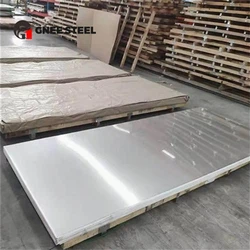
1.4621 Stainless Steel Plate
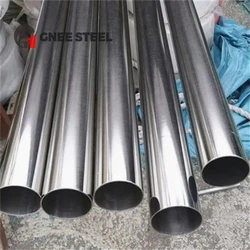
1.4621 Stainless Steel Pipe
1.4621 Stainless Steel Bar