

EN 1.4590 (2507): Super Duplex Stainless Steel Overview
Apr 02, 2026
Leave a message
1.4590 stainless steel, commonly known as 441 or UNS S44100, is a titanium and niobium stabilized ferritic stainless steel that offers excellent high-temperature oxidation resistance, good corrosion resistance, and superior weldability. With its high chromium content and dual stabilization, it provides enhanced performance in automotive exhaust systems and high-temperature applications where traditional ferritic grades like 409 or 430 may be insufficient. Its excellent thermal fatigue resistance and good formability make it a preferred material for demanding exhaust system components.
Equivalent Grade for 1.4590 stainless steel
| Standard | Equivalent Grade |
|---|---|
| EN (Europe) | 1.4590 |
| ASTM/AISI (USA) | 441, UNS S44100 |
| Common Name | 441, AISI 441 |
Chemical composition of 1.4590 stainless steel
| Element | C | Si | Mn | P | S | Cr | Ti | Nb |
|---|---|---|---|---|---|---|---|---|
| Content (%) | ≤ 0.03 | ≤ 1.0 | ≤ 1.0 | ≤ 0.04 | ≤ 0.015 | 17.0 - 19.0 | 0.10 - 0.60 | 0.30 - 0.80 |
properties of 1.4590 stainless steel
| Property | Yield Strength (Rp0.2) | Tensile Strength (Rm) | Elongation (A) | Hardness (HB) |
|---|---|---|---|---|
| Typical Value | ≥ 280 MPa | 450 - 600 MPa | ≥ 25% | ≤ 200 |
Key Characteristics and Applications of 1.4590 / 441
Excellent High-Temperature Oxidation Resistance: The higher chromium content (17-19%) provides superior resistance to oxidation and scaling at elevated temperatures up to approximately 850°C, making it suitable for hot-end exhaust components.
Superior Weldability: Dual stabilization with titanium and niobium prevents sensitization during welding, eliminating the need for post-weld heat treatment and ensuring good weld integrity.
Good Thermal Fatigue Resistance: Excellent resistance to thermal cycling makes it ideal for components subject to repeated heating and cooling cycles.
Good Corrosion Resistance: Offers better corrosion resistance than 409 and 430 in automotive exhaust environments, particularly against exhaust
gas condensate and road salt.
Primary Applications:
Automotive Exhaust Systems: Catalytic converter shells, exhaust manifolds, hot-end components, diesel particulate filters, and EGR systems.
High-Temperature Applications: Components requiring good oxidation resistance up to 850°C.
Heat Exchangers: Automotive and industrial heat exchanger components.
Decorative Applications: Architectural trim and cladding requiring good formability and weldability.
Industrial Equipment: Components requiring a combination of high-temperature strength and corrosion resistance.
How does 441 (1.4590) compare to 409 (1.4512) and 439 (1.4509)?
What are the welding considerations for 441 stainless steel?
What temperature range is 441 suitable for?
Looking for a Reliable Supplier of 1.4590 / 441 Stainless Steel?

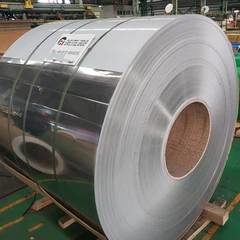
1.4590 Stainless Steel Plate
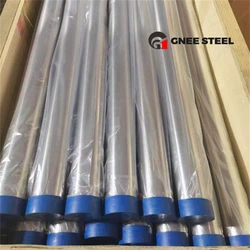
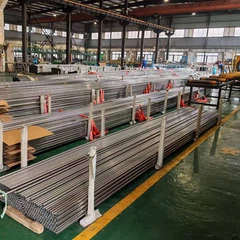
1.4590 Stainless Steel Pipe

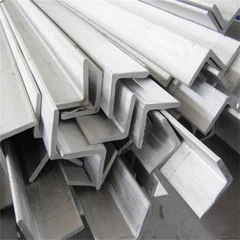
1.4590 Stainless Steel Bar
Send Inquiry