







What are the core characteristics of EN 1.4762 stainless steel?
Apr 02, 2026
Leave a message
1.4762 stainless steel, commonly known as 446 or UNS S44600, is a high-chromium ferritic stainless steel designed for exceptional resistance to high-temperature oxidation and sulfidation. With its elevated chromium content (23-27%), it offers superior scaling resistance at temperatures up to 1100°C, making it the material of choice for demanding high-temperature applications such as furnace components, burner parts, and heat treatment equipment where conventional stainless steels would rapidly degrade. Its ferritic structure provides good thermal conductivity and low thermal expansion, essential for thermal cycling applications.
Equivalent Grade for 1.4762 stainless steel
| Standard | Equivalent Grade |
|---|---|
| EN (Europe) | 1.4762 |
| ASTM/AISI (USA) | 446, UNS S44600 |
| Common Name | 446 |
Chemical composition of 1.4762 stainless steel
| Element | C | Si | Mn | P | S | Cr | N |
|---|---|---|---|---|---|---|---|
| Content (%) | ≤ 0.20 | ≤ 1.0 | ≤ 1.5 | ≤ 0.04 | ≤ 0.03 | 23.0 - 27.0 | ≤ 0.25 |
properties of 1.4762 stainless steel
| Property | Yield Strength (Rp0.2) | Tensile Strength (Rm) | Elongation (A) | Hardness (HB) |
|---|---|---|---|---|
| Typical Value (Room Temp) | ≥ 275 MPa | 450 - 600 MPa | ≥ 20% | ≤ 220 |
Key Characteristics and Applications of 1.4762 / 446
Exceptional High-Temperature Oxidation Resistance: The high chromium content (23-27%) provides outstanding resistance to scaling and oxidation in continuous service up to 1100°C (2010°F) and intermittent service up to 1050°C (1920°F).
Excellent Sulfidation Resistance: Superior resistance to sulfur-containing atmospheres makes it ideal for high-temperature applications in the presence of combustion gases and sulfur compounds.
Low Thermal Expansion: Ferritic structure provides lower thermal expansion than austenitic grades, reducing thermal stress in cyclic heating applications.
Good Thermal Conductivity: Higher thermal conductivity than austenitic stainless steels, beneficial for heat transfer applications.
Primary Applications:
Furnace Components: Radiant tubes, burner parts, retorts, muffles, and furnace linings.
Heat Treatment Equipment: Support grids, trays, baskets, and fixtures for heat treating operations.
Petrochemical Industry: Components in reformers, crackers, and high-temperature process equipment.
Power Generation: Superheater tubes, boiler components, and heat recovery systems.
Glass Industry: Glass handling equipment and kiln components.
Cement Industry: Preheater cyclones and ducting.
Waste Incineration: Combustion chambers and heat exchangers in high-sulfur environments.
How does 446 (1.4762) compare to 310S (1.4845) and 316L (1.4404)?
What are the welding considerations for 446 stainless steel?
What are the limitations of 446 stainless steel?
Looking for a Reliable Supplier of 1.4762 / 446 Stainless Steel?
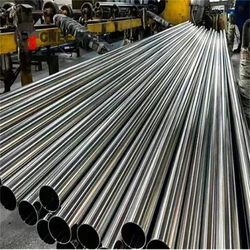
1.4762 stainless steel pipe

1.4762 stainless steel plate

1.4762 stainless steel coil
Send Inquiry