

304 4ft Cold Rolled Stainless Steel Coil Price Today
Oct 21, 2026
Leave a message
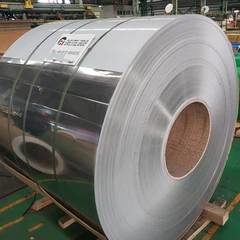
If you are sourcing standard-width cold-rolled coils for the production of kitchenware, architectural panels, welded pipes, stamped parts, or various corrosion-resistant products, then 4-foot (1219 mm) wide 304 cold-rolled stainless steel coils serve as the most versatile and widely used base material.
Many buyers focus solely on the "price per kilogram" when making purchases, overlooking critical factors such as thickness tolerances, flatness, edge quality, the risk of surface scratches, and the availability of a valid mill test certificate (material certification). Opting for low-cost but substandard products often leads to material scrap, production delays, or even rejection of the goods due to failure to meet quality inspection standards.
What is 304 4ft Cold Rolled Stainless Steel Coil?
304 (UNS S30400, EN 1.4301, AISI 304) is the most widely used austenitic stainless steel, with a nominal composition of 18%–20% chromium (Cr), 8%–10.5% nickel (Ni), and ≤ 0.08% carbon (C). The term "4-foot (4ft)" refers to a width of 1219 mm-the global standard width for 304 cold-rolled master coils-which facilitates slitting, cut-to-length processing, and further fabrication. The finished product is typically annealed and pickled. Compared to hot-rolled coils, cold-rolled coils offer tighter thickness tolerances, a smoother surface finish, superior flatness, and more consistent mechanical properties during forming and welding.
Today's Price 304 Cold Rolled Coil, 4ft /1219 mm, EXW China
Grade 304 4ft-width cold-rolled stainless steel coils generally trade at US$1,200 to US$2,800 per ton (approx. US$1.10 to US$2.80 per kilogram) wholesale, depending on thickness (typically 0.3mm to 3.0mm), surface finish (2B, BA, or Hairline), and minimum order quantities.
| Thickness | Width | Surface | MOQ | Reference Price (USD/kg) | Remarks |
|---|---|---|---|---|---|
| 0.3–0.5 mm | 1219 mm (4ft) | 2B | 500 kg | 2.30 – 2.52 | Thin gauge, higher rolling loss |
| 0.6–1.0 mm | 1219 mm (4ft) | 2B | 1000 kg | 2.12 – 2.33 | Best-selling standard spec |
| 1.2–2.0 mm | 1219 mm (4ft) | 2B | 1000 kg | 2.05 – 2.24 | Stable stock, fast delivery |
| 0.4–1.5 mm | 1219 mm (4ft) | BA | 800 kg | 2.38 – 2.60 | Bright annealed, strict surface |
| 0.8–2.0 mm | 1219 mm (4ft) | No.4 / HL | 1000 kg | 2.22 – 2.45 | Brushed finish for visible parts |
Disclaimer: Prices below are only for budget reference. Final quotation changes with LME nickel, ferrochrome, exchange rate, surface finish, edge type, order tonnage, inspection terms and delivery terms. Base condition: 2B finish, annealed & pickled, standard mill edge, MTC EN 10204 3.1 available, export seaworthy packing.
To give you a more accurate quote, could you share:
• The exact thickness (gauge) you need?
• The estimated weight or total length required?
• Whether you need a specific surface finish (like 2B or hairline)?
Market Price Analysis for Stainless Buyers
304 coil price is mainly controlled by LME nickel and ferrochrome. Nickel accounts for 8–10.5% of 304 composition; every $1000/MT swing of LME nickel normally shifts 304 coil price around 0.09–0.13 USD/kg. The key influencing factors you need to evaluate before inquiry:
1. Thickness: gauges under 0.5 mm need multiple cold rolling passes, so premium is obvious.
2. Surface: 2B is the baseline; BA, No.4, HL and mirror surface add polishing/brushing processing cost.
3. Edge: mill edge is cheaper; burr-free slit edge for tube making or precision stamping has extra slitting charge.
4. Order volume: orders above 5 MT usually get 5–8% bulk discount vs small spot batches.
5. Inspection requirement: PMI, SGS/BV third-party witness inspection will increase unit cost and lead time.
6. Stock cycle: standard 4ft 2B 304 cold rolled coil keeps regular spot stock; custom surface or ultra-thin material belongs to production order with longer lead time.
Important buyer reminder: Low-price material without valid MTC often has unstable Ni/Cr segregation, inconsistent thickness tolerance and hidden surface defects. It will raise your reject rate and total procurement cost, even if the per-kg price looks attractive.
304 vs. 304L vs. 316L vs. 201: Price
| Grade | Cr (%) | Ni (%) | Mo | Relative Price vs 304 |
|---|---|---|---|---|
| 304 | 18–20 | 8–10.5 | 0 | Baseline (100%) |
| 304L | 18–20 | 8–12 | 0 | +4% ~ +8% |
| 316L | 16–18 | 10–14 | 2–3 | +28% ~ +40% |
| 430 | 16–18 | <0.75 | 0 | -30% ~ -38% |
| 201 | 16–18 | 3.5–5.5 | 0 | -40% ~ -48% |
304 stainless steel cold rolled coil supplier-GNEE
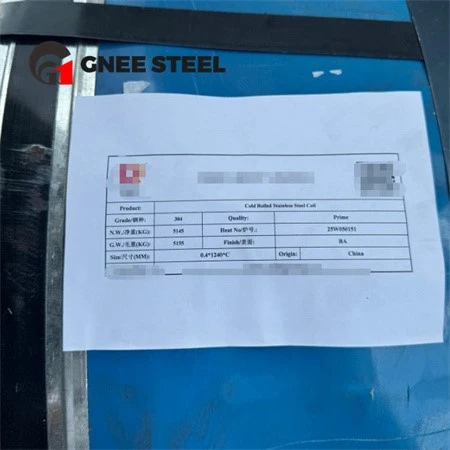
- Standards support: ASTM A240, ASTM A480, EN 1.4301, JIS G4305, GB/T 3280; supply EN 10204 3.1 / 3.2 MTC
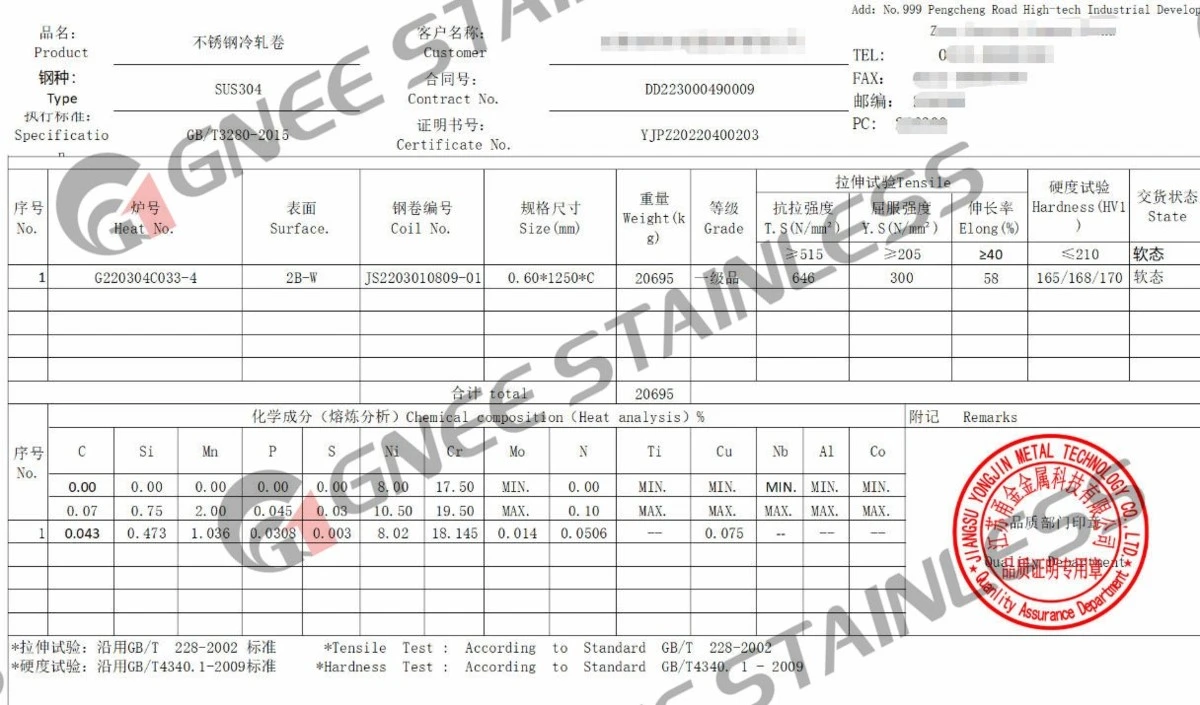
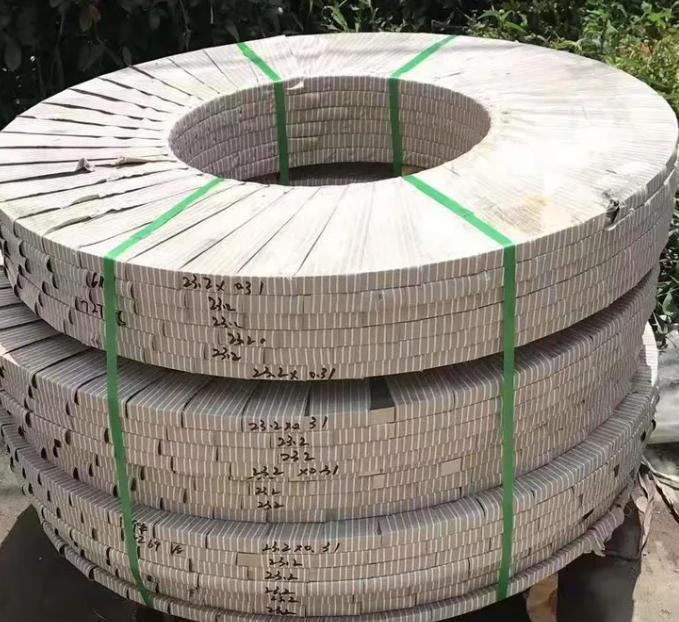
- Size range: thickness 0.3–3.0 mm; standard 1219 mm (4ft) mother coil, also 1500 mm, 1000 mm and custom slit strip width
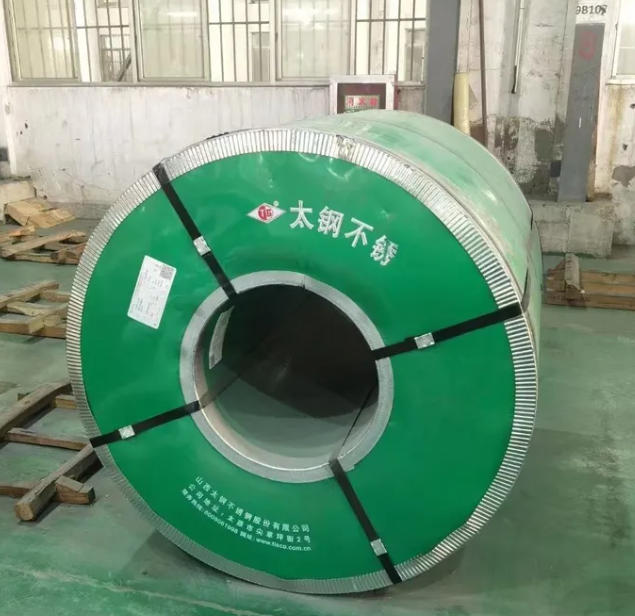
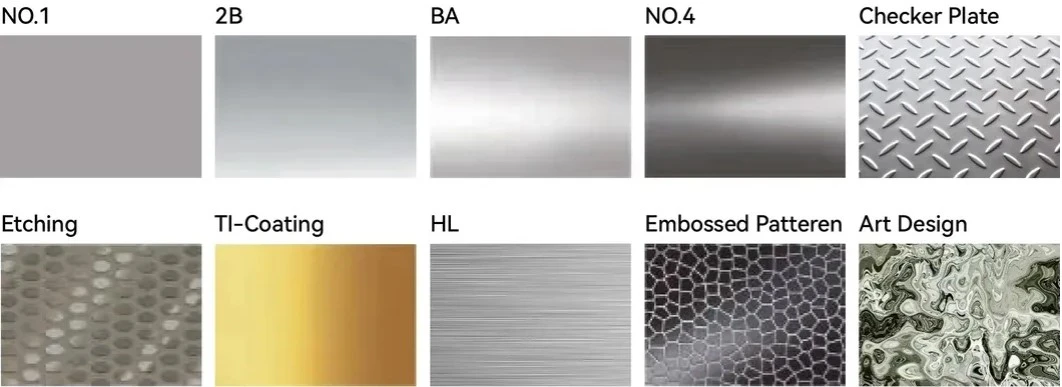
- Surface options: 2B, BA, No.4, HL hairline, 8K mirror; PE protective film applied to avoid scratching during laser cutting, bending and slitting
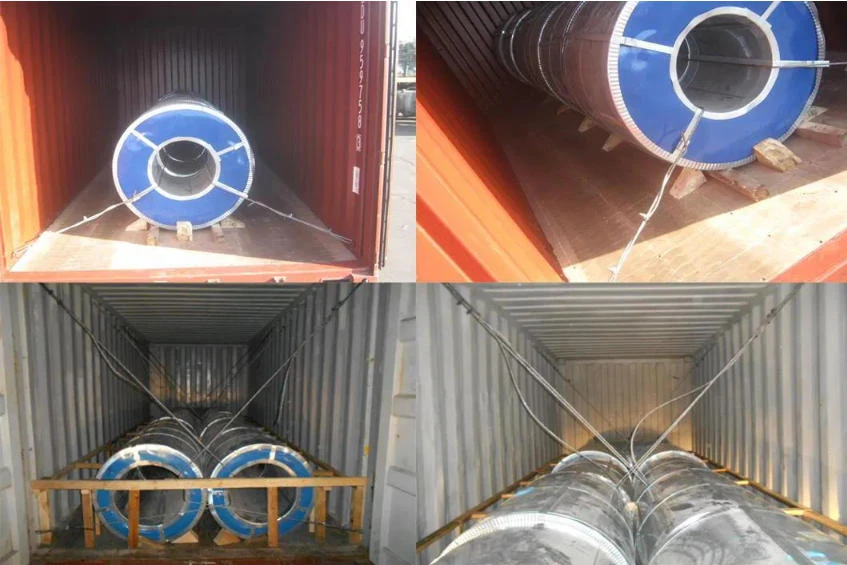
- Processing service: slitting, cut-to-length, leveling, deburring, anti-rust oil, seaworthy wooden packing for export
- Inspection service: on-request PMI test, dimension inspection, visual surface check, SGS / BV / TUV third-party inspection
- Flexible MOQ: spot small batch stock and large volume production order both acceptable; stable monthly supply for long-term framework contracts
- Trade terms: EXW, FOB, CIF, CFR; complete documents including packing list, commercial invoice, certificate of origin for customs clearance
FAQ
Q: What is the difference between 304 and 304L cold-rolled coils?
A: The carbon content in 304 is capped at 0.08%, while in 304L, it is capped at 0.03%. 304L reduces the risk of carbide precipitation after welding, making it better suited for components that require extensive welding. If your product does not have stringent corrosion resistance requirements for welded areas, standard 304 is a more cost-effective choice.
Q: Can 304 cold-rolled coils be used in saltwater or coastal, salt-laden environments?
A: It is not recommended. Because it lacks molybdenum, 304 has poor resistance to chloride-induced pitting corrosion. For use in marine environments or saltwater media, 316L or 2205 duplex stainless steel is recommended.
Q: Why is 430 stainless steel cheaper than 304?
A: 430 is a ferritic stainless steel that contains almost no nickel. While this avoids the high cost of nickel, it results in inferior formability and corrosion resistance compared to 304; additionally, 430 is magnetic.
Q: What is the lead time for 304 (4-foot wide) cold-rolled coils?
A: For 4-foot wide coils with a 2B finish that are in stock, the lead time is typically 3–7 business days. For coils with a BA finish, a No. 4 (brushed) finish, or those requiring special slitting, the lead time is 12–20 business days.
Q: What documentation does GNEE provide after shipment?
A: We provide a Mill Test Certificate (MTC), packing list, commercial invoice, and certificate of origin. If you have commissioned a third-party inspection, the corresponding third-party inspection report will also be provided. Furthermore, every shipment is eligible for PMI (Positive Material Identification) re-testing upon arrival at your warehouse.
Send Inquiry