







1.4404 vs 316L stainless steel: different
Apr 16, 2026
Leave a message
What is 1.4404 material grade?
1.4404 is the European standard (EN) designation for AISI 316L. AISI 316L is a low-carbon austenitic stainless steel with excellent corrosion resistance (especially in chloride environments) and good weldability. Its chemical composition is X2CrNiMo17-12-2, and it is widely used in industries with high durability requirements, such as pharmaceuticals, chemicals, shipbuilding, and medical fields.
What is the equivalent material of 316I stainless steel?
The primary equivalent material for 316L (often referred to as 316I or low-carbon 316) stainless steel is EN 1.4404 (X2CrNiMo17-12-2). It is a marine-grade alloy known for high corrosion resistance and is widely used in chemical, food, and pharmaceutical applications, with 316S11 (BS) and SUS316L (JIS) as other common, similar designations.
Is 1.4401 the same as 316L?
No, 1.4401 (316) and 316L (1.4404) are not exactly the same, although they are both very similar austenitic stainless steels and are often used interchangeably. The main difference lies in the carbon content: 316L (1.4404) has a lower maximum carbon content (≤ 0.03%) than 316 (1.4401) (≤ 0.07%), and 316L is superior in terms of post-weld corrosion resistance.
1.4404 vs 316L stainless steel: Chemical Composition (%)
Based on EN 10088-2 and ASTM A240 standards.
| Element | 316 / 1.4401 (Standard Carbon) | 316L / 1.4404 (Low Carbon) |
| Carbon (C) | ≤ 0.07 | ≤ 0.03 |
| Chromium (Cr) | 16.50 – 18.50 | 16.50 – 18.50 |
| Nickel (Ni) | 10.00 – 13.00 | 10.00 – 13.00 |
| Molybdenum (Mo) | 2.00 – 2.50 | 2.00 – 2.50 |
| Nitrogen (N) | ≤ 0.10 | ≤ 0.10 |
| Manganese (Mn) | ≤ 2.00 | ≤ 2.00 |
| Silicon (Si) | ≤ 1.00 | ≤ 1.00 |
| Phosphorus (P) | ≤ 0.045 | ≤ 0.045 |
| Sulfur (S) | ≤ 0.015 | ≤ 0.015 |
1.4404 vs 316L stainless steel:Mechanical Properties (at Room Temperature)
Typical values for cold-rolled plate/sheet according to EN 10088-2.
| Property | 316 / 1.4401 | 316L / 1.4404 |
| Yield Strength (Rp0.2) | ≥ 240 MPa | ≥ 220 MPa |
| Tensile Strength (Rm) | 530 – 680 MPa | 520 – 670 MPa |
| Elongation (A50mm) | ≥ 40% | ≥ 45% |
| Hardness (Brinell - HBW) | ≤ 215 | ≤ 215 |
| Modulus of Elasticity | 200 GPa | 200 GPa |
Download 1.4404/316L Technical Data Sheet
What is the difference between 316L and 316 stainless steel?
The primary difference between 316 and 316L stainless steel is their carbon content, with 316L limited to a maximum of 0.03% and 316 allowing up to 0.08%. This lower carbon level in 316L significantly improves its weldability and formability by reducing the risk of carbide precipitation (weld decay), making it the preferred choice for heavily welded or complex fabrication projects.
What is the difference between ASTM A351 CF8M and SS 316L?
ASTM A351 CF8M is a cast, pressure-resistant austenitic stainless steel (ASTM A351), while SS 316L is a forged, low-carbon austenitic stainless steel (ASTM A240/A276). The main differences lie in the manufacturing method (casting vs. forging/rolling) and carbon content; 316L has a carbon content of 0.03%, which provides better weldability than CF8M's ≤ 0.08% carbon content.
Are 1.4404 and 316L suitable for cryogenic or high-temperature use?
Yes. Both are austenitic steels that remain tough and do not become brittle at sub-zero temperatures.
High Temperature: They are suitable for use up to 450°C (840°F) for structural pressure applications. For temperatures above this, 316Ti (1.4571) or 316H (High Carbon) might be required to maintain creep strength.
Why Choose Gnee's 1.4401/1.4404 Stainless Steel?
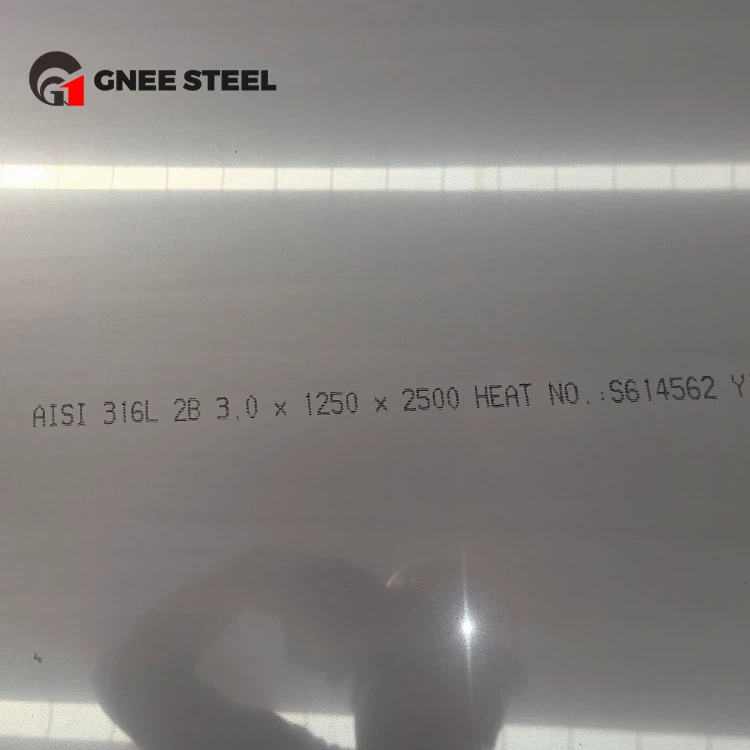
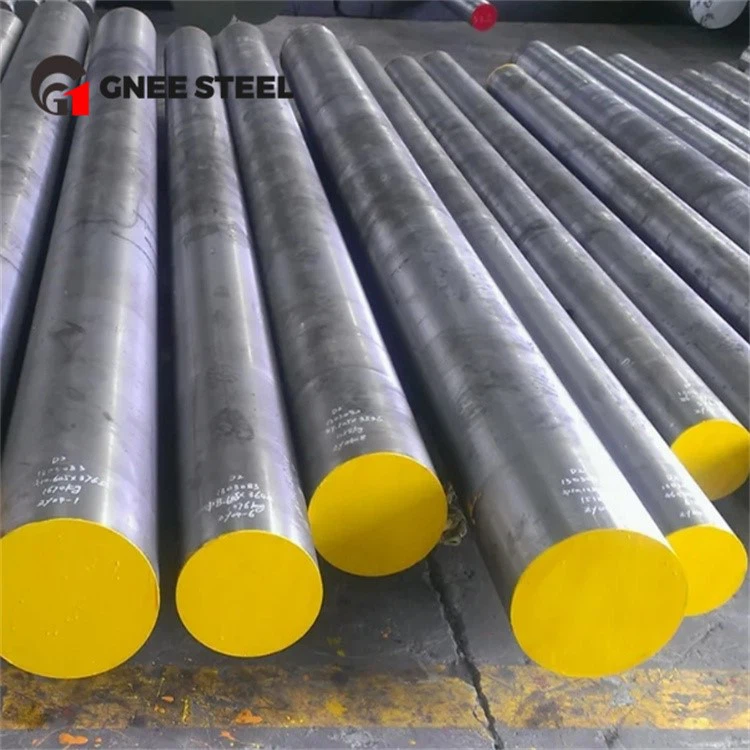
Gnee Steel specializes in dual-certified 316/316L (1.4401/1.4404) materials that meet both European and American engineering standards. These materials can be processed into various practical product forms, including plates, coils, pipes, bars, and wires.
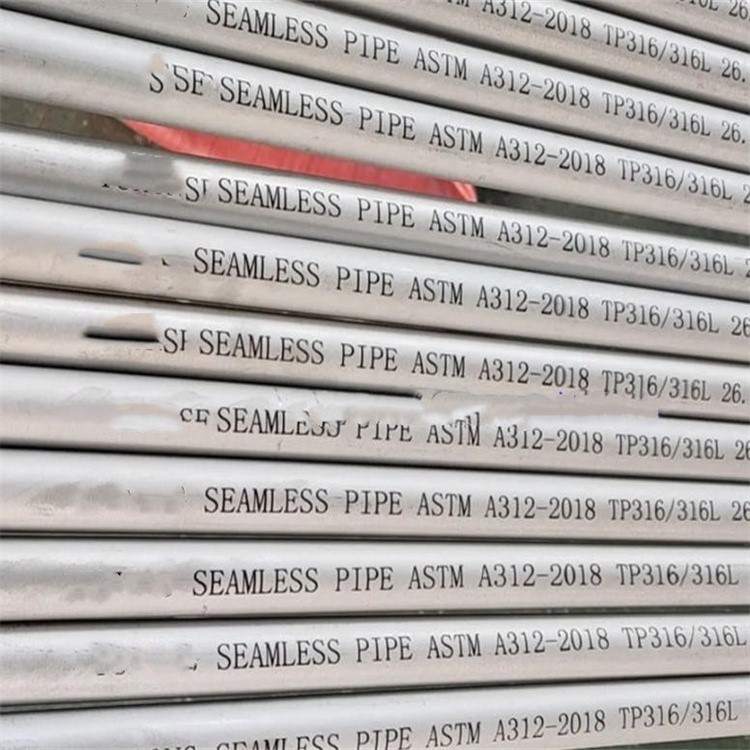
Looking for high-purity 316L pipe for chemical or marine use?
We utilize advanced cold-rolling technology from partner steel mills such as TISCO and BAOWU, providing tolerances that are stricter than industry standards.
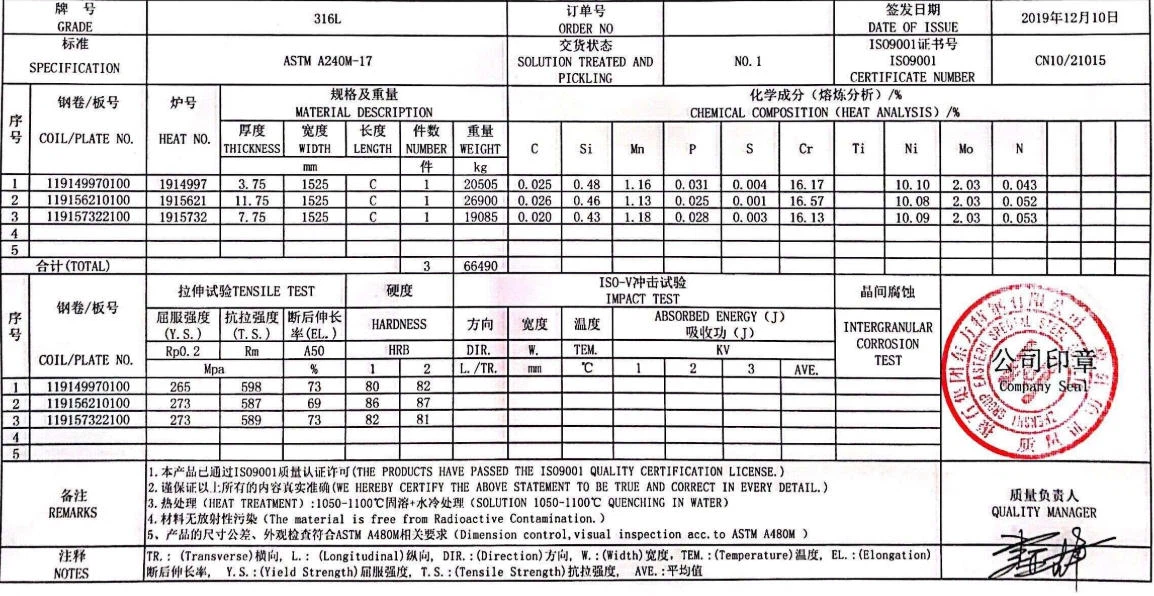
Full Traceability: Every order comes with a complete EN 10204 3.1 Material Testing Certificate (MTC), detailing precise chemical composition analysis and mechanical property test results.
Send Inquiry