







EN 1.4017 | X6CrNi17‑1 Martensitic Stainless Steel
Apr 02, 2026
Leave a message
1.4017 stainless steel, commonly known as 430 Ti or UNS S43035, is a titanium-stabilized ferritic stainless steel that offers improved weldability and resistance to intergranular corrosion compared to standard 430. With its titanium addition and lower carbon content, it provides a good balance of corrosion resistance, formability, and cost-effectiveness, making it particularly suitable for applications where welding is required. Its enhanced stability makes it a preferred choice for automotive exhaust systems, heat exchangers, and other applications where standard 430's weldability limitations are a concern.
Equivalent Grade for 1.4503 stainless steel
| Standard | Equivalent Grade |
|---|---|
| EN (Europe) | 1.4017 |
| ASTM/AISI (USA) | 430 Ti, UNS S43035 |
| Common Name | 430 Ti, 439 (similar) |
Chemical composition of 1.4503 stainless steel
| Element | C | Si | Mn | P | S | Cr | Ti |
|---|---|---|---|---|---|---|---|
| Content (%) | ≤ 0.05 | ≤ 1.0 | ≤ 1.0 | ≤ 0.04 | ≤ 0.03 | 16.0 - 18.0 | 0.10 - 0.60 |
properties of 1.4503 stainless steel
| Property | Yield Strength (Rp0.2) | Tensile Strength (Rm) | Elongation (A) | Hardness (HB) |
|---|---|---|---|---|
| Typical Value | ≥ 230 MPa | 450 - 600 MPa | ≥ 22% | ≤ 200 |
Key Characteristics and Applications of 1.4017 / 430 Ti
Excellent Weldability: Titanium stabilization prevents chromium carbide formation during welding, eliminating sensitization and the need for post-weld heat treatment, making it suitable for welded assemblies.
Good Corrosion Resistance in Mild Environments: Performs well in indoor atmospheres, fresh water, and automotive exhaust environments, with better resistance to intergranular corrosion than unstabilized 430.
High-Temperature Oxidation Resistance: Good resistance to oxidation and scaling at elevated temperatures up to about 750°C, suitable for exhaust system components.
Magnetic and Cost-Effective: Strongly magnetic and more economical than nickel-containing austenitic grades, offering a balance of performance and cost.
Primary Applications:
Automotive Exhaust Systems: Mufflers, catalytic converter housings, tailpipes, and heat shields.
Heat Exchangers: Components in automotive and HVAC systems requiring good thermal conductivity.
Decorative Trim: Interior and exterior architectural elements where aesthetics and moderate corrosion resistance are required.
Appliances: Dishwasher interiors, oven linings, and other household equipment.
Kitchen Equipment: Sinks, countertops, and food preparation surfaces in less demanding environments.
Industrial Equipment: Tanks and vessels for mild chemical service where welding is required.
How does 430 Ti (1.4017) compare to standard 430 (1.4016)?
What are the welding considerations for 430 Ti?
What are the forming considerations for 430 Ti?
Looking for a Reliable Supplier of 1.4017 / 430 Ti Stainless Steel?

1.4017 Stainless Steel Plate
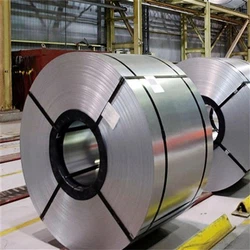
1.4017 Stainless Steel Coil
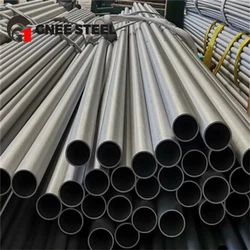
1.4017 Stainless Steel Pipe
Send Inquiry