







What Is EN 1.4016 (AISI 430) Ferritic Stainless Steel Used For?
Apr 02, 2026
Leave a message
1.4016 stainless steel, commonly known as 430 or UNS S43000, is the most widely used ferritic stainless steel, offering an excellent balance of corrosion resistance, formability, and cost-effectiveness. With its chromium content providing good resistance to oxidation and mild corrosive environments, it serves as a practical alternative to austenitic grades for applications where high corrosion resistance is not required. Its combination of good mechanical properties, magnetic characteristics, and lower cost makes it a popular choice for automotive trim, kitchen appliances, architectural applications, and a wide range of industrial components.
Equivalent Grade for 1.4016 stainless steel
| Standard | Equivalent Grade |
|---|---|
| EN (Europe) | 1.4016 |
| ASTM/AISI (USA) | 430, UNS S43000 |
| JIS (Japan) | SUS430 |
| KS (Korea) | STS430 |
| Common Name | 430 |
Chemical composition of 1.4016 stainless steel
| Element | C | Si | Mn | P | S | Cr |
|---|---|---|---|---|---|---|
| Content (%) | ≤ 0.12 | ≤ 1.0 | ≤ 1.0 | ≤ 0.04 | ≤ 0.03 | 16.0 - 18.0 |
properties of 1.4016 stainless steel
| Property | Yield Strength (Rp0.2) | Tensile Strength (Rm) | Elongation (A) | Hardness (HB) |
|---|---|---|---|---|
| Typical Value | ≥ 240 MPa | 450 - 600 MPa | ≥ 22% | ≤ 200 |
Key Characteristics and Applications of 1.4016 / 430
Good Corrosion Resistance in Mild Environments: Performs well in indoor atmospheres, fresh water, and mild chemicals, but is not suitable for marine or severe industrial environments.
Excellent Formability and Surface Finish: Can be easily formed, bent, deep drawn, polished, and textured, making it popular for decorative applications.
Magnetic and Cost-Effective: Strongly magnetic and more affordable than nickel-containing austenitic grades due to its simpler composition.
Good Oxidation Resistance: Provides adequate resistance to scaling and oxidation at temperatures up to about 750°C, suitable for moderate-temperature applications.
Primary Applications:
Architectural and Decorative: Interior trim, wall panels, elevator interiors, nameplates, and signage.
Automotive: Trim, moldings, wheel covers, and non-structural exhaust components.
Household Appliances: Washing machine drums, dishwasher interiors, range hoods, microwave ovens, and refrigerator panels.
Catering Equipment: Sinks, countertops, and food preparation surfaces in less demanding environments.
Heat Exchangers: Components in moderate-temperature service.
Kitchenware: Cutlery, utensils, and cookware where high corrosion resistance is not required.
How does 430 (1.4016) stainless steel differ from 304 (1.4301)?
What are the welding considerations for 430 stainless steel?
What temperature range is 430 suitable for?
Looking for a Reliable Supplier of 1.4016 / 430 Stainless Steel?

1.4016 Stainless Steel Plate
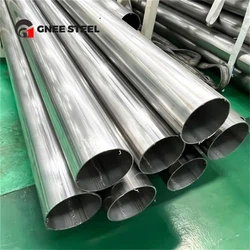
1.4016 Stainless Steel Pipe

1.4016 Stainless Steel Bar
Send Inquiry