







SUS 304 Stainless Steel Specification.PDF
Sep 28, 2026
Leave a message
If you are looking for specifications, material standards, chemical composition, mechanical properties, and procurement parameters for SUS 304 stainless steel, this article provides a detailed overview-covering what SUS 304 is, international standard equivalents, performance data, market applications, purchasing considerations, and supplier quality control-to help engineers, purchasers, and end-users quickly identify the right 304 stainless steel material for their needs.
Click to download SUS 304 Stainless Steel Specification.PDF

What is SUS 304 Stainless Steel?
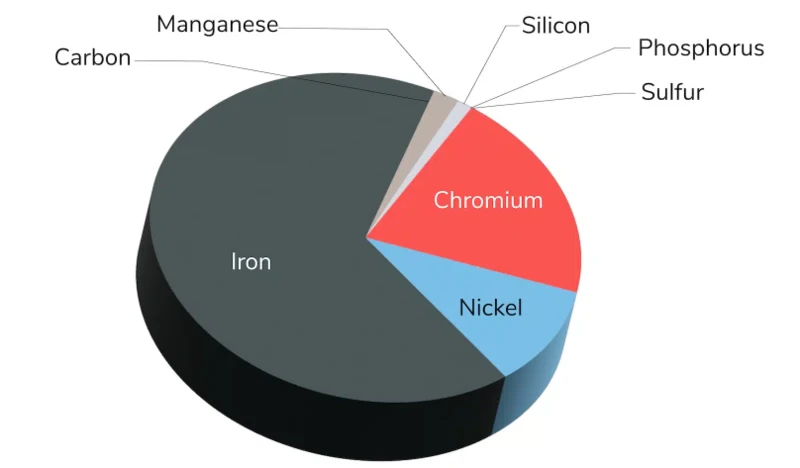
SUS 304 Stainless Steel is the Japanese Industrial Standard (JIS G4303) designation for the standard "18/8" austenitic stainless steel grade, chemically equivalent to AISI 304 (UNS S30400) and EN 1.4301. Containing 18% Chromium and 8% Nickel, SUS 304 offers excellent atmospheric corrosion resistance, high deep-drawing capability, and superior weldability without requiring post-weld annealing, making it the most widely specified stainless steel grade worldwide.
What is the difference between SUS 304 and AISI 304?
There is no difference in their metallurgical composition. SUS 304 is a grade defined by the Japanese Industrial Standards (JIS), while AISI 304 (or UNS S30400) is a grade defined by American standards. Both contain 18% chromium (Cr) and 8% nickel (Ni) and are completely interchangeable in global engineering specifications.
SUS304 Grade Equivalents
The same stainless steel grade may have different designations under different standards. For example, Japan uses the prefix SUS, the USA uses 304 / UNS S30400, and China uses 06Cr19Ni10. Before placing an order, buyers should confirm the required standard system, product tolerance, and inspection requirements to avoid differences in specifications.
| Standard System | Country / Region | Grade Designation | Applicable Product Standards |
|---|---|---|---|
| JIS | Japan | SUS 304 | JIS G4303 (Bars), G4304 (Hot Rolled Plate/Sheet), G4305 (Cold Rolled Plate/Sheet), G3459 (Pipes) |
| ASTM / AISI | USA | 304 / UNS S30400 | ASTM A240 (Plate/Sheet), A276 (Bars), A312 (Pipe), A554 (Welded Tubes) |
| EN | Europe | 1.4301 / X5CrNi18-10 | EN 10088-1 / EN 10088-3 |
| GB | China | 06Cr19Ni10 | GB/T 24511, GB/T 3280 |
| ISO | International | X5CrNi18-10 | ISO 15510 |
SUS 304 Chemical Composition (JIS G4305)
| Element | C | Mn | P | S | Si | Cr | Ni | Balance |
|---|---|---|---|---|---|---|---|---|
| Requirement (wt%) | ≤0.08 | ≤2.00 | ≤0.045 | ≤0.030 | ≤1.00 | 18.0–20.0 | 8.0–10.5 | Fe |
SUS 304 Vs. SUS304L Vs.SUS304H:Carbon Content
| Grade | Carbon Content | Typical Applications |
|---|---|---|
| 304 | ≤0.08% | Food equipment, decoration, chemical equipment |
| 304L | ≤0.03% | Heavy welded structures, pressure vessels |
| 304H | 0.04–0.10% | High-temperature structural components |
| 304LN / 304N | ≤0.03% / ≤0.08% + N | High-strength welded structures |
SUS 304 Mechanical Properties
| Property | Annealed Condition | Cold Worked Condition | Unit |
|---|---|---|---|
| Tensile Strength (σb) | ≥520 (typically 515–750) | ~1000 | MPa |
| Yield Strength (σ0.2) | ≥205 | 350–700 | MPa |
| Elongation (δ5) | ≥40 | 20–35 | % |
| Reduction of Area | ≥60 | - | % |
| Hardness | ≤90 HRB / ≤200 HV / ≤187 HB | ~250 HB | - |
| Elastic Modulus | ~193 | ~193 | GPa |
| Poisson's Ratio | 0.29 | 0.29 | - |
SUS 304 Stainless Steel Physical Properties
| Physical Property | Typical Value | Remarks |
|---|---|---|
| Density | 7.93 g/cm³ (0.286 lb/in³) | Used for weight calculation and material estimation |
| Melting Point | 1400–1450°C (2550–2650°F) | Suitable for high-temperature processing |
| Specific Heat Capacity | ~500 J/(kg·K) | Measured around 0–100°C |
| Thermal Conductivity | 16.3 W/(m·K) at 100°C | Lower than carbon steel, affecting heat transfer design |
| Electrical Resistivity | 0.73 μΩ·m at 20°C | Higher electrical resistance than carbon steel |
| Thermal Expansion Coefficient | 16.3–17.2 ×10⁻⁶/K | Important for thermal expansion control in assemblies |
| Magnetic Permeability | ~1.02 | Nearly non-magnetic after annealing; weak magnetism may appear after cold working |
SUS 304 Stainless Steel Applications
| Industry | Typical Applications |
|---|---|
| Food Processing | Food-grade equipment, kitchenware, storage tanks, transportation containers |
| Chemical & Pharmaceutical | Reaction vessels, pipelines, corrosion-resistant processing equipment |
| Architecture & Decoration | Curtain walls, handrails, decorative panels |
| Household Appliances | Exterior panels, inner tanks, structural components |
| Medical & Electronics | Medical instruments, low-magnetic components, precision parts |
| Automotive & Energy | Exhaust components, heat exchangers, structural parts |

Is SUS 304 magnetic?
In its fully solution-annealed state, SUS 304 is non-magnetic (austenitic structure). However, after cold working processes (such as deep drawing, bending, or cold rolling into tread plates), a slight martensitic phase transformation occurs, inducing weak magnetism. Solution annealing restores its non-magnetic state.
What is the maximum operating temperature for SUS 304?
SUS 304 offers good oxidation resistance in intermittent service up to 870°C (1600°F) and continuous service up to 925°C (1700°F). However, continuous use in the 425°C–860°C range is not recommended if post-weld aqueous corrosion resistance is required (use 304L or 321 instead).
How do the performances of SUS 304 and SUS 316 differ in marine environments?
SUS 304 contains no molybdenum and has a PREN (Pitting Resistance Equivalent Number) of approximately 19, making it susceptible to pitting corrosion in saline environments; in contrast, SUS 316 contains 2%–3% molybdenum (PREN > 23–25), making it the preferred material for direct seawater contact and offshore marine applications.
How much does SUS304 stainless steel cost per kg in 2026?
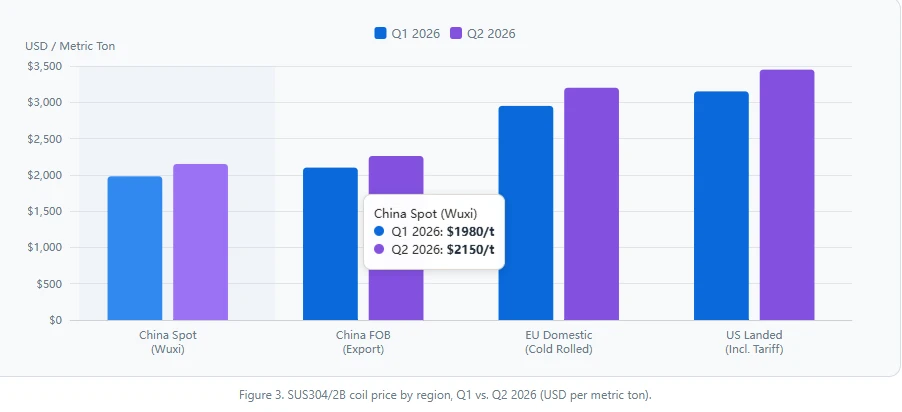
SUS304 stainless steel ranges globally from $1.80 to $4.50 per kilogram for raw or finished industrial stock, while raw scrap metal sits much lower at roughly $0.50 to $1.30 per kg. Because steel is a heavily traded global commodity, the exact price varies significantly by your region, order size, and specific product form (such as sheets, plates, or pipes).
| Market Dimension | Price Range | Description |
|---|---|---|
| China Domestic Market | ¥13,600–15,200/ton ≈ $1,900–2,100/ton | Based on 1.0–2.0 mm thickness |
| Export FOB Price (By Order Volume) |
Small orders <5 MT: $3,500–3,750/ton; Contract orders >100 MT: $2,600–2,900/ton |
Larger quantities usually achieve lower unit prices |
| USA Delivered Price | $3,100–3,500/ton | Including Section 232 tariffs and local market premium |
| Global Average Price | ≈$2,311–2,429/ton | Based on comprehensive market indexes |
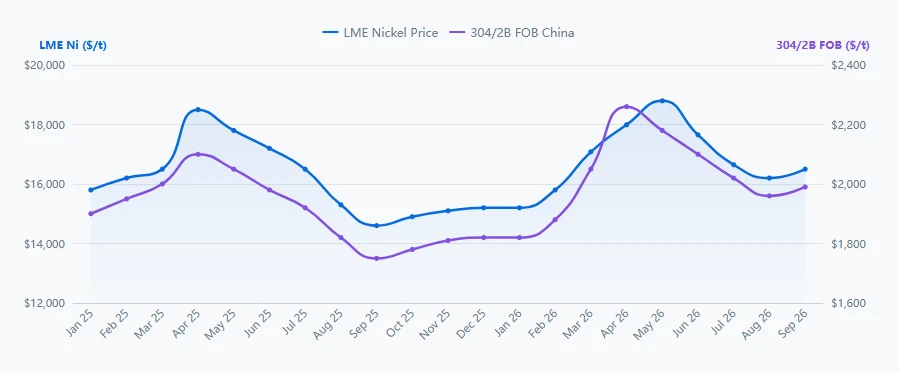
Nickel Price → SUS304 Price Relationship (FOB, USD/kg)
Purchasing Recommendation: Nickel price is one of the most important cost drivers for SUS304 stainless steel. Large-volume contracts (>100 MT) can typically achieve savings of approximately $700–900/Ton compared with small urgent orders. Buyers should monitor both LME Nickel Prices And Ferrochrome Trends when planning procurement and avoid relying on a single market indicator.
| LME Nickel Price (USD/ton) | Estimated SUS304 2B Price (USD/kg) |
|---|---|
| $14,000 | 2.20–2.70 |
| $16,000 | 2.40–2.95 |
| $18,000 | 2.65–3.25 |
| $22,000 | 3.10–3.80 |
SUS304 vs 316L Price Difference

| Nickel Price (USD/ton) | 304/2B (USD/kg) | 316L/2B (USD/kg) | Price Difference |
|---|---|---|---|
| $16,000 | $2.50 | $3.15 | 26% |
| $18,000 | $2.75 | $3.50 | 27% |
| $22,000 | $3.25 | $4.20 | 29% |
Material Selection Guidance:
Choose SUS304 for general applications requiring good corrosion resistance, weldability, and cost efficiency.
Choose SUS316L when equipment is exposed to chloride environments, seawater, chemical media, or higher corrosion risks.
The price premium of 316L mainly comes from its 2–3% molybdenum (Mo) content and higher nickel content, which improve pitting and crevice corrosion resistance.
SUS304 stainless steel suppliers and manufacturers
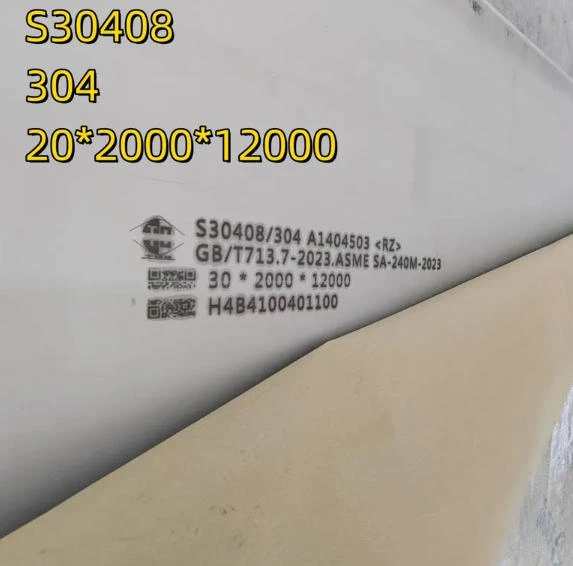
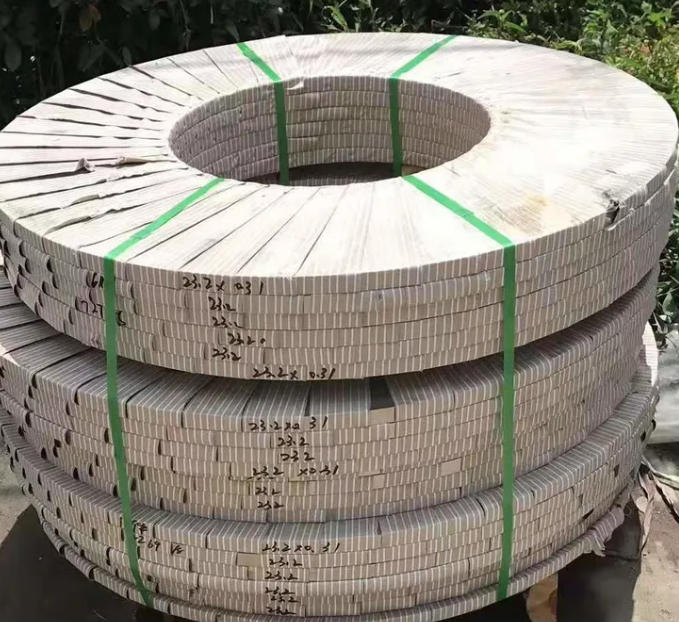
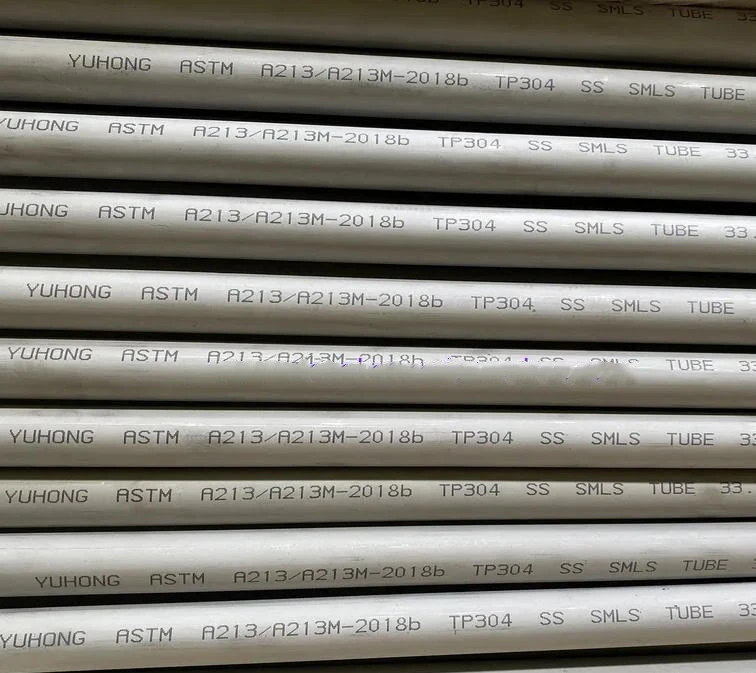
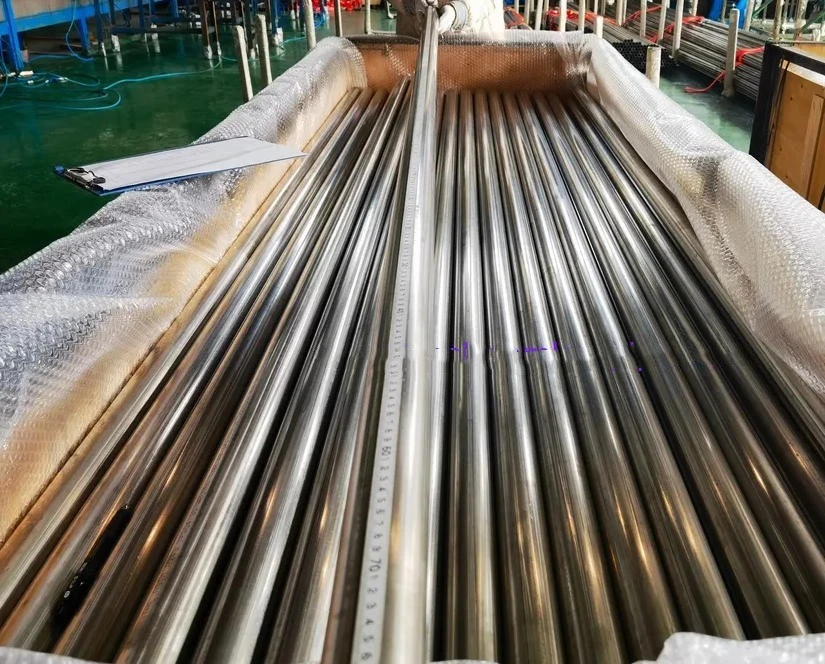
Gnee supplies SUS304 stainless steel plates, coils, pipes, bars and fabricated products according to international standards including ASTM, ASME, EN and JIS.
Supply advantages include:
SUS304/SUS304L/SUS316 regular stock
ASTM A240, A312 compliant products
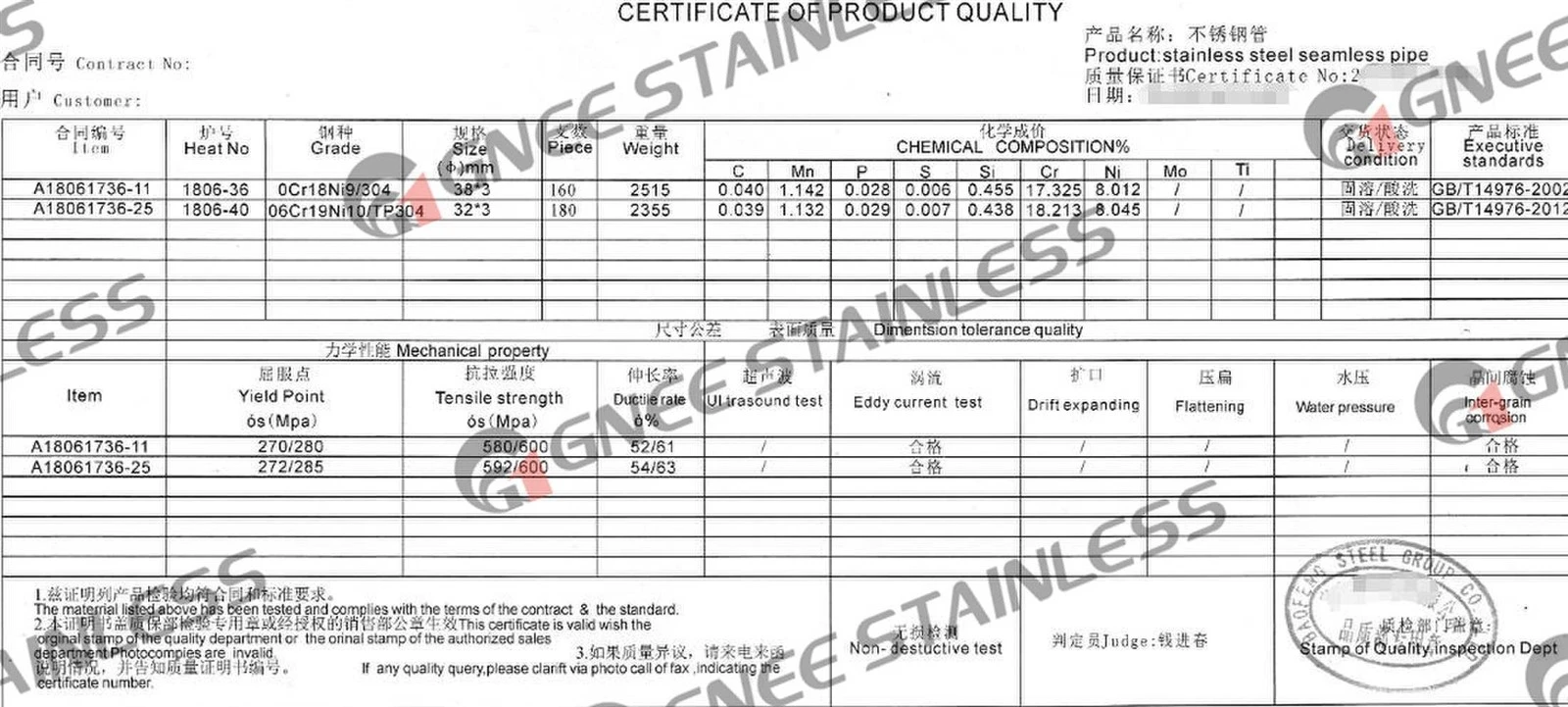
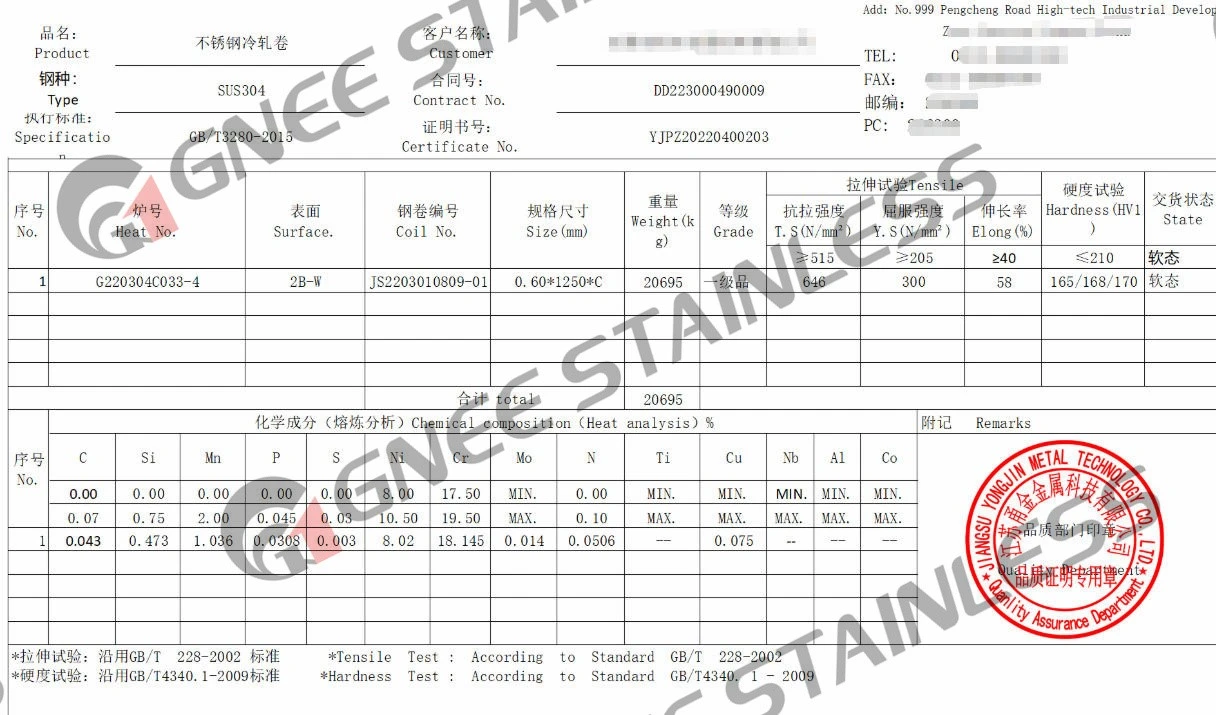
EN10204 3.1 Material Certificates for each batch
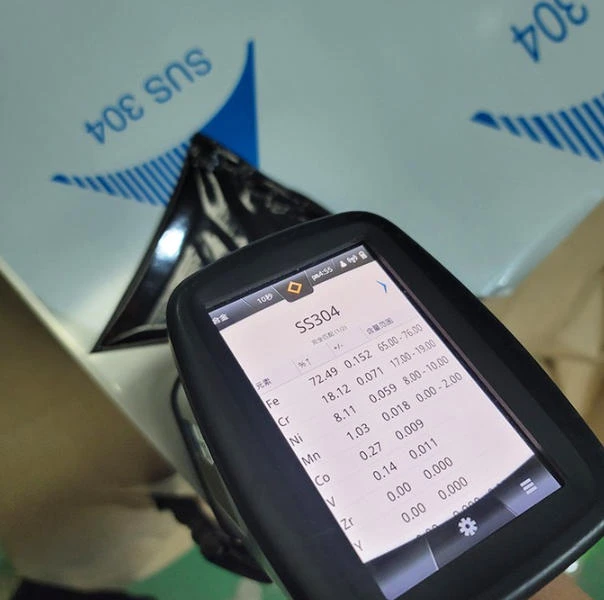
PMI, UT, ET, hydraulic and mechanical testing support
Surface finishes: 2B, BA, No.1, HL, Mirror


Cutting, polishing, CNC machining and customized processing
For global buyers requiring stable quality, traceability and export experience, SUS304 remains one of the most reliable stainless steel choices.
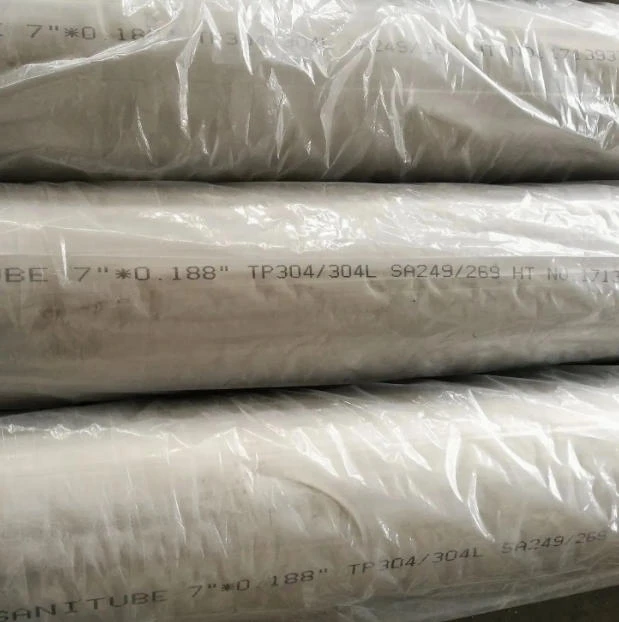
To help tailor this specification to your application, could you please provide the following information?
What specific form or product type are you using (e.g., sheet, tube, wire, or rod)? What kind of environment or exposure conditions will it face (e.g., high temperatures, chemical exposure, or outdoor environments)?
Send Inquiry