







Properties and Applications of 1.4541 (321) Stainless Steel
Apr 03, 2026
Leave a message
1.4541 stainless steel, commonly known as 321 or UNS S32100, is a titanium-stabilized austenitic stainless steel designed for applications requiring excellent resistance to intergranular corrosion after exposure to elevated temperatures. The addition of titanium prevents chromium carbide formation at grain boundaries during welding or service in the 450-850°C range, making it particularly suitable for high-temperature applications where standard 304 would be susceptible to sensitization. It is widely used in aircraft exhaust systems, heat exchangers, expansion joints, and other components operating at elevated temperatures.
Equivalent specifications for 1.4541 stainless steel
| Standard | Equivalent Grade |
|---|---|
| EN (Europe) | 1.4541 |
| ASTM/AISI (USA) | 321, UNS S32100 |
| JIS (Japan) | SUS321 |
| KS (Korea) | STS321 |
| Common Name | 321 |
Chemical composition of 1.4541 stainless steel
| Element | C | Si | Mn | P | S | Cr | Ni | Ti |
|---|---|---|---|---|---|---|---|---|
| Content (%) | ≤ 0.08 | ≤ 1.0 | ≤ 2.0 | ≤ 0.045 | ≤ 0.03 | 17.0 - 19.0 | 9.0 - 12.0 | ≥ 5xC |
Properties of 1.4541 Stainless Steel
| Property | Yield Strength (Rp0.2) | Tensile Strength (Rm) | Elongation (A) | Hardness (HB) |
|---|---|---|---|---|
| Typical Value (Room Temp) | ≥ 205 MPa | 500 - 750 MPa | ≥ 40% | ≤ 215 |
Key Characteristics and Applications of 1.4541 / 321
Intergranular Corrosion Resistance: Titanium binds with carbon preferentially, preventing chromium depletion at grain boundaries and offering protection in the sensitization temperature range (450-850°C), making it ideal for welded assemblies and high-temperature service.
Good High-Temperature Strength: Maintains oxidation resistance and strength at elevated temperatures, suitable for intermittent use up to about 900°C and continuous use to about 850°C.
Excellent Formability and Weldability: Possesses good ductility and can be welded by all common methods without the need for post-weld heat treatment in most applications.
Creep Resistance: Offers good creep resistance at elevated temperatures, making it suitable for long-term high-temperature service.
Primary Applications:
Aerospace: Jet engine exhaust components, afterburner parts, thermal shields, and ducting.
Heat Processing: Heat exchanger tubing, furnace parts, thermocouple sheaths, and radiant tubes.
Chemical Industry: Vessels and piping exposed to corrosive media at elevated temperatures.
Automotive: Exhaust systems, catalytic converter housings, and manifold components.
Power Generation: Superheater tubes and boiler components.
Food Processing: Equipment requiring high-temperature sterilization.
What is the primary advantage of using 321 (1.4541) over 304 (1.4301) for welded and high-temperature applications?
What is the difference between 321 (1.4541) and 321H (1.4878)?
What are the welding considerations for 321?
Looking for a Reliable Supplier of 1.4541 / 321 Stainless Steel?

1.4541 Stainless Steel Pipe

1.4541 Stainless Steel Bar
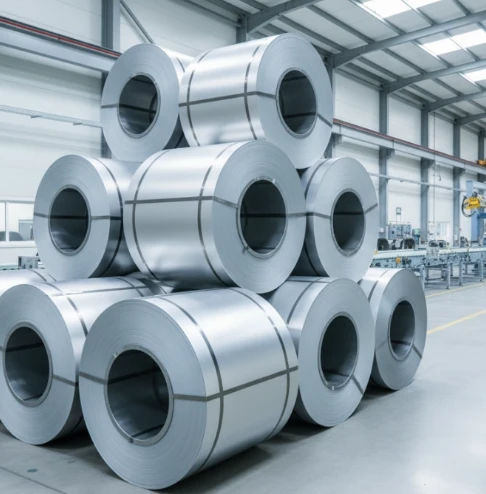
1.4541 Stainless Steel Coil
Send Inquiry