

What is an ASTM A240 Type 2507 plate?
Oct 19, 2026
Leave a message
When stainless steel plates are required to withstand seawater-which is rich in chloride ions-as well as high mechanical loads and harsh industrial environments, the choice of material becomes a critical factor in determining the reliability of the equipment.
ASTM A240 Type 2507 (UNS S32750) plate is a super duplex stainless steel; it offers not only high strength but also exceptional resistance to pitting, crevice corrosion, and chloride-induced stress corrosion cracking. It is frequently used in applications such as seawater desalination, offshore engineering, chemical processing, and pressure equipment.
What is ASTM A240 Type 2507 steel plate?
ASTM A240/A240M is a material standard covering chromium and chromium-nickel stainless steel plate, sheet, and strip intended for pressure vessels and general applications. Type 2507 typically refers to UNS S32750, a super duplex stainless steel containing approximately 25% chromium, 7% nickel, 4% molybdenum, and nitrogen. It possesses 2.5 times the strength of 316L stainless steel and offers twice the resistance to chloride pitting compared to the standard duplex steel 2205.
Super Duplex 2507 Equivalent
|
Identification item |
Typical designation |
|---|---|
|
Product |
Super duplex stainless steel plate |
|
ASTM specification |
ASTM A240/A240M |
|
Common grade name |
Type 2507 |
|
UNS designation |
S32750 |
|
European material number |
EN 1.4410 |
|
European grade designation |
X2CrNiMoN25-7-4 |
|
Material family |
Super duplex stainless steel |
|
Typical delivery condition |
Solution annealed and rapidly cooled, as required by the specification |
|
Typical applications |
Desalination, offshore equipment, chemical processing, pressure equipment |
What is the difference between ASTM A240 2507 and EN 1.4410?
They refer to the same material, simply governed by different standard systems. ASTM A240 UNS S32750 (American standard) is equivalent to EN 10028-7 / 1.4410 X2CrNiMoN25-7-4 (European standard). Their chemical composition ranges are essentially identical. The EN standard may specify slightly different impact test temperatures, tailored to European operating conditions.
Super Duplex 2507 Plate Specification
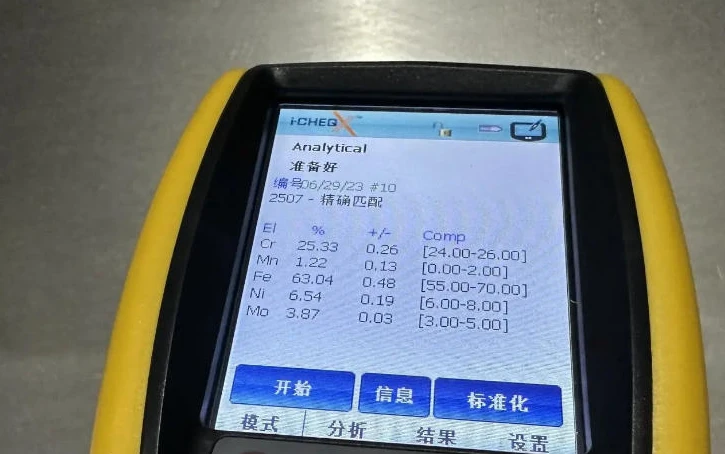
Chemical Composition of ASTM A240 Type 2507 Plate
|
Element |
Specification range (wt.%) |
|---|---|
|
Carbon (C) |
≤ 0.030% |
|
Chromium (Cr) |
24.0–26.0% |
|
Nickel (Ni) |
6.0–8.0% |
|
Molybdenum (Mo) |
3.0–5.0% |
|
Nitrogen (N) |
0.24–0.32% |
|
Manganese (Mn) |
≤ 1.20% |
|
Silicon (Si) |
≤ 0.80% |
|
Phosphorus (P) |
≤ 0.035% |
|
Sulfur (S) |
≤ 0.020% |
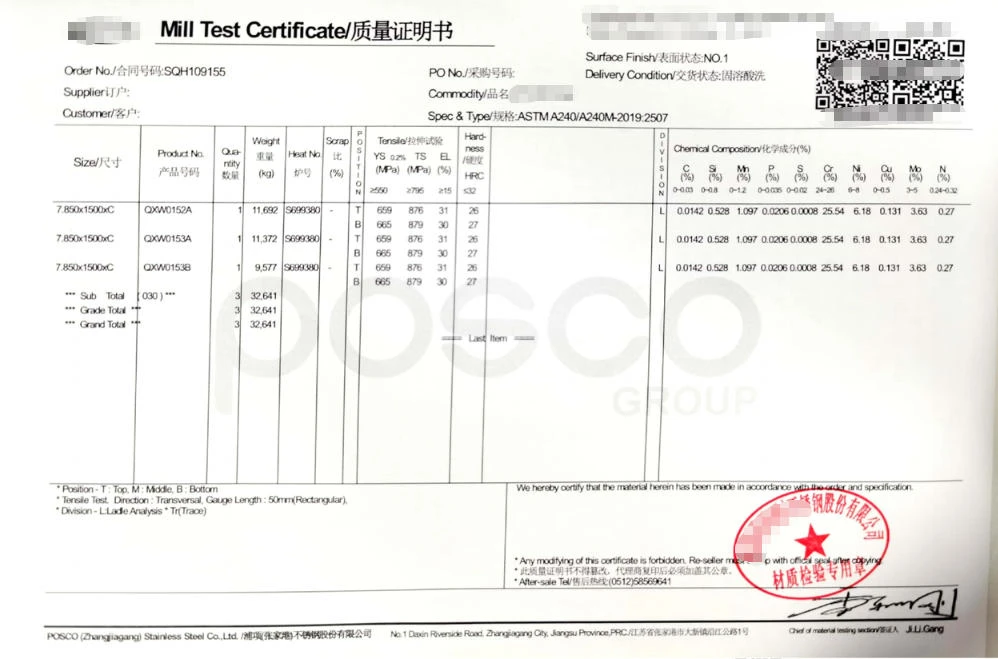
Reference chemistry for UNS S32750; confirm the applicable ASTM A240/A240M edition and the actual mill test certificate for the supplied plate.
One useful screening parameter is the pitting resistance equivalent number (PREN), commonly calculated as:
PREN =%Cr + 3.3(%Mo) + 16(%N)
Using nominal values of 25% chromium, 4% molybdenum, and 0.28% nitrogen gives a PREN of approximately 41.8. This is a comparative alloy-screening indicator, not a guarantee of corrosion performance in a particular plant or seawater environment.
Mechanical Properties of Type 2507 Plate
| Property | Metric | Imperial |
| Yield Strength (0.2% offset) | ≥ 550 MPa | ≥ 80 ksi |
| Tensile Strength (UTS) | ≥ 800 MPa | ≥ 116 ksi |
| 1% Proof Stress | ≥ 640 MPa | ≥ 93 ksi |
| Elongation (2 in / 50 mm) | ≥ 15% | ≥ 15% |
| Reduction of Area | ≥ 45% | - |
| Hardness | ≤ 310 HBW | ≤ 32 HRC |
| Impact Energy (20 °C / 68 °F) | ≥ 77 J | ≥ 57 ft·lb |
| Impact Energy (−20 °C / −4 °F) | ≥ 40 J | ≥ 30 ft·lb |
Super Duplex 2507 Plate Physical properties
|
Property |
Approximate reference value |
|---|---|
|
Density |
7.8 g/cm³ |
|
Elastic modulus |
Approximately 200 GPa |
|
Thermal conductivity |
Approximately 14 W/(m·K) |
|
Thermal expansion |
Approximately 13 × 10⁻⁶/K over a typical reference temperature range |
ASTM A240 Type 2507 plate Available Sizes & Dimensions
Hot-Rolled Plate
| Thickness | Width | Length |
| 3 – 100 mm (⅛" – 4") | 1,000 – 2,500 mm (39" – 98") | 1 – 12 m (3.3 – 39 ft) |
Cold-Rolled Sheet
| Surface Finish | Thickness | Width |
| No.1 (hot-rolled, pickled) | 2.4 – 12.7 mm (⅛" – ½") | max. 2,032 mm (80") |
| 2B (cold-rolled, pickled, skin-passed) | 0.25 – 8.0 mm (0.01" – ⅜") | max. 2,032 mm (80") |
| 2D (cold-rolled, pickled) | 0.4 – 6.35 mm | max. 1,524 mm (60") |
| 2R (bright annealed) | 0.25 – 3.5 mm | max. 1,524 mm (60") |
| Polished / Brushed | 0.5 – 4.0 mm | max. 1,524 mm (60") |
Standard Stock Sizes
| Size (mm) | Size (in) | Availability |
| 1,000 × 2,000 | 39" × 79" | ✅ In stock |
| 1,220 × 2,440 | 48" × 96" | ✅ In stock |
| 1,500 × 3,000 | 59" × 118" | ✅ In stock |
| 2,000 × 2,000 | 79" × 79" | ✅ In stock |
| 2,000 × 4,000 | 79" × 157" | ✅ In stock |
Custom sizes available upon request. Gnee supports cut-to-length, edge grinding, and surface finishing as value-added services.
ASTM A240 Type 2507 plate Plate Weight
| Thickness | Weight per m² (kg) | Weight per ft² (lb) |
| 3 mm (⅛") | 23.4 | 4.80 |
| 5 mm (⅜") | 39.0 | 8.00 |
| 6 mm (¼") | 46.8 | 9.60 |
| 8 mm (⅜") | 62.4 | 12.80 |
| 10 mm (⅜") | 78.0 | 16.00 |
| 12 mm (½") | 93.6 | 19.20 |
| 15 mm (⅝") | 117.0 | 24.00 |
| 20 mm (⅞") | 156.0 | 32.00 |
| 25 mm (1") | 195.0 | 40.00 |
| 30 mm (1⅛") | 234.0 | 48.00 |
2507 vs. 2205 vs. 316L : Strength Comparison
| Property | 316L | 2205 | 2507 |
| Yield (ksi) | 25 | 65 | 80 |
| Tensile (ksi) | 70 | 90 | 116 |
| PREN | ~24 | ~34 | ≥ 40 |
| Max Cl⁻ Tolerance (60 °C) | ~2,000 ppm | ~20,000 ppm | > 50,000 ppm |
| SCC Threshold (Cl⁻, warm) | ~60 °C | ~100 °C | > 150 °C |
Can 2507 steel plate be used at temperatures above 600 °F (315 °C)?
Long-term, continuous use at temperatures above 600 °F (315 °C) is not recommended. Prolonged exposure above this temperature can lead to the precipitation of the sigma (σ) phase-a phenomenon known as "475 °C embrittlement"-which reduces the material's toughness and corrosion resistance. For intermittent use at temperatures up to 700 °F, please consult your material supplier. For long-term, continuous service at high temperatures, the use of austenitic steels (such as 310 or 347H) or nickel-based alloys is recommended.
Is 2507 steel plate magnetic?
Yes, 2507 steel plate is magnetic due to its approximately 50% ferritic phase content. This is normal and does not affect its corrosion resistance or mechanical properties. However, if your application requires a non-magnetic material (such as in MRI environments or magnetic separation equipment), 2507 is not suitable; in such cases, 316L or 904L is recommended instead.
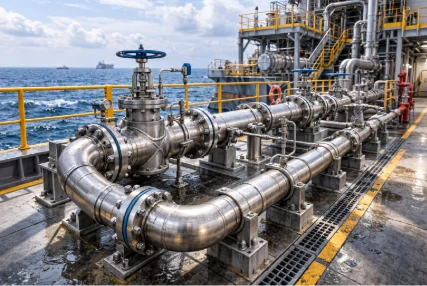
Applications of ASTM A240 Type 2507 Steel Plate
• Oil and Gas Industry:
• Offshore production platforms.
• Subsea pipelines and downhole oil/gas processing or control tubulars.
• High-pressure vessels and storage tanks.
• Marine Engineering and Seawater Systems:
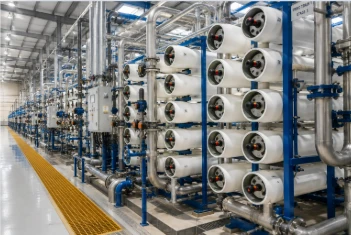
• Seawater desalination equipment and reverse osmosis units.
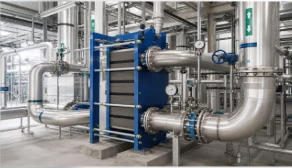
• Marine components and heat exchangers cooled by brackish water or natural seawater.
• Chemical and Petrochemical Processing:
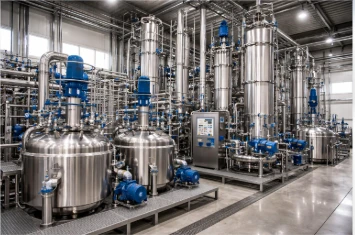
• Reactors, pressure vessels, piping systems, and heat exchangers used in the production of organic and inorganic acids.
• Storage and transport equipment exposed to high-chloride environments or corrosive chemical solutions.
• Environmental Protection and Power Generation:
• Flue-gas desulfurization (FGD) scrubbers and pollution control equipment in power plants.
What is the price of ASTM A240 Type 2507 steel plate?
FOB China prices are $4.50–$7.50/kg for hot-rolled plates (3–50 mm) and $5.00–$8.00/kg for cold-rolled plates (0.5–6 mm). For compliance with NACE standards, an additional cost of $0.15–$0.40/kg applies. Please provide specific requirements and contact Gnee for an accurate quote.
ASTM A240 Type 2507 Supplier
GNEE offers ASTM A240 Type 2507 (UNS S32750 / EN 1.4410) super duplex stainless steel plates. Standard specifications range from 4–100 mm in thickness and 1,000–3,500 mm in width; specific dimensions and stock availability are subject to order confirmation.
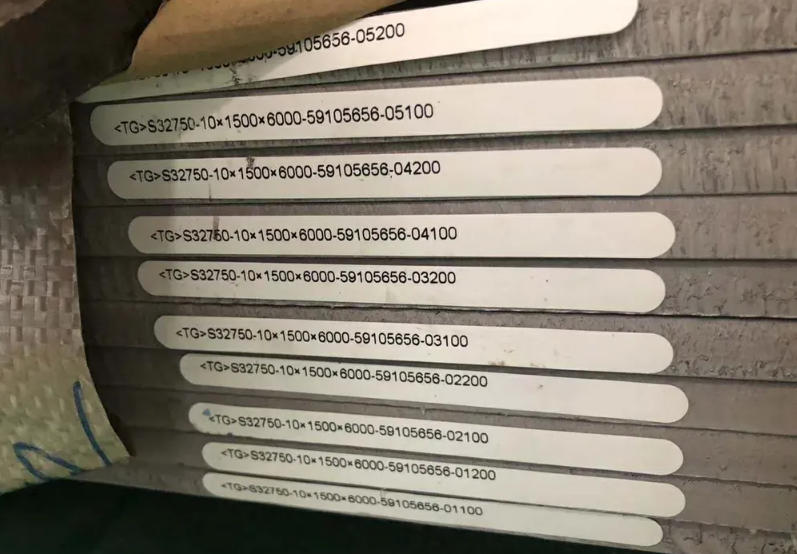
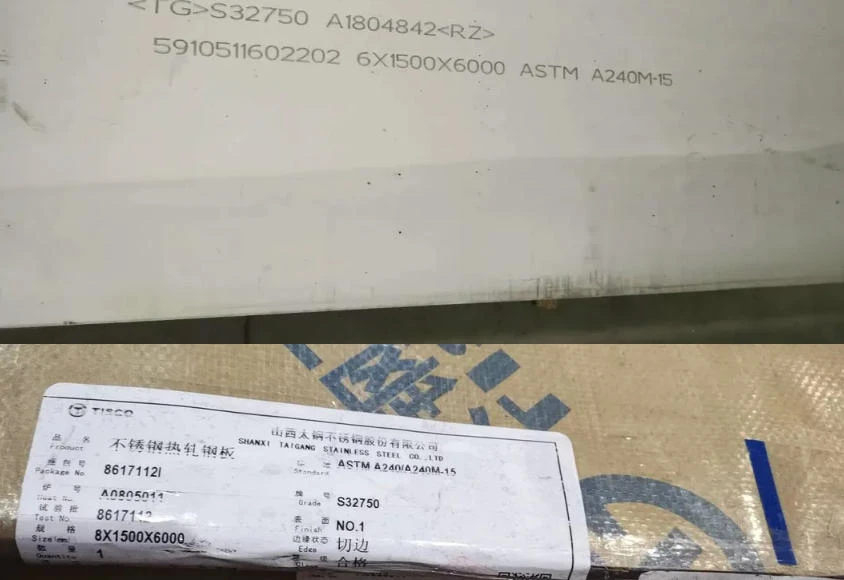
Products can be supplied in hot-rolled, solution-annealed, and pickled conditions. Each shipment includes a Material Test Certificate (MTC) covering chemical composition, mechanical properties, dimensional inspection, and heat number traceability. Additional requirements-such as Positive Material Identification (PMI), Ultrasonic Testing (UT), and third-party inspections-can be arranged upon request. These materials are suitable for corrosion-resistant applications in sectors including seawater desalination, offshore engineering, chemical processing equipment, and pressure vessels.
What dimensions should you include in an RFQ?
For example, a buyer may request:
- Grade: ASTM A240 Type 2507 / UNS S32750
- Thickness: 12 mm
- Width: 1,500 mm
- Length: 6,000 mm
- Quantity: 10 plates
- Delivery condition: Solution annealed
- Documentation: Material test certificate and heat-number traceability
- Destination: Named port or delivery address
This is an illustrative inquiry, not a statement that the dimensions or quantity are currently in stock. Confirm availability, tolerances, and delivery timing before placing an order.
FAQ
Q:What is the maximum available thickness for ASTM A240 2507 steel plates?
A:GNEE offers hot-rolled 2507 steel plates in thicknesses up to 100 mm (4 inches). For requirements exceeding 100 mm, orders can be arranged through special request. GNEE maintains stock of standard sizes ranging from 3 mm to 50 mm in thickness; plates up to 100 mm can also be sourced, with a lead time of approximately 6–10 weeks.
Q: What is the Minimum Order Quantity (MOQ) for 2507 steel plates from GNEE?
A: For standard stock sizes (e.g., 5 mm × 1500 mm × 3000 mm), the MOQ is 500 kg. For custom dimensions, special surface finishes, or materials requiring NACE compliance, the MOQ is 1 metric ton. For thin-gauge (0.5–3 mm) cold-rolled sheets, the MOQ can be as low as 200 kg.
Q: What are the typical lead times for ASTM A240 2507 steel plates?
A: Standard stock items: 1–2 weeks (dispatch possible within a few days of order confirmation). Custom hot-rolled plates: 4–6 weeks. Special dimensions or NACE-compliant materials: 6–10 weeks. Cold-rolled sheets: 3–5 weeks. Expedited delivery is available, reducing lead times by 20%–30% for an additional surcharge of 5%–10%.
Send Inquiry