

What is duplex 2507 chemical composition?
Oct 19, 2026
Leave a message
"When selecting stainless steel for seawater, offshore, or chloride-rich chemical environments, buyers need to evaluate more than the grade name. The chromium, molybdenum, and nitrogen content of Super Duplex 2507 directly influence its resistance to pitting and crevice corrosion, while the product standard, heat treatment, and mill test certificate help determine whether the material meets project requirements."
What is duplex 2507 stainless steel?
Super duplex 2507 (also known as UNS S32750 or EN 1.4410) is a highly alloyed duplex stainless steel designed for demanding, corrosive environments. Its typical chemical composition includes approximately 25% chromium, 7% nickel, 4% molybdenum, and 0.24%–0.32% nitrogen. It is available in a variety of practical product forms, including plates, coils, pipes, bars, and wire.
What is the equivalent stainless steel for duplex 2507?
The exact product standard depends on the form being purchased. For example, ASTM A240 is commonly specified for plate, sheet, and strip; ASTM A790 for duplex stainless steel pipe; ASTM A789 for tubing; and ASTM A182 Grade F53 for forged components.
|
Item |
Description |
|---|---|
|
Common name |
Super Duplex 2507 |
|
UNS designation |
S32750 |
|
EN material number |
1.4410 |
|
EN material name |
X2CrNiMoN25-7-4 |
|
Common alloy description |
25Cr–7Ni–4Mo–N |
|
Material family |
Super duplex stainless steel |
|
Typical PREN |
Approximately 41–43, depending on actual chemistry and calculation |
|
Common product applications |
Seawater systems, offshore equipment, chemical process equipment, pressure systems |
What Is The Chemical Composition Of Duplex 2507?
The chemical composition of UNS S32750 is controlled by the applicable material specification. The following table summarizes the commonly specified limits for ASTM A240 Type 2507 plate, sheet, and strip, expressed as weight percentages. Confirm the edition and product standard stated in the purchase order before procurement.
|
Chemical element |
Symbol |
Minimum (%) |
Maximum (%) |
|---|---|---|---|
|
Carbon |
C |
- |
0.030 |
|
Chromium |
Cr |
24.00 |
26.00 |
|
Nickel |
Ni |
6.00 |
8.00 |
|
Molybdenum |
Mo |
3.00 |
5.00 |
|
Nitrogen |
N |
0.24 |
0.32 |
|
Manganese |
Mn |
- |
1.20 |
|
Silicon |
Si |
- |
0.80 |
|
Phosphorus |
P |
- |
0.035 |
|
Sulfur |
S |
- |
0.020 |
|
Copper |
Cu |
- |
0.50 |
|
Iron |
Fe |
Balance |
Balance |
Note: "-" means no minimum limit is specified in this summary. The table is not a substitute for the complete standard or the heat-specific mill test certificate (MTC).
Why do these elements matter to buyers?
Chromium (Cr): 24–26%
Chromium forms the passive oxide film that protects the steel surface. Its high concentration helps 2507 resist general corrosion and localized corrosion in aggressive environments.
Molybdenum (Mo): 3–5%
Molybdenum improves resistance to pitting and crevice corrosion, particularly in chloride-bearing environments. Buyers handling seawater or brine should consider it alongside temperature, chloride concentration, and flow conditions.
Nitrogen (N): 0.24–0.32%
Nitrogen strengthens the alloy, stabilizes the austenite phase, and contributes significantly to pitting resistance. It also helps maintain the duplex microstructure when the material is properly processed.
Nickel (Ni): 6–8%
Nickel helps stabilize austenite and balance the ferrite-austenite structure, supporting toughness and ductility alongside the high strength of the ferritic phase.
How is the Pitting Resistance Equivalent Number (PREN) of 2507 stainless steel calculated?
A useful screening indicator is the Pitting Resistance Equivalent Number (PREN), commonly calculated for 2507 as follows:
PREN =%Cr +3.3(%Mo) +16(%N)
Using representative values of 25% Cr, 4% Mo, and 0.28% N gives a PREN of approximately 42.7. Commercial 2507 is commonly described as having a PREN above 40, although the actual result depends on the measured chemistry and the formula specified.
| Grade | Cr | Mo | N | PREN |
| 316L | 17 | 2.5 | 0.02 | ~24 |
| 2205 | 22.5 | 3.2 | 0.17 | ~35 |
| 2507 | 25 | 4.0 | 0.28 | ~42 |
| 255 (Zeron 100) | 23 | 5.5 | 0.28 | ~48 |
2507 vs. 2205 vs. 316L: key differences
|
Property |
316L stainless steel |
Duplex 2205 |
Super Duplex 2507 |
|---|---|---|---|
|
Material family |
Austenitic |
Duplex |
Super duplex |
|
Chromium, typical (%) |
16–18 |
22–23 |
24–26 |
|
Molybdenum, typical (%) |
2–3 |
3–3.5 |
3–5 |
|
Nitrogen, specified range (%) |
Usually lower |
0.14–0.20 for S32205 |
0.24–0.32 |
|
Typical PREN range |
About 23–26 |
About 34–38 |
About 41–43 |
|
Relative strength |
Lower |
Higher than 316L |
High |
|
Typical selection |
General corrosion service |
Moderate-to-aggressive corrosion |
More demanding chloride service |
Purchasing takeaway: 2507 may be worth evaluating when 316L lacks sufficient chloride-corrosion resistance or when 2205 does not provide enough performance margin. However, the higher alloy cost and more demanding fabrication controls mean it should be selected against actual design conditions, not simply because it is a higher grade.
What are the differences between 2507 and 2205?
Compared to 2205, 2507 has a chromium (Cr) content that is approximately 2% higher (24–26% vs. 22–23%), a molybdenum (Mo) content about 1% higher (3–5% vs. 3–3.5%), and a nitrogen (N) content that is twice as high (0.24–0.32% vs. 0.14–0.20%). Additionally, 2507 has a slightly higher nickel (Ni) content (6–8% vs. 4.5–6.5%). These compositional differences result in a PREN value of ≥40 for 2507 (compared to approximately 34 for 2205), providing a 20% improvement in pitting corrosion resistance.
What is the difference between S32750 and S32760?
S32750 (ASTM/US standard) and S32760 (EN/European standard) refer to the same material and have identical chemical compositions. S32760 is the designation under the EN standard (corresponding to 1.4410 / X2CrNiMoN25-7-4). In most applications, the two are interchangeable.
What is the maximum service temperature for 2507?
For continuous service, the maximum temperature is 300 °C (572 °F). Prolonged exposure to temperatures above this limit may lead to the precipitation of the sigma (σ) phase-a phenomenon often associated with "475 °C embrittlement"-which reduces the material's toughness and corrosion resistance. For intermittent service at temperatures up to 350 °C, please consult your supplier regarding potential derating of performance specifications.
Is 2507 magnetic?
Yes. 2507 is a ferritic-austenitic (duplex) steel containing 40%–60% ferrite, which renders it magnetic. This is normal and does not affect its corrosion resistance. If your application requires a non-magnetic material, 2507 is not suitable.
Which filler metal (welding consumable) should be used for welding 2507?
It is recommended to use ER2594 filler wire (or E2594 electrode) in accordance with the AWS A5.9 standard. For dissimilar metal welding-such as joining 2507 to other steel grades like 316L-ER309L should be used. Preheating is not required for material thicknesses under 25 mm. During welding, the interpass temperature must be kept below 150 °C. Post-weld heat treatment is not recommended, as it carries the risk of "475 °C embrittlement."
What Products Can Be Made from Duplex 2507?
Super Duplex 2507 is available in several product forms. Buyers should match the product form to the component design and identify the relevant ASTM or ASME specification.
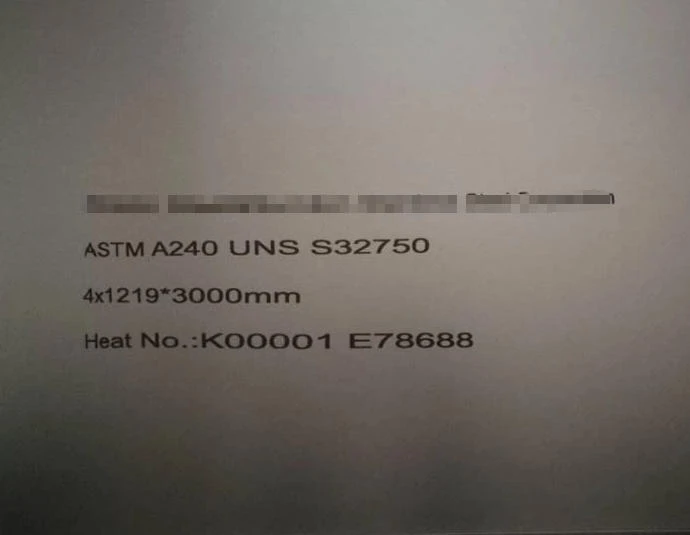
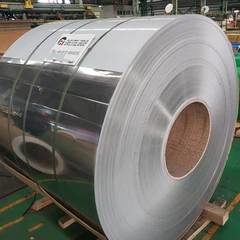
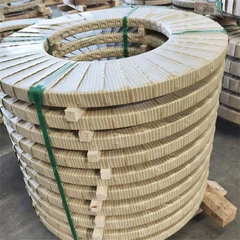
2507 Plate, Sheet and Strip
Common specification: ASTM A240 / ASME SA-240.
Typical uses include pressure-vessel components, desalination equipment, scrubbers, storage tanks, and heat-exchanger components. Confirm thickness, width, length, flatness, surface condition, and heat-treatment requirements.
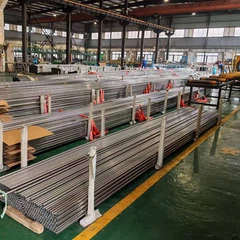
2507 Pipe and Tube
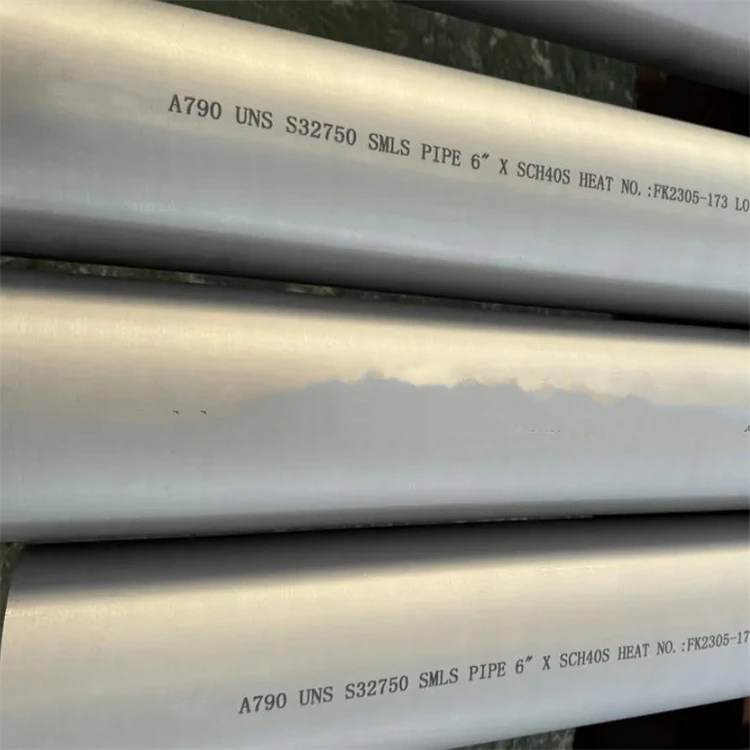
Common specifications: ASTM A790 for pipe and ASTM A789 for tubing.
Used in seawater piping, offshore process systems, heat exchangers, and corrosive-fluid handling. Specify seamless or welded construction, OD, wall thickness, length, inspection, and testing requirements.
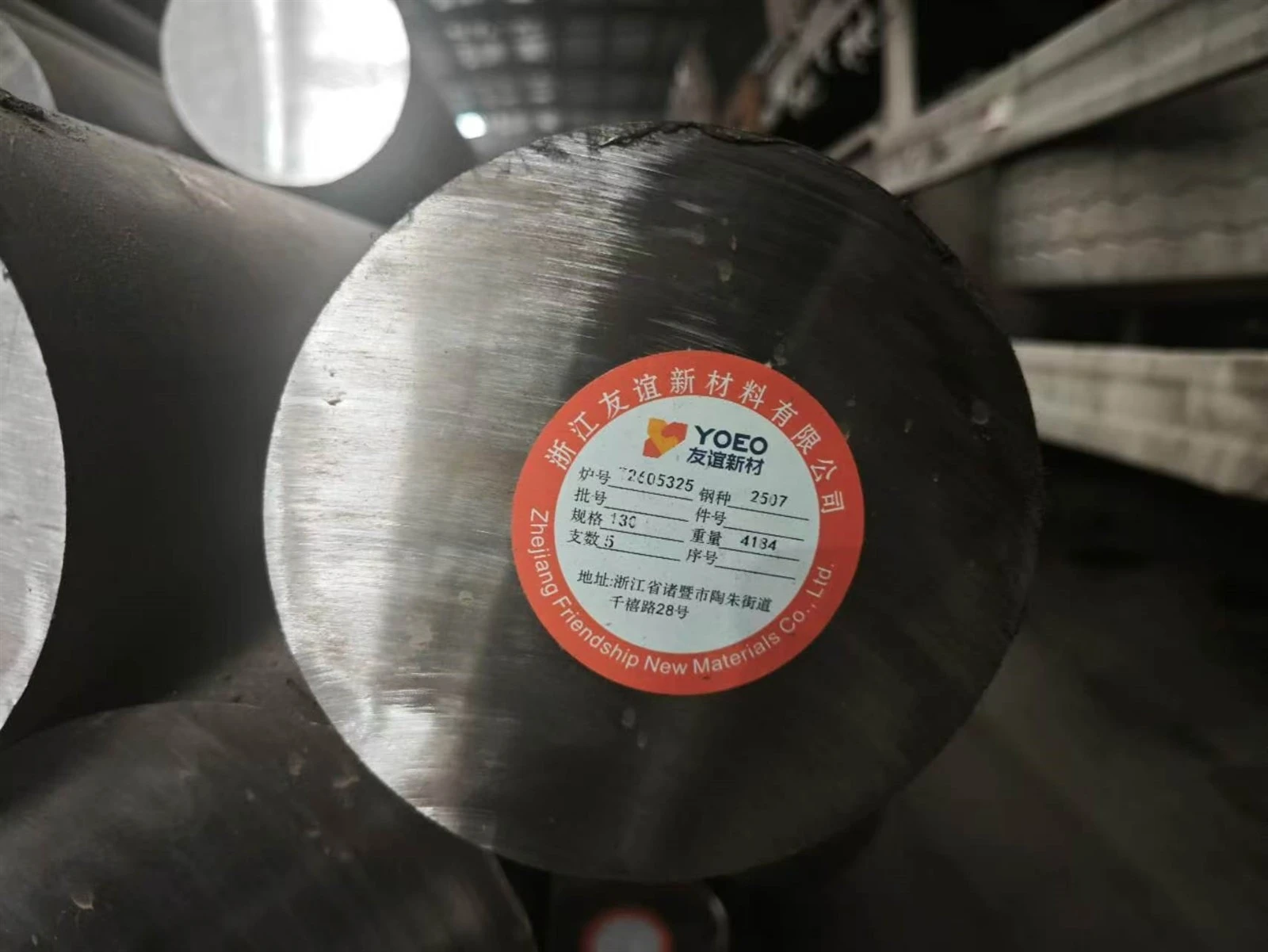
AISI 2507 Round Bar
ASTM A479 is a commonly referenced specification for stainless steel bars and shapes.
Used for shafts, machined components, fasteners, and selected equipment parts. Confirm diameter, tolerance, delivery condition, hardness, and machining allowance.
2507 Flanges and Pipe Fittings
Common specifications include ASTM A182 Grade F53 for forgings and ASTM A815 for duplex stainless steel wrought fittings.
Specify the component standard, pressure class or schedule, dimensions, end connections, and required certificates. Do not assume that every 2507 fitting is covered by the same standard.
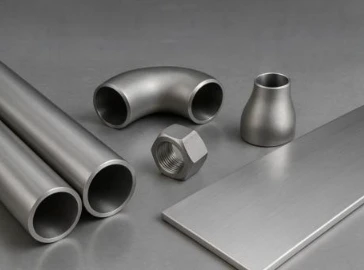
Super Duplex Steel 2507 Suppliers and Manufacturers
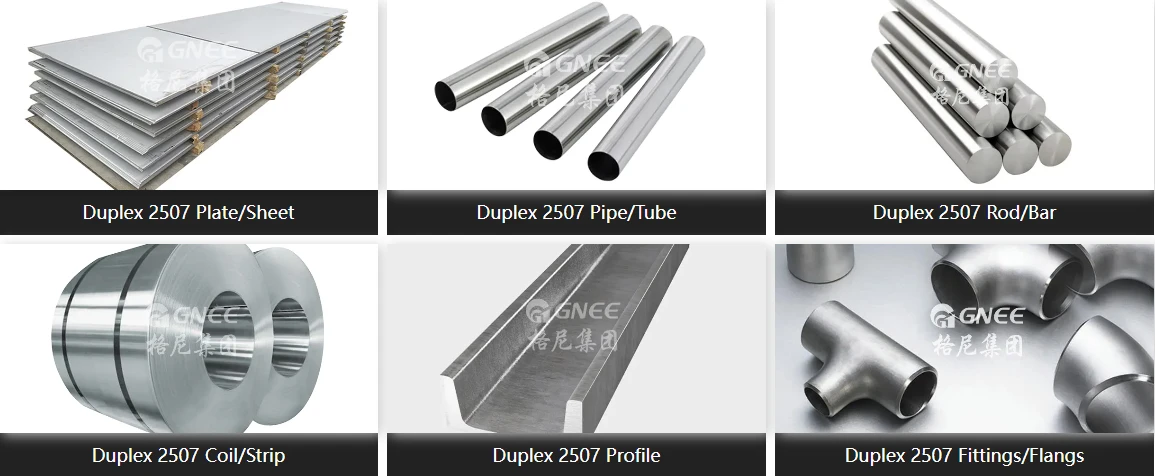
2507 stainless steel can be processed into thick plates, sheets, coils, strips, round bars, hexagonal bars, flat bars, seamless pipes, welded pipes, forgings, flanges, pipe fittings, wire, and various profiles. Gnee can supply products in all these forms and provide a full set of certification documents.
Super Duplex Steel 2507 Specification
| Product Form | Standard | Typical Size Range | Surface Finish | Applications |
| Plate / Sheet (Hot Rolled) | ASTM A240 / SA-240 | 3–100 mm × 1,000–2,500 mm | No.1, Black | Heat exchanger shells, reactor linings, structural |
| Sheet (Cold Rolled) | ASTM A240 | 0.25–8 mm × 600–2,000 mm | 2B, 2D, BA, Polished | Hygienic, decorative, thin-wall pressure parts |
| Coil / Strip | ASTM A240 / A480 | 0.3–6 mm × 600–2,000 mm | No.1, 2B, 2D | Stamping, forming, gaskets, spiral wound |
| Round Bar / Rod | ASTM A276 / A479 | Ø3–500 mm | Bright, Peeled, Ground, Black | Shafts, pins, fasteners, spools |
| Hex Bar | ASTM A276 | 5–100 mm A/F | Bright | Bolts, studs, fittings |
| Flat / Square Bar | ASTM A276 | 5–150 mm | Hot Rolled, Ground | Structural, brackets, clamps |
| Seamless Pipe / Tube | ASTM A790 / A928 | ½"–10", Sch 10S–160S | Pickled, Bright | HPHT wellheads, subsea, process lines |
| Welded Pipe / Tube | ASTM A999 | ½"–24", Sch 5S–40S | ERW, Pickled | Piping, structural, low-pressure |
| Forgings | ASTM A182 F53 | Custom (flanges, blocks, rings) | Forged + Annealed | Flanges, valve bodies, spools |
| Fittings & Flanges | ASTM A182 / A350 | DN15–DN1200 | Machined, Annealed | Piping systems, manifolds |
- Technical Documentation: A Mill Test Certificate (MTC) for the specific heat/lot number is required, detailing the actual chemical composition and the results of mechanical property tests in compliance with the relevant standards.
- Quality Verification: Clearly specify all requirements in the inquiry, including dimensional inspection, surface examination, Positive Material Identification (PMI), and any other applicable non-destructive testing (NDT).
- Order-Specific Requirements: Confirm the solution-annealed condition, surface finish, tolerances, cut dimensions, marking, traceability, and export packaging requirements.
What is the minimum order quantity (MOQ) for 2507-grade products?
For standard, in-stock specifications, the minimum order quantity is 500 kg. For custom specifications or materials requiring compliance with NACE standards, the minimum order quantity is 1 metric ton. For thin-gauge (0.5–3 mm) cold-rolled sheets, the minimum order quantity can be as low as 200 kg.
Send Inquiry