

SUS304L Low-Carbon Stainless Steel Plate
Feb 26, 2026
Leave a message
What is SUS304L Low-Carbon Stainless Steel Plate?
SUS304L is the low-carbon version of SUS304, specially developed to prevent intergranular corrosion after welding. By controlling carbon content to ≤0.03%, it effectively reduces chromium carbide precipitation in the heat-affected zone during welding, eliminating the need for post-weld annealing. It maintains the same high levels of formability, toughness, and general corrosion resistance as SUS304. This grade is particularly suitable for heavy-section welded components that cannot undergo heat treatment after fabrication. It is widely used in chemical, pharmaceutical, and food-processing equipment where corrosion resistance after welding is critical.
What is "304/304L dual-certified" plate?
Many steel plates on the market are labeled "304/304L." This indicates that the material has been processed-through refined control during smelting-to meet the low-carbon standard of 304L (≤0.03% carbon content) while simultaneously achieving the higher mechanical strength standards of 304 (via precise alloying or process optimization). Such plates combine the advantages of both grades and are now very common in the market.

What is the equivalent material for SUS304L?
SUS304L steel corresponds to AISI 304L / ASTM 304L (UNS S30403) in the United States, and to EN 1.4307 (X2CrNi18-9) or EN 1.4306 (X2CrNi19-11) in Europe. By limiting its carbon content, this material prevents the precipitation of chromium carbides and intergranular corrosion during welding, making it highly suitable for thick-walled welded components that do not require post-weld heat treatment.
SUS304L Low-Carbon Stainless Steel Plate Specification
| Item | Detail |
| Standard | ASTM A240 / A240M, ASME SA-240 |
| JIS | SUS304L |
| UNS Designation | S30403 |
| EN / WNR | 1.4307 (X2CrNi18-10) |
| Common Name | Type 304L / 18-8 Low Carbon |
| Condition | Cold-Rolled and Annealed (CR) |
| Thickness Range (CR) | 0.3 – 6.35 mm (0.012" – 0.250") |
| Thickness Range (HR) | 3.0 – 100 mm (1/8" – 4") |
| Width | Up to 2,500 mm (100") |
| Length | Up to 12 m (40 ft) or coil |
| Surface Finish | 2B, No. 1, BA, 2D, No. 4 (brushed), 2K / 4K / 8K (mirror) |
| Form | Flat plate, sheet, or coil |
| NDE | Visual, eddy current (optional), PMI (spectro) |
| Certifications | EN 10204 3.1 / 3.2, PED, ISO 9001, MTC |
Chemical Composition (wt. %)
| Element | C | Mn | P | S | Si | Cr | Ni | N | Fe |
| Max / Range | 0.030 | 2.00 | 0.045 | 0.030 | 1.00 | 18.0 – 20.0 | 8.0 – 12.0 | 0.10 | Bal. |
PREN (Pitting Resistance Equivalent Number): Cr + 3.3Mo + 16N ≈ 18 – 20 (no Mo)
Mechanical Properties (Annealed)
| Property | Value (Metric) | Value (Imperial) |
| Tensile Strength (min) | 485 MPa | 70 ksi |
| Yield Strength, 0.2% (min) | 170 MPa | 25 ksi |
| Elongation in 50 mm (min) | 40 % | 40 % |
| Hardness (max) | 201 HBW / 92 HRB | 92 HRB |
| Annealing Range | 1010 – 1120 °C | 1,850 – 2,050 °F |
ASTM A240 Dimensional Tolerances
Thickness Tolerance - Cold-Rolled (CR)
| Specified Thickness (mm) | Specified Thickness (in.) | Tolerance (mm) | Tolerance (in.) |
| 0.30 – 0.50 | 0.012 – 0.020 | ±0.03 | ±0.001 |
| > 0.50 – 0.80 | > 0.020 – 0.031 | ±0.04 | ±0.0015 |
| > 0.80 – 1.20 | > 0.031 – 0.047 | ±0.05 | ±0.002 |
| > 1.20 – 2.00 | > 0.047 – 0.079 | ±0.06 | ±0.0025 |
| > 2.00 – 3.00 | > 0.079 – 0.118 | ±0.07 | ±0.003 |
| > 3.00 – 5.00 | > 0.118 – 0.197 | ±0.10 | ±0.004 |
| > 5.00 – 6.35 | > 0.197 – 0.250 | ±0.13 | ±0.005 |
Thickness Tolerance - Hot-Rolled (HR)
| Specified Thickness (mm) | Specified Thickness (in.) | Tolerance (mm) | Tolerance (in.) |
| 3.0 – 6.0 | 1/8" – 1/4" | ±0.30 | ±0.012 |
| > 6.0 – 12.0 | > 1/4" – 1/2" | ±0.40 | ±0.016 |
| > 12.0 – 20.0 | > 1/2" – 3/4" | ±0.50 | ±0.020 |
| > 20.0 – 30.0 | > 3/4" – 1-1/8" | ±0.60 | ±0.024 |
| > 30.0 – 50.0 | > 1-1/8" – 2" | ±0.75 | ±0.030 |
| > 50.0 – 100.0 | > 2" – 4" | ±1.00 | ±0.040 |
Width Tolerance
| Specified Width (mm) | Specified Width (in.) | Tolerance (mm) | Tolerance (in.) |
| ≤ 610 | ≤ 24" | +3.0 / −1.5 | +0.12 / −0.06 |
| > 610 – 1,220 | > 24" – 48" | +4.0 / −1.5 | +0.16 / −0.06 |
| > 1,220 – 2,032 | > 48" – 80" | +5.0 / −1.5 | +0.20 / −0.06 |
| > 2,032 – 2,500 | > 80" – 100" | +6.0 / −1.5 | +0.24 / −0.06 |
Length Tolerance (Cut-to-Length)
| Specified Length (mm) | Specified Length (ft) | Tolerance (mm) | Tolerance (in.) |
| ≤ 3,000 | ≤ 10 ft | +3.0 / −1.5 | +0.12 / −0.06 |
| > 3,000 – 6,000 | > 10 – 20 ft | +4.0 / −1.5 | +0.16 / −0.06 |
| > 6,000 – 12,000 | > 20 – 40 ft | +6.0 / −1.5 | +0.24 / −0.06 |
What are the common surface finishes for SUS304L plates?
No. 1: A hot-rolled and pickled surface, typically used for thick plates, industrial structures, and large storage tanks.
2B: A smooth, flat surface with low reflectivity; the most common cold-rolled finish.
BA (Bright Annealed): Features a mirror-like, reflective appearance; often used in applications requiring high levels of cleanliness.
No. 4 / HL (Hairline): A mechanically polished finish, commonly used for equipment enclosures, architectural applications, and commercial kitchen or bathroom fixtures.

What is the difference between SUS304 and SUS304L?
SUS304L is a low-carbon version of SUS304 (with a carbon content of C ≤ 0.03%). Reducing the carbon content eliminates the risk of chromium carbide (Cr₂₃C₆) precipitation at grain boundaries-a phenomenon that can occur during welding or when the material is exposed to temperatures between 450°C and 850°C. Consequently, SUS304L is the preferred material for welded stainless steel structures that cannot undergo post-weld annealing. In environments containing chlorides (such as seawater, areas exposed to de-icing salts, or chemical processing environments involving chlorides), SUS316L (which contains molybdenum) should be used. For applications requiring exposure to high temperatures above 870°C, SUS304H or SUS310S may be considered.
304L vs 304 vs 316L Comparison
| Parameter | 304 (S30400) | 304L (S30403) | 316L (S31603) |
| C (max) | 0.080 | 0.030 | 0.030 |
| Cr | 18.0 – 20.0 | 18.0 – 20.0 | 16.0 – 18.0 |
| Ni | 8.0 – 10.5 | 8.0 – 12.0 | 10.0 – 14.0 |
| Mo | - | - | 2.00 – 3.00 |
| PREN | ~19 | ~19 | ~25 – 28 |
| Tensile (min) | 515 MPa (75 ksi) | 485 MPa (70 ksi) | 485 MPa (70 ksi) |
| Yield (min) | 205 MPa (30 ksi) | 170 MPa (25 ksi) | 170 MPa (25 ksi) |
If you are planning a project, let me know:
What type of fabrication or welding you are doing
Whether the part will be exposed to harsh chemicals or high heat
I can help you decide if SUS304L or an alternative grade like SUS316L is best.
SUS304L Low-Carbon Stainless Steel Plate Applications
Chemical and Petrochemical: Reaction vessels, storage tanks, piping, and heat exchangers.
Cryogenic Engineering: LNG (liquefied natural gas) storage tanks and cryogenic piping systems.
Environmental Protection and Nuclear Energy: Flue-gas desulfurization equipment and auxiliary piping for nuclear power plants.
Pharmaceutical and Food Processing: Large-scale fermentation tanks, aseptic fluid transport piping, and other equipment that cannot undergo post-weld heat treatment.
Is SUS304L more expensive than SUS304?
The price difference is generally minimal. Although the decarburization process required for 304L (using equipment like AOD or VOD refining furnaces) entails slightly higher production costs than for standard 304, the maturity of modern stainless steel smelting technology-combined with the large-scale production of "dual-certified" material-has kept the price gap between SUS304L and SUS304 within a few hundred RMB per ton (approximately 1%–3%). In some cases, the prices are even identical.
SUS304LStainless Steel Suppliers
If you have project requirements for stainless steel, we welcome your order. GNEE has a large inventory of popular products for you to choose from. It can be processed into various practical product forms, including plates, coils, tubes, bars, wires, etc. For detailed chemical composition information and free samples, please contact our factory immediately. We offer competitive prices and excellent service.Email: sales@gneestainless.com


Testing and Documentation: Factory test certificate, EN 10204 3.1, chemical report, mechanical report, destructive testing report, non-destructive testing report, PMI test report, visual inspection report, third-party inspection report, NABL certified laboratory report.

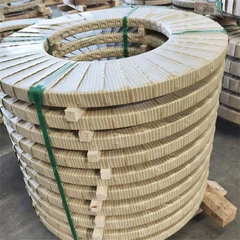
Packaging: Wooden crate packaging, bubble wrap packaging, steel strapping, or packaging according to customer requirements.

Send Inquiry